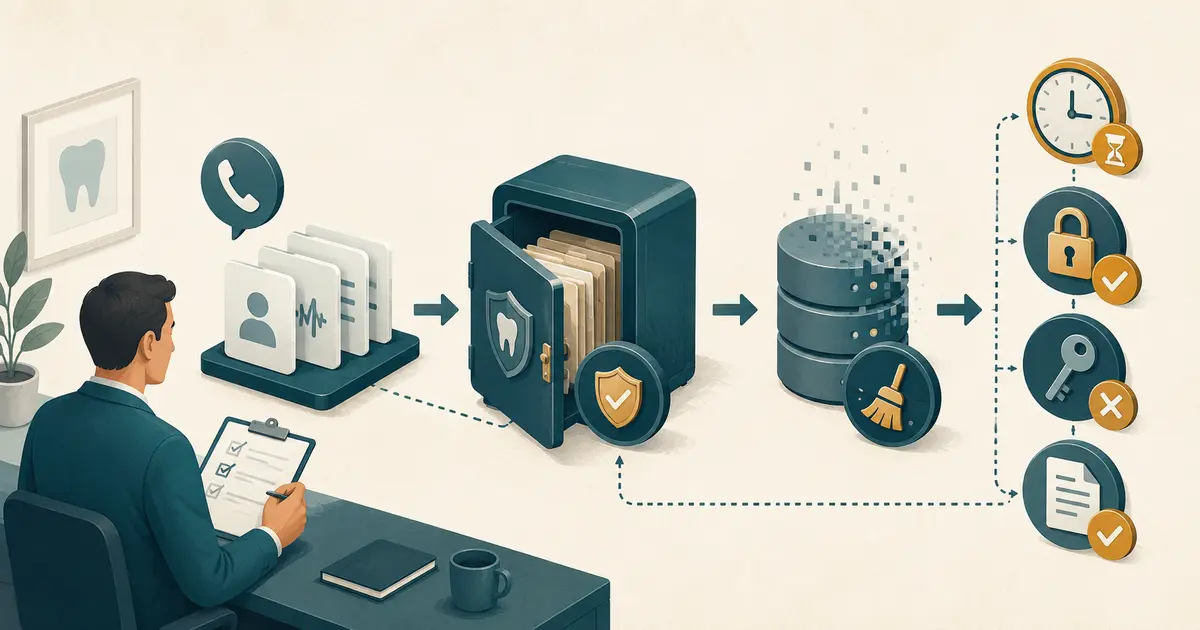
Dental voice vendor incident notification requirements define which events a vendor must report, how quickly the first notice must arrive, what it must contain, and how updates continue. A vague promise to “notify when appropriate” leaves the practice negotiating facts during the incident.
This is contract and operations guidance, not legal advice. Qualified privacy, security, and legal advisers should determine the clauses and regulatory duties that apply to the practice, vendor role, data, and states involved.
Cover more than confirmed breaches
The notice clause should distinguish at least:
- suspected or confirmed unauthorized access, use, disclosure, change, or deletion;
- loss of availability that affects incoming calls, routing, voicemail, summaries, or exports;
- compromised credentials or administrative actions;
- material integrity errors, misrouting, or cross-customer exposure;
- subprocessor incidents that affect the service;
- law-enforcement, regulator, or third-party demands when disclosure is permitted;
- a confirmed breach that triggers separate legal notification duties.
Do not make the first operational alert wait for a final breach determination. HHS notes that security-incident reporting detail, frequency, and format may be addressed in a business associate agreement, while breach notification carries specific legal requirements.
Set two clocks
Define a short operational clock for material service or security incidents and a separate outer limit for information required by law or contract. The first notice can be incomplete, but it should arrive through an approved 24/7 channel and identify what is known, what is not known, the affected services, containment steps, and the next update time.
Avoid language that starts the clock only after the vendor's legal department confirms an incident. Define discovery consistently and require the vendor to supplement the notice as facts develop.
Require usable incident fields
Ask for:
- incident identifier, discovery time, and relevant time zone;
- affected products, numbers, locations, accounts, and subprocessors;
- data types and approximate scope when known;
- availability, confidentiality, and integrity impact;
- containment, preservation, and recovery actions;
- customer actions, safe workarounds, and prohibited actions;
- vendor incident lead and secure communication path;
- update cadence, root-cause report, corrective actions, and closure evidence.
Connect this record to the practice's HIPAA answering-service review, AI answering privacy and security questions, and phone incident postmortem. Those documents should use the same service names and contacts.
Test the clause before signing
Run a tabletop scenario: the vendor sees suspicious access at 2:00 a.m., a downstream provider is involved, and call summaries may be affected. Ask who contacts the practice, through which channel, what arrives in the first hour, how updates are authenticated, and what evidence is preserved.
The test fails if the support desk does not know the incident route, the contract contact is a departed employee, or the vendor cannot explain when subprocessor incidents reach the practice.
HHS requires business associates to report security incidents under applicable agreements and to notify covered entities of breaches of unsecured PHI under the Breach Notification Rule. The FTC also recommends a prepared response team, evidence preservation, verified remediation, and a communication plan. The practice should map those responsibilities before an event occurs.