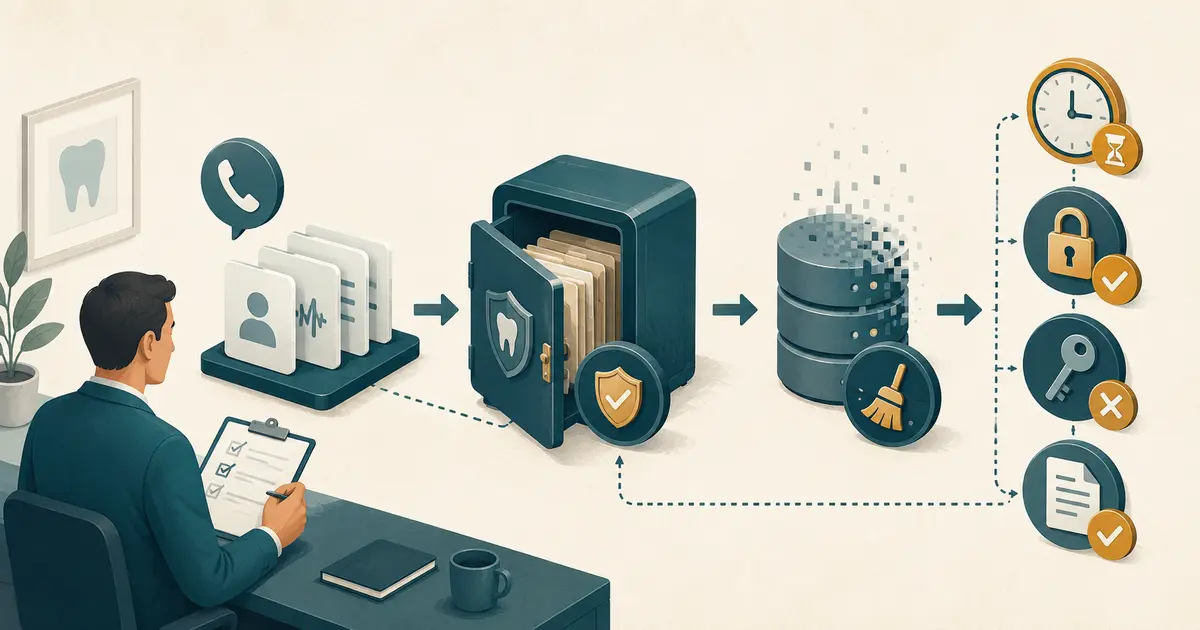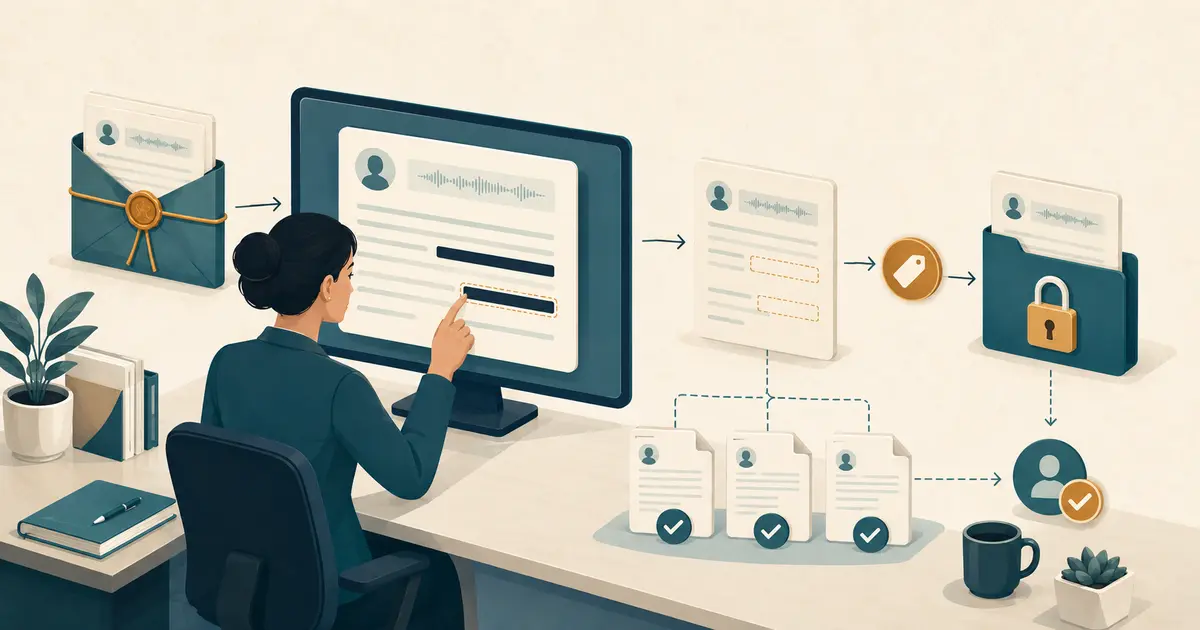
A dental call summary redaction workflow removes information that is unnecessary or inappropriate for a working operational summary while preserving the authoritative source and audit history required by practice policy. Redaction should not become silent rewriting, destruction of evidence, or a way to hide an error.
Decide which record is being changed
Identify the source call record, transcript, generated summary, staff-edited summary, exported task, and any downstream copies. These may have different purposes, access rules, and retention requirements. A working callback note can be minimized without altering a source recording that the practice must preserve.
Classify the request: unnecessary sensitive detail, wrong recipient, mistaken caller data, credential or payment information, staff commentary, unsupported clinical inference, or another policy-defined reason. Route factual disputes through the dental record correction and amendment workflow rather than treating every disagreement as redaction.
Require authority and a stated reason
Use a controlled record with:
- source record and affected copy;
- requested removal and reason category;
- requester and relationship to the record;
- privacy, records, clinical, billing, security, or legal owner;
- decision and authority;
- original preservation method;
- redacted version, downstream locations, and completion evidence;
- exception, reviewer, and closure date.
Front desk staff may identify a problem and restrict routine sharing, but they should not decide formal amendment rights, legal holds, or deletion obligations outside their role.
Redact the minimum necessary content
Remove only the content approved for the stated purpose. Keep enough context for the operational request to remain understandable. Avoid replacing text in a way that changes who said what, the requested action, or the timing.
Use structured fields where possible. A neutral reason such as “billing question for account team” is safer in a broad work queue than a copied narrative. Do not paste the removed content into the redaction ticket, email subject, or chat discussion.
HHS's minimum-necessary guidance supports limiting uses and disclosures of protected health information to what is reasonably needed for the purpose, while recognizing specific exceptions. The practice should apply current policies and qualified review to its actual records and obligations.
Preserve lineage and update downstream copies
Keep the original under the appropriate access and retention policy, or document why it is not retained. Mark the working copy as redacted and record who made the change, when, under which authority, and what downstream copies were addressed.
Search exports, queue items, notifications, support tickets, and vendor copies within scope. If a downstream system cannot be corrected, restrict access where possible, record the limitation, and escalate. A cleaned primary screen does not prove that copies disappeared.
Audit for both over- and under-redaction
Sample completed cases. Check whether sensitive details remain, essential request context was removed, originals were overwritten, reasons are vague, or staff used redaction to conceal quality issues. Feed recurring problems into script, access, summary-generation, or training changes.
Use the separate AI call quality scorecard to evaluate output accuracy and the dental record-retention policy to decide how long each record class is kept.
Missed Calls Dental boundary
Missed Calls Dental Workspace can make supported summaries and transcripts available to the practice. The practice owns access, correction or redaction decisions, recordkeeping, downstream handling, legal review, and follow-up. The product does not make clinical or legal determinations.