An after-hours dental answering service should do one job well: receive calls when the office is closed and turn them into a clear, safe next step. The best option depends on which calls you want covered, how much judgment the service needs, and what your team can reliably review the next morning.
Do not choose coverage only because it says “24/7.” First define the workflow. A simple voicemail may be enough for routine requests. A live operator may fit calls that need flexible conversation. AI call answering can provide consistent request capture within approved boundaries. Some practices need a hybrid of those options.
Start with the after-hours outcome
Before comparing services, decide what a successful after-hours call should produce. For most dental offices, the service should not attempt to solve the caller's dental concern. It should help the caller understand what happens next and give the office enough information to respond.
A practical outcome may include:
- identifying the office clearly;
- collecting the caller's name and callback number when available;
- recording the reason for the call in the caller's own words;
- answering only approved routine office questions;
- following a predefined nonclinical escalation path;
- creating a message or request the team can find and act on.
This is different from the front desk's day-to-day process. If you need the staff workflow for greeting, message review, and next-day follow-up, use the guide to handling after-hours calls at a dental office. The decision here is which coverage model should receive those calls before the office reopens.
Five after-hours coverage options
1. Voicemail with next-business-day callback
Voicemail is the simplest option. The greeting explains that the office is closed, asks the caller to leave a message, and tells them when the team will return it.
The tradeoff is caller effort. The caller has to decide what to say, leave enough detail, and trust that someone will listen. Messages may be incomplete, silent, or difficult to understand. Voicemail can still work well when after-hours volume is low and the team has a disciplined review process.
2. An on-call staff member
Some practices route selected calls to an owner, office manager, or on-call team member. This gives the office direct control and allows a person who knows the practice to handle unusual questions.
The cost is interruption and inconsistency. Coverage depends on the person's availability, and the practice needs clear rules for which calls should transfer. An on-call path is often better reserved for defined exceptions than used as the default destination for every routine request.
3. A live answering service
A live answering service uses human operators to answer calls under the practice's instructions. It can fit conversations that vary widely or require a flexible human response.
Quality depends on training, access to current office information, staffing, and the message the operator sends back. Ask to review the actual script, escalation rules, and sample handoff. A friendly conversation is not enough if the office receives an incomplete or delayed message.
4. AI call answering
AI call answering can handle repeatable conversations, use approved office information, and collect a structured request consistently. It may be useful when the main goal is to capture why the patient called and prepare a clear handoff.
Its boundaries must be explicit. AI should not diagnose, provide clinical triage, promise appointment availability, confirm individual insurance benefits, or guess when an answer is unknown. The practice should test how the system introduces itself, handles interruptions, responds to uncertainty, and transfers the request to staff.
5. A hybrid model
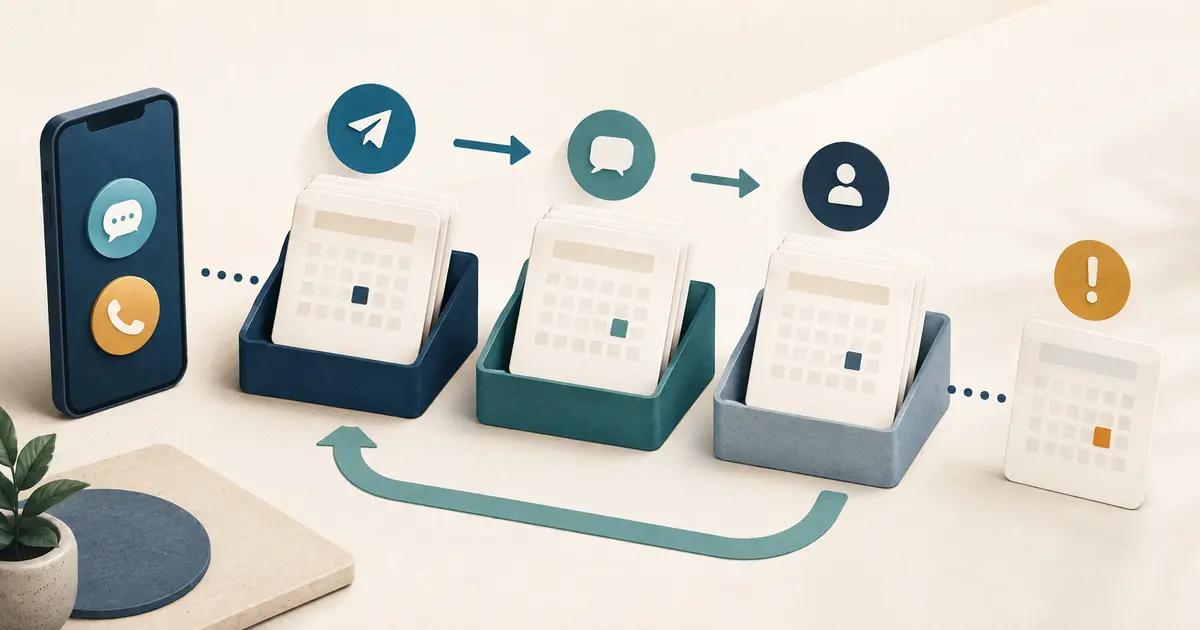
A hybrid model assigns different calls or time periods to different paths. For example, routine after-hours requests may go to voicemail or AI, while narrowly defined exceptions go to an on-call person. A practice might also use a live answering service only on weekends or holidays.
Hybrid coverage can match each call type more closely, but it adds routing and ownership complexity. Every branch needs a clear trigger, fallback, and handoff destination. If staff cannot explain the routing plan in a few sentences, it may be too complicated to operate reliably.
Compare the tradeoffs side by side
| Option | Strongest fit | Main tradeoff | Handoff to verify |
|---|---|---|---|
| Voicemail | Low-volume routine messages | More caller effort and incomplete messages | Recording, transcript, or message review queue |
| On-call staff | Defined exceptions needing office knowledge | Staff interruption and variable availability | Who receives the call and who documents it |
| Live answering service | Flexible human conversation | Training, staffing, and operator consistency | Complete message, delivery time, and escalation record |
| AI call answering | Repeatable request capture using approved facts | Narrow judgment boundaries and setup quality | Structured request, transcript or summary, and unresolved questions |
| Hybrid | Different paths for different call types or periods | More routing rules and failure points | One shared destination with clear ownership |
No option wins every category. The right model is the one that produces a safe, usable request without creating a process your team cannot maintain.
For a focused comparison of the two most conversational models, see AI receptionist versus a traditional dental answering service.
Design the workflow before requesting quotes
An after hours answering service for dentists should be priced against a written workflow, not a vague promise to “answer calls.” Use the same requirements for every provider so you can compare equivalent coverage.
Define when calls enter the service
Choose the exact conditions: after a closing time, on no answer, when all lines are busy, on weekends, or during selected holidays. Confirm who controls forwarding and how the office turns it off.
Limit the information the service may use
Prepare approved facts such as office hours, locations, services, general payment policies, and the wording for uncertain questions. Assign one person to keep those facts current.
Specify what the service may not do
Write down the boundaries. The service should not make clinical decisions, provide treatment advice, promise a booking, or improvise office policy. Define what it says when a request falls outside the approved workflow.
Create one handoff destination
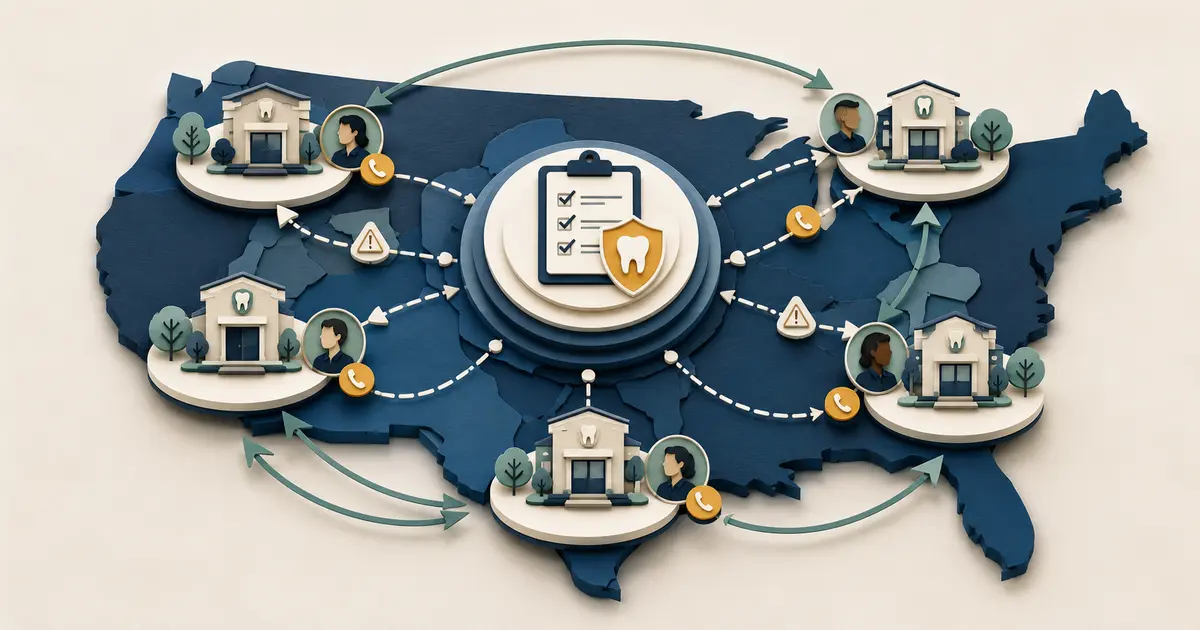
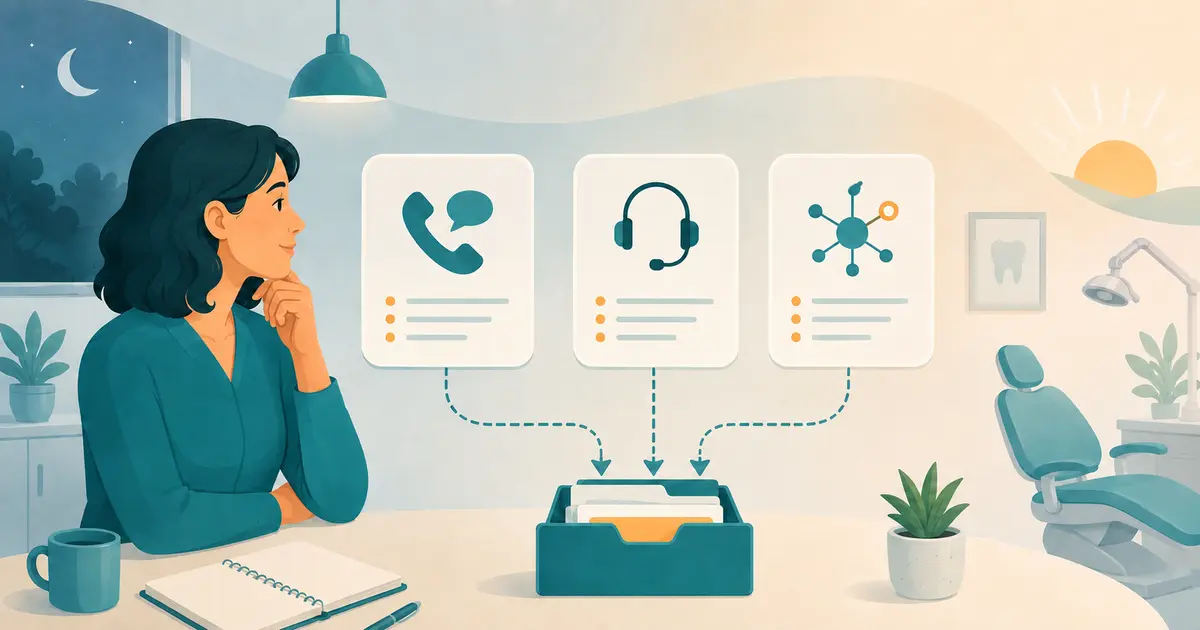
Decide where every actionable request appears. Avoid splitting voicemail, emails, text alerts, and operator notes across several places unless one person is responsible for reconciling them. The front desk should be able to see the caller, reason, time, source, and unresolved question without reconstructing the conversation.
Assign next-business-day ownership
Coverage is incomplete until someone reviews the queue. Set a daily owner, a backup, and a method for marking each request handled. If the practice already struggles to return calls, adding another inbox will not solve the underlying problem.
Questions to ask an after-hours provider
Send the same questions to every provider:
- Which call conditions and hours can the service cover?
- What greeting will callers hear, and can the practice approve it?
- What caller information does the service collect by default?
- How are routine office facts added, reviewed, and updated?
- What happens when the service does not know an answer?
- Which calls can transfer, to whom, and what happens if no one answers?
- What exactly does the front desk receive after each call?
- How quickly does the handoff appear, and where is it stored?
- How are outages, busy periods, spam calls, and immediate hang-ups handled?
- What setup, usage, overage, holiday, location, or cancellation charges apply?
Pricing can vary by minutes, calls, included usage, staffing, and add-ons. The dental answering service cost guide explains how to compare quotes using the same call volume and billing assumptions.
Run a narrow pilot before expanding coverage
Start with one call condition or one coverage period. Test the complete path rather than only the greeting.
Place realistic calls for:
- a routine appointment request;
- a question the service can answer from approved office information;
- a question it should hand back to the office;
- a caller who interrupts or changes the request;
- a failed transfer or unavailable on-call person;
- a short call, wrong number, or hang-up.
Then inspect the handoff from the front desk's perspective. Is the request clear? Can staff see what remains unanswered? Does the callback number match? Is there one obvious next action?
Review the first few weeks for request quality, missed handoffs, unnecessary transfers, caller confusion, and staff follow-up effort. Expand coverage only after the team can operate the workflow consistently.
Where Missed Calls Dental fits
Missed Calls Dental is designed for eligible missed, busy, overflow, and after-hours calls that a practice forwards to its MCD AI number. AI Answering can use approved common office information, capture the caller's request, and create a transcript and summary in Workspace for the front desk.
It is not a live human answering service, a phone-system replacement, or a full dental receptionist. It does not diagnose, provide medical triage, confirm individual insurance benefits, or book appointments. The dental team reviews each request and decides the next step.
To see the broader service model before comparing providers, read what a dental answering service is and how it works.