After-hours dental calls are not all the same. One caller may want regular office hours. Another may need to cancel tomorrow's appointment. Another may describe a concern that belongs in the practice's established on-call process. A useful after-hours workflow separates these paths without asking an automated system or nonclinical staff member to make a medical judgment.
Define the purpose of after-hours coverage
Start by deciding what the office wants the phone process to accomplish. Common goals include:
- sharing current hours, address, and parking information;
- collecting routine appointment or callback requests;
- explaining when the office will respond;
- directing true medical emergencies to emergency services;
- following the dentist's approved instructions for reaching an on-call clinician;
- creating a complete message for the next business day.
Write the policy before choosing technology. Voicemail, a live service, and AI can each support a clear policy, but none can repair a policy that is vague or outdated.
Separate information from clinical judgment
An after-hours greeting may provide factual office information and explain the available next steps. It should not diagnose symptoms or decide whether a dental condition is clinically urgent.
Use a clear boundary:
This phone service is not an emergency service and does not provide medical advice. If this is a medical emergency, call 911. For other dental concerns, follow the office's established after-hours instructions.
The exact wording and on-call path should be approved by the practice. Staff and vendors should not improvise clinical guidance.
Choose a coverage model
Voicemail
Voicemail can be enough for low-volume routine requests. Keep the greeting short, state when messages are reviewed, and ask for only the information staff need. Review the message queue at a defined time rather than relying on someone to notice it.
Live answering service
A live service can provide human conversation and follow an escalation tree. Give operators a current, limited knowledge base and a clear list of situations they must hand off. Review message quality regularly.
AI call answering
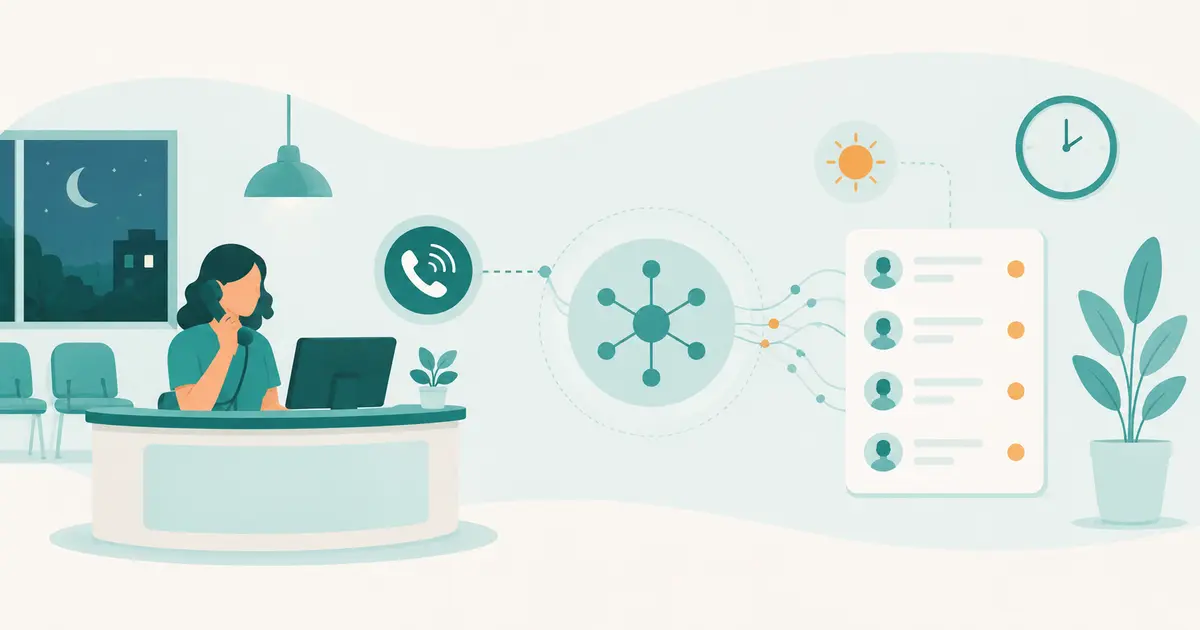
AI can answer approved common questions and capture a structured request. It should disclose that it is an AI assistant, avoid clinical interpretation, and hand unknown questions back to the office. The practice should verify exactly what the system says when it cannot help.
On-call clinician
Some practices maintain an on-call process for established patients. The criteria, schedule, contact method, documentation, and backup plan should come from the practice's clinical leadership. Do not publish a personal number or route every routine request directly to the clinician.
Build the handoff for the next shift
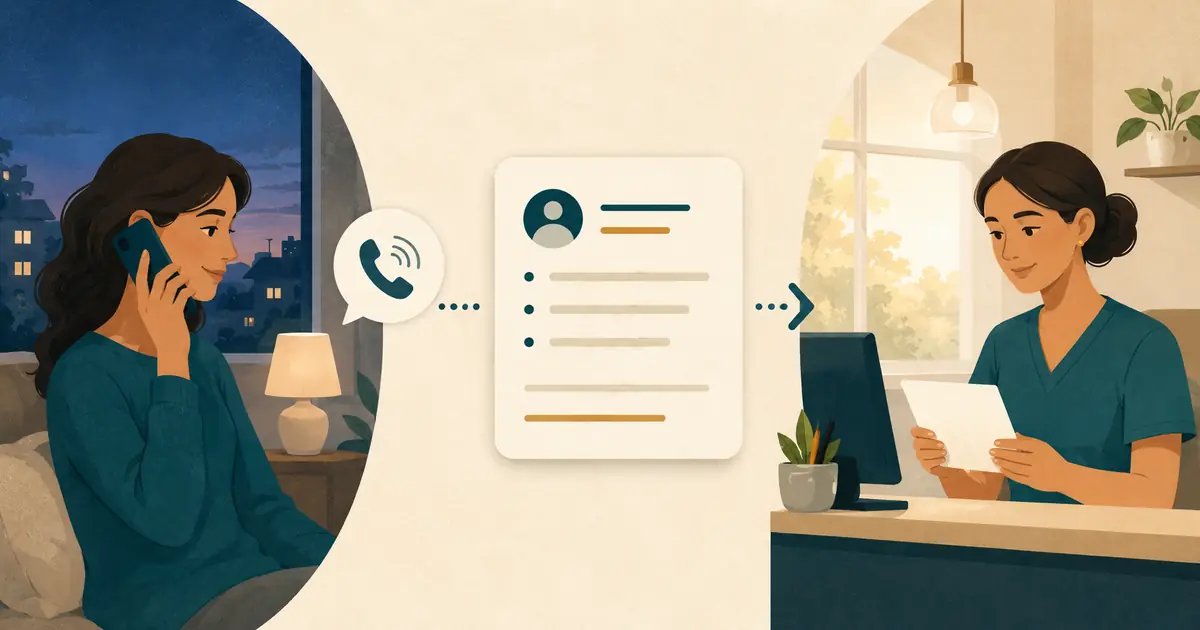
The morning team needs a queue, not a pile of disconnected messages. Each request should include:
- caller name and callback number;
- reason for the call, stated neutrally;
- date and time received;
- whether the caller used the approved on-call path;
- any unresolved office question;
- the expected staff follow-up window.
Assign responsibility for reviewing the queue. A simple process is: one person checks new requests at opening, marks duplicates, assigns callbacks, and records the outcome.
Keep office information current
After-hours systems fail when they repeat old holiday hours, a former address, an outdated insurance statement, or an unavailable service. Create a short review checklist for:
- regular and holiday hours;
- office location and accessibility notes;
- services the office currently offers;
- payment and insurance language;
- on-call instructions;
- the promised callback window.
Review the information whenever the practice changes hours or policy, and at least on a regular calendar cadence.
Test the full call path
Call the office from an outside number after hours. Confirm which greeting answers, whether forwarding preserves the caller's number, what information is collected, and where the request appears. Test a routine question, an unknown question, and the approved emergency wording.
Document who fixes problems with the office phone provider, answering service, or internal follow-up process. A test that ends with a recorded message but no staff handoff is incomplete.
Missed Calls Dental can receive eligible calls forwarded to an MCD AI number, answer approved office questions, and create a request summary and transcript for Workspace. It is not an emergency service and does not provide clinical triage. Learn more in AI Dental Receptionist: What It Can and Cannot Do or review the sample call.