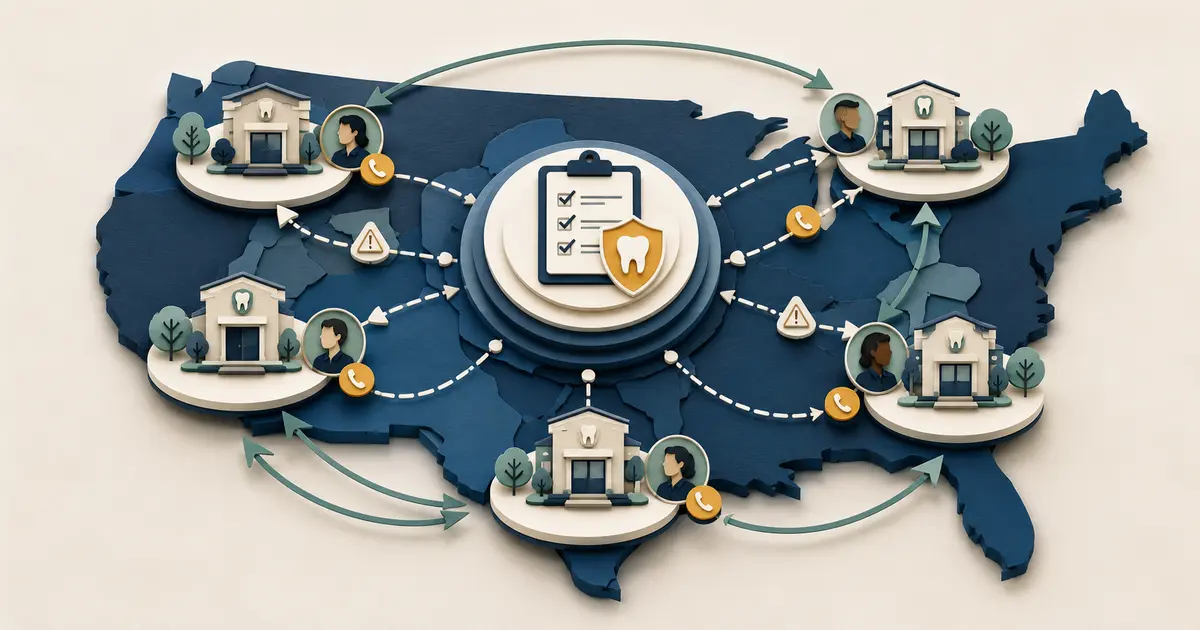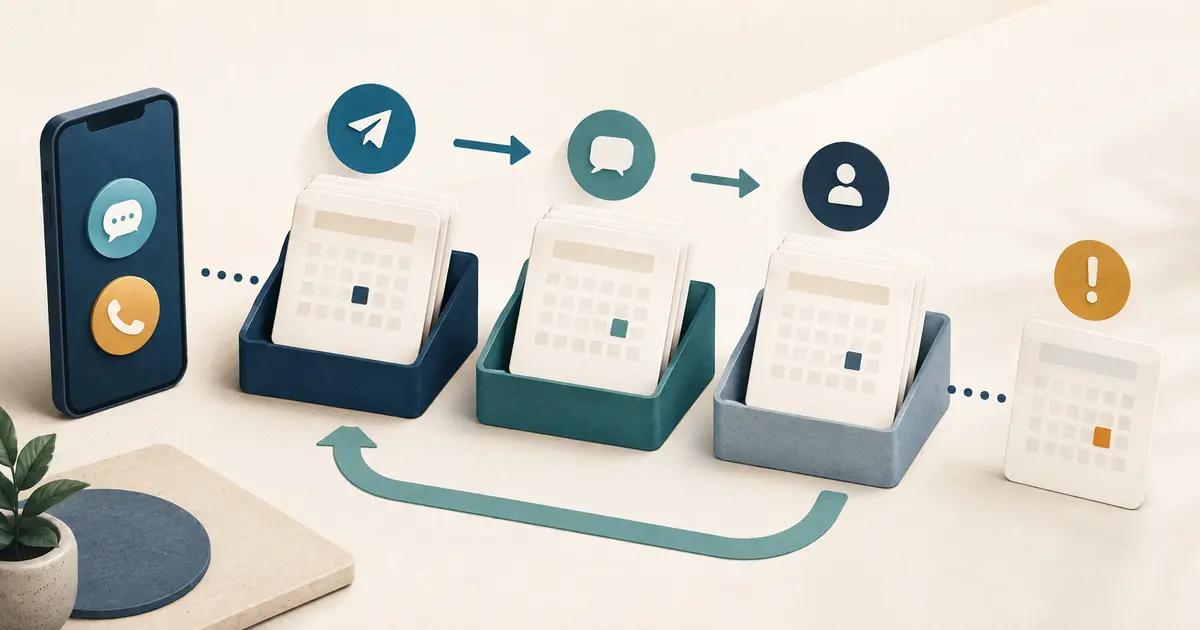
To reduce dental appointment no-shows, make the appointment state clear, contact patients through approved preferred channels, give them an easy way to respond, and assign every exception to a staff owner. Reminders help only when the workflow behind them is accurate.
No process eliminates no-shows, and this article does not promise a benchmark or outcome.
Define the states
Use consistent labels in the authoritative scheduling system:
- scheduled;
- reminder queued;
- reminder delivered;
- delivery failed;
- patient confirmed;
- patient requested a change;
- staff follow-up required;
- canceled;
- no-show;
- completed.
Do not mark an appointment confirmed merely because a message was sent or delivered. Delivery is a channel event; confirmation is a patient response or another approved verification event.
Ask for communication preferences
The American Dental Association recommends asking patients which reminder method they prefer and recording that choice. The practice should define how a preference is captured, updated, withdrawn, and honored across phone, text, email, and portal messages.
Have qualified counsel review consent and automated-message requirements for the practice's specific purposes, systems, and jurisdictions. Appointment reminders and marketing messages may not follow the same rules.
The patient texting best-practices guide covers the channel controls in more detail.
Use a staged reminder plan
Choose timing based on the practice's schedule, patient population, appointment types, and ability to act on replies. A staged plan might include:
- an initial reminder with the correct date, time, location, and response method;
- a second contact only for appointments still in the defined unconfirmed state;
- a staff queue for failed delivery, change requests, or unclear replies;
- a final reconciliation before the appointment day.
Do not send repeated messages to a patient who already responded or opted out. Do not include more sensitive detail than needed for the approved purpose.
Write messages that preserve authority
A reminder should identify the practice, give accurate appointment information, and explain the response path.
“Harbor Dental reminder: our records show an appointment on [date] at [time]. Reply C to confirm or call 555-0100 if you need to discuss a change.”
Use fictional names and numbers in training. If replies are not monitored, do not invite them. If a reply does not itself change the schedule, say so clearly.
The appointment confirmation call script provides a phone-based workflow.
Design the exception queue
Create visible handling for:
- invalid or landline number;
- bounced email;
- undelivered text;
- ambiguous reply;
- patient asks to cancel;
- patient requests another time;
- family member replies;
- wrong-number report;
- language or accessibility need;
- patient opts out;
- duplicate reminders;
- vendor outage.
For each exception, define the owner, due rule, approved next channel, and closure state. A failed reminder must not disappear into a vendor dashboard nobody reviews.
Make changes easy but controlled
Patients are more likely to communicate when the path is simple. Provide the monitored number or approved reply method. Staff should verify identity as required, state whether an alternative is merely being discussed, update the authoritative schedule, and send a final confirmation only after the change is complete.
Missed Calls Dental does not book, cancel, or change appointments. It can capture requests from eligible forwarded missed calls for front desk follow-up. Staff remain responsible for the schedule and final patient communication.
The cancellation and rescheduling scripts help keep pending and completed states separate.
Avoid pressure and blame
Reminders should not shame patients, imply a clinical consequence without clinician-approved wording, or surprise them with an unsupported fee. Cancellation and no-show policies should be written, consistently applied, accessible, and reviewed by the practice's qualified advisers.
When a patient misses an appointment, follow the approved outreach process and document the outcome. The no-show follow-up script provides neutral language.
Measure the workflow honestly
Choose a stable denominator. For example:
no-show rate = no-show appointments / eligible scheduled appointments
Define “eligible” and use the same rule across periods. Keep cancellations, reschedules, completed appointments, and no-shows separate. Segment only when the group is large enough to interpret responsibly.
Also track:
- preference on file;
- reminder delivery failures;
- confirmation responses;
- change requests;
- exceptions without owners;
- late schedule changes;
- wrong-number reports;
- opt-outs;
- duplicate contacts.
Do not assume a reminder caused attendance. Weather, transportation, health, work, childcare, cost, misunderstanding, and many other factors may affect the outcome.
Run a monthly control review
Sample fictional tests and real workflow records under approved privacy controls. Verify templates, variables, sender identity, monitored hours, staff permissions, opt-out behavior, appointment state, failed-delivery alerts, and vendor logs. Reapprove the plan after a system, policy, location, or hours change.
A strong reminder workflow is respectful and operationally complete. It helps patients understand the appointment, respond through a real channel, and reach staff before an unresolved issue becomes an empty chair.
Create a controlled reminder calendar
Document the event that triggers each reminder, the time window, eligible appointment states, exclusions, template version, channel, owner, and stop condition. If the appointment changes, the old reminder series should cancel automatically or create a visible exception. Staff should not have to remember to remove every queued message manually.
Use separate rules for new and existing patients, appointments that require special instructions, minors or caregivers, and people with communication accommodations. Clinicians and advisers should approve any content that goes beyond basic logistics. Keep clinical preparation instructions in their governed source rather than copying them into a generic marketing platform.
Review message timing from the patient's perspective. Repeated texts, email, and calls on the same day may feel like harassment and create duplicate replies. A coordinated channel plan should recognize prior responses and stop unnecessary contacts. When a patient confirms by phone, update the authoritative state so the text system does not continue asking.
Run a quarterly template audit. Verify practice name, location, date and time formatting, callback number, monitored hours, links, opt-out behavior, accessibility, and translation quality. Send test messages to devices on different carriers and inspect lock-screen previews.
For improvement work, select one failure type at a time. If many reminders fail because phone numbers are stale, strengthen contact verification. If patients reply but the queue is unowned, fix staffing and notifications. If callers misunderstand whether they are confirmed, revise both the wording and the state model. A new cadence cannot repair a broken underlying record.
Approve the workflow as a team
Before changing the cadence, have scheduling, front desk, privacy, and clinical owners review the plan. Confirm which appointment categories use the standard templates, which need separate instructions, and who responds when the patient raises a clinical or accessibility question.
Publish the current workflow with its owner and effective date. Retire old templates and recurring tasks from every platform. For the first week after a change, inspect messages daily and compare queued reminders with the authoritative schedule.
If no-shows do not change, do not immediately add more contacts. Review whether the denominator, patient preferences, delivery data, schedule accuracy, and exception ownership were valid. The practice may discover a different barrier that reminders cannot solve. Document the finding and choose a targeted improvement rather than increasing pressure on every patient.