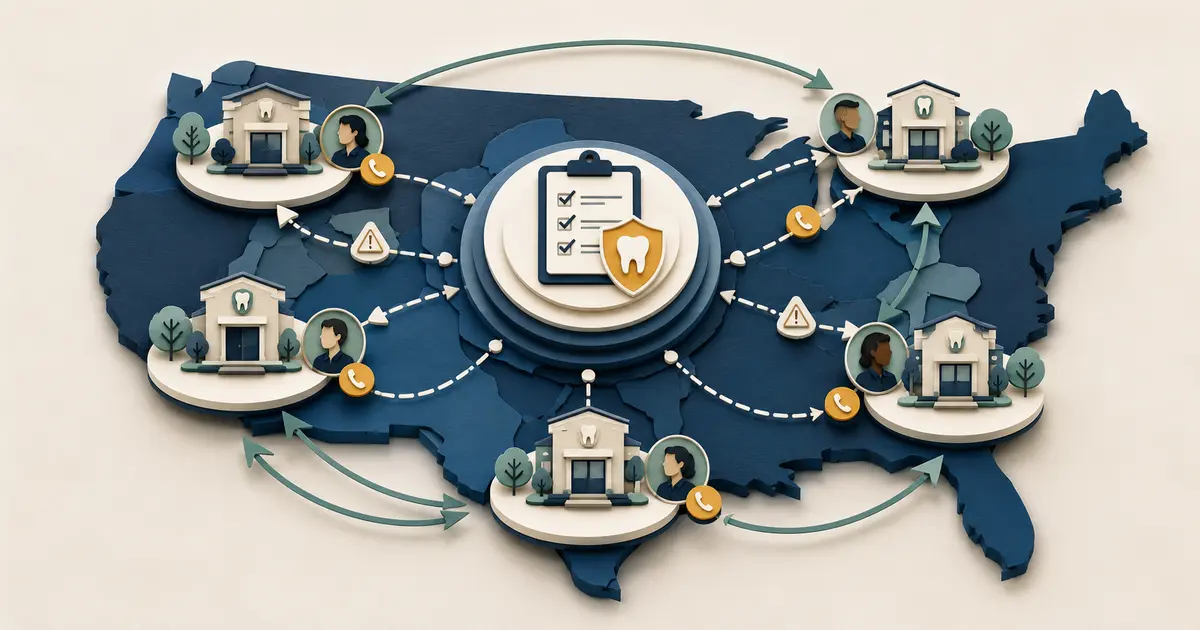
A dental appointment answering service may collect appointment preferences, schedule directly, or combine both models. Those are materially different services. Request capture creates work for the office to review. Direct scheduling changes the practice's source calendar and needs accurate availability, appointment rules, permissions, confirmation, and recovery.
Before choosing a provider, define which outcome callers should receive for each call type. Never let “we handle scheduling” remain an undefined sales phrase.
Define three possible outcomes
1. Appointment request
The service records preferred dates, times, location, and general request information. Practice staff review the request and later confirm or offer alternatives.
Caller language should be explicit:
“I have submitted your appointment request. It is not yet confirmed. The practice will review availability and contact you with the final details.”
2. Confirmed booking
The service writes a valid appointment into the designated scheduling system under practice rules. The caller receives the confirmed location, date, time, appointment status, and approved next steps.
3. Assisted handoff
The service transfers the caller or sends the request to an authorized scheduler because the case falls outside direct-booking rules.
One call may move from the booking path to a handoff when the requested appointment, provider, insurance question, clinical concern, or accessibility need exceeds the service's authority.
The dental appointment request call workflow explains the front desk side of request capture.
Write a scheduling authority matrix
For every call category, document:
- request only, direct booking, or transfer;
- new versus established patient;
- approved locations and providers;
- appointment types the service may select;
- duration and resource rules;
- age or other administrative constraints approved by the practice;
- same-day or short-notice rules;
- information required before completion;
- questions that stop scheduling;
- who owns the exception.
Avoid asking an answering service to infer a procedure or clinical need from symptoms. If the appropriate appointment type requires clinical judgment, route the request to qualified staff.
Version the matrix. Record who approved it, when it becomes effective, and what events require review.
Give the service a controlled source of truth
Maintain current:
- practice names, numbers, addresses, and hours;
- provider and location availability;
- approved service descriptions;
- appointment types and durations;
- new-patient administrative requirements;
- general insurance-participation language;
- fees or deposits the service is explicitly allowed to describe;
- accessibility and language resources;
- closure, escalation, and transfer instructions.
Every time-sensitive fact needs an owner and review date. The service should have a safe “unknown” response rather than guessing from an old script.
Protect the live schedule
Direct booking requires more than calendar visibility. Ask how the service prevents:
- double booking;
- use of a blocked or unavailable resource;
- wrong appointment duration;
- selection of an incompatible provider or location;
- race conditions when staff and the service book simultaneously;
- duplicate records for the same person;
- booking while the integration is stale;
- changes after a schedule hold or closure.
Use least-privilege access. The role may need to view specific availability and create allowed appointment types, but not edit provider templates, view broad clinical data, or delete appointments.
Require an audit record showing who or what made each change, when, from which workflow, and what values changed.
Build confirmation into the transaction
A direct booking is not complete until the designated system accepts it and the caller receives accurate details. Confirm:
- practice and location;
- date, time, and time zone when relevant;
- appointment status;
- approved arrival or administrative instructions;
- callback number;
- how to request a change.
If the write fails or the confirmation status is uncertain, fall back to a request:
“I was not able to verify a confirmed appointment. I can send your preferred time to the office for review.”
Do not announce success based only on the service's local screen. Reconcile the practice's source schedule.
The appointment confirmation call script provides language for staff follow-up.
Handle changes without creating silent errors
Define authority for cancellation, rescheduling, waitlist changes, and late-arrival questions. A service allowed to create an appointment may not automatically have authority to cancel or move every appointment.
For each change, record:
- original appointment;
- caller identity outcome;
- requested change;
- completed action or pending status;
- confirmation delivered;
- destination owner if unresolved.
Keep requests distinct from completed changes. Use the dental cancellation and rescheduling scripts to draft accurate language.
Draw a firm clinical boundary
The answering service should not diagnose, recommend treatment, or independently decide the clinical urgency or correct appointment type. The practice should supply approved language and a human escalation path for health concerns.
A bounded response is:
“I cannot provide clinical advice or determine the appropriate treatment. I can follow the practice's approved process to route your concern to the appropriate team.”
Document what happens when the transfer is unanswered, when the office is closed, and when approved instructions direct a caller to emergency services. Qualified clinicians and advisors should approve this protocol.
Review privacy and the complete vendor chain
Map audio, transcripts, request fields, scheduling access, notifications, analytics, support access, backups, and deletion. Identify which entities create, receive, maintain, or transmit protected information for the practice.
HHS explains that business-associate status depends on the function and information involved, and its current guidance includes cloud and AI-service examples. Review the HHS business-associate guidance with qualified advisors.
Evaluate:
- required contracts and agreements;
- authentication and role-based access;
- audit logs and schedule-change logs;
- support and subprocessor access;
- recordings and transcription settings;
- secure notifications;
- retention, deletion, and data return;
- incident reporting and cooperation;
- access removal when the relationship ends.
Collect only the information needed for the authorized next step. Keep detailed data in approved systems instead of copying it into email or ordinary text alerts.
Test request and booking paths separately
Use fictional scenarios covering:
- a straightforward request;
- an eligible direct booking;
- no suitable availability;
- two callers seeking the same slot;
- multiple locations and similar provider names;
- an appointment type outside authority;
- a clinical concern;
- an insurance or fee question;
- identity not verified for a change;
- integration timeout after the caller selects a slot;
- schedule write succeeds but confirmation fails;
- service outage and manual fallback.
For each case, record the caller language, service action, schedule result, request record, handoff owner, audit trail, and recovery. Test with the front desk staff who will repair exceptions.
Compare providers with evidence
Ask candidates to demonstrate the practice's scenarios rather than a generic happy path. Score:
- approved-fact accuracy;
- distinction between request and booking;
- schedule-rule compliance;
- exception recognition;
- clinical-boundary compliance;
- transfer and notification results;
- audit detail;
- privacy and access controls;
- fallback and rollback;
- staff correction time.
The answering-service trial and demo guide provides a structured evaluation process.
Measure the complete outcome
Track:
- eligible appointment calls;
- complete requests;
- direct bookings accepted by the source schedule;
- callers who misunderstood appointment status;
- bookings corrected or reversed by staff;
- duplicate appointments or patient records;
- exceptions delivered to the right owner;
- time to review pending requests;
- failed schedule writes and notifications;
- cancellations or no-shows linked to incorrect details;
- staff minutes spent on reconciliation.
Do not report requests and confirmed appointments in one number. The operational value and risk are different.
Use this owner checklist:
- [ ] Request, booking, and handoff outcomes are defined.
- [ ] Scheduling authority is documented by call type.
- [ ] Practice facts and availability have owners.
- [ ] Least-privilege schedule access is configured.
- [ ] Confirmation depends on a verified source-system result.
- [ ] Changes preserve the original and final status.
- [ ] Clinical questions follow an approved human path.
- [ ] Privacy, vendors, logs, retention, and incidents are reviewed.
- [ ] Fictional tests include race conditions and failures.
- [ ] Requests and bookings are measured separately.
A dental appointment answering service should make appointment status unmistakable. Choose request capture when staff need to review the details, allow direct booking only within controlled rules, and give every failed or exceptional transaction a visible human owner.