A dental office VoIP quality test should reproduce the network conditions of a real workday. A single clear call after installation proves very little. Voice quality can change when imaging files move, cloud backups run, guests use Wi-Fi, several calls occur together, or an internet path becomes unstable.
Test before opening, after material network changes, and whenever callers report repeat audio problems.
Establish the test environment
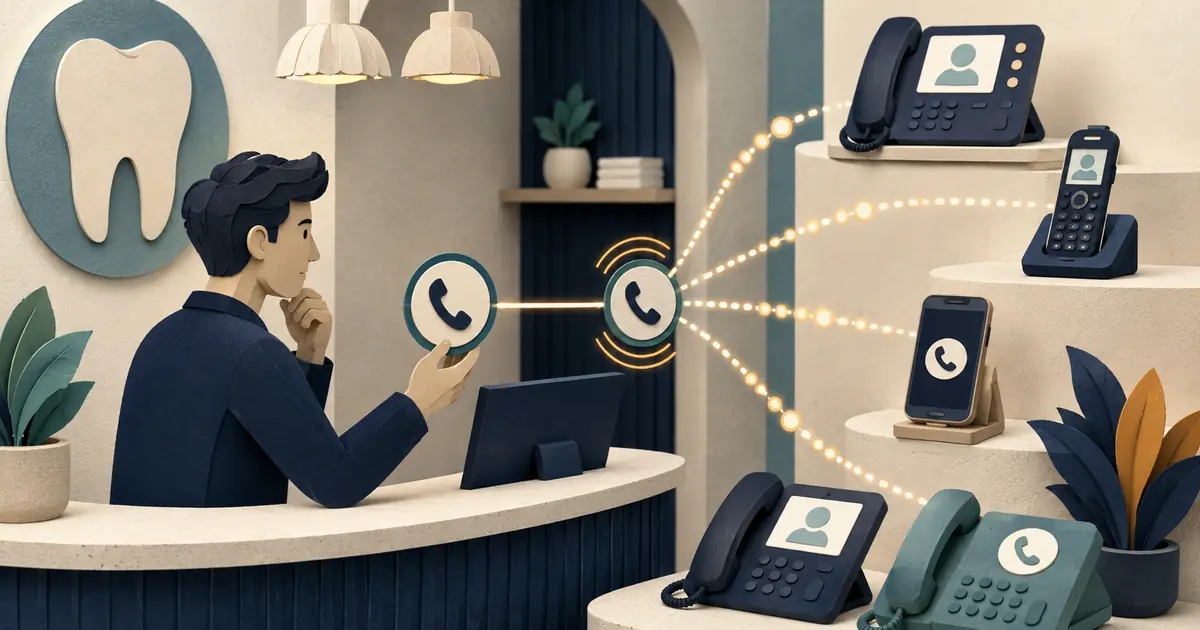
Map the call path from handset or application through the local network, internet connection, voice provider, carrier network, and receiving phone. Record device models, wired or wireless connection, network equipment, provider, test number, and time.
Use synthetic caller information and office-controlled destinations. The dental office phone-system guide can inventory the devices and routes. Keep the phone-outage plan open during testing so a failed dependency has a known response.
Measure what callers can experience
Provider tools may report latency, jitter, packet loss, codec, network events, and call-quality warnings. These measures are useful, but the practice should also record the actual symptom.
| Symptom | Evidence to capture |
|---|---|
| Delay or talking over each other | Direction and approximate timing |
| Choppy or robotic audio | Which side heard it and network condition |
| One-way audio | Direction, transfer state, and route |
| Dropped call | Exact time, duration, and call identifier |
| Slow connection | Dial-to-ring and answer-to-audio behavior |
| Transfer failure | Origin, destination, and failure message |
Do not publish a universal acceptable threshold without reference to the provider's current requirements and the practice's service expectations. Use metrics to locate a path problem, then verify the correction with a call.
Run five practical test rounds
- Quiet baseline: one wired call with no planned heavy traffic.
- Normal office load: ordinary cloud applications and at least two concurrent calls.
- Peak load: approved simulation of backups, uploads, guest traffic, and expected call concurrency.
- Mobility: Wi-Fi handset or softphone movement, if the practice will use it.
- Failure and restoration: internet interruption, backup connection, power dependency, and return to the primary path.
Repeat inbound, outbound, hold, transfer, voicemail, and forwarding tests. A route may handle a direct call but fail after a transfer.
Separate Wi-Fi from wired findings
When a wireless device fails, repeat the same call on a wired connection where possible. Record signal location, access point, roaming behavior, congestion, and whether voice traffic has appropriate network treatment. Do not assume buying faster internet will fix local wireless design or device configuration.
Coordinate network changes with the phone and IT providers. Preserve the before-and-after call identifiers and measurements.
Build an escalation packet
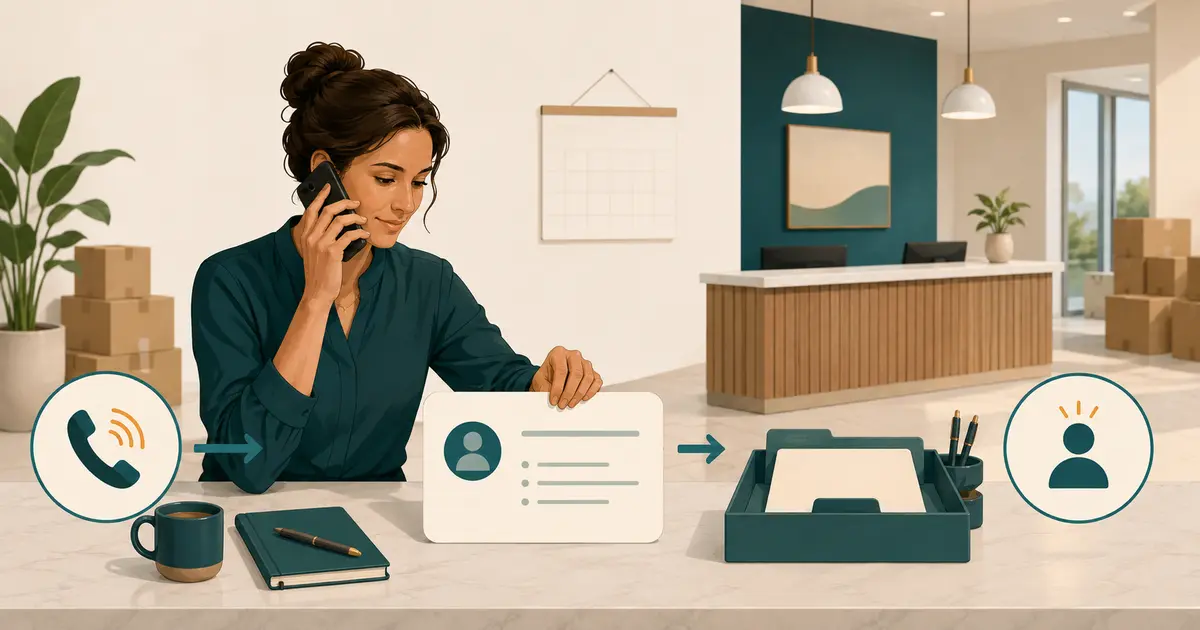
For each failed test, give the provider:
- call source and destination;
- date, time, time zone, and call identifier;
- observed symptom and direction;
- device and network connection;
- concurrent network condition;
- screenshots or diagnostic export where appropriate;
- whether a repeat test succeeded;
- business impact and requested next step.
“Calls sound bad” is hard to investigate. A compact evidence packet allows the provider to correlate the practice's experience with route and network data.
Set acceptance and monitoring rules
Before opening, define which scenarios must pass, which minor findings have dated corrective actions, and which failures block sign-off. Confirm who monitors quality after launch and how staff report a problem without losing the call details.
Re-test after firewall, router, internet, handset, provider, or routing changes. Keep the baseline results so future problems can be compared to a known working state.
Missed Calls Dental boundary
Missed Calls Dental can participate in approved voice workflows, but it does not manage the practice's local network, internet service, carrier routing, power, or device configuration. It cannot guarantee call quality, diagnose, verify benefits, or independently change appointments. SMS is separate and readiness-gated.
Marcus Lee is an editorial pen name. This article was reviewed for accuracy and alignment with Missed Calls Dental product information.