Dental office HIPAA compliance should be visible in ordinary front desk decisions: what appears on a screen, how callers are verified, where forms are placed, which staff may access a record, and what happens after a mistaken disclosure. This checklist translates the Privacy, Security, and Breach Notification Rules into operational review points. It is not a legal opinion. Confirm the practice's covered-entity status, state privacy laws, contracts, and specific safeguards with qualified privacy and security professionals.
HIPAA does not require silence or prevent reasonable patient service. It requires the practice to understand protected health information, limit inappropriate access and disclosure, adopt safeguards, honor patient rights, manage business associates, train its workforce, and document required decisions.
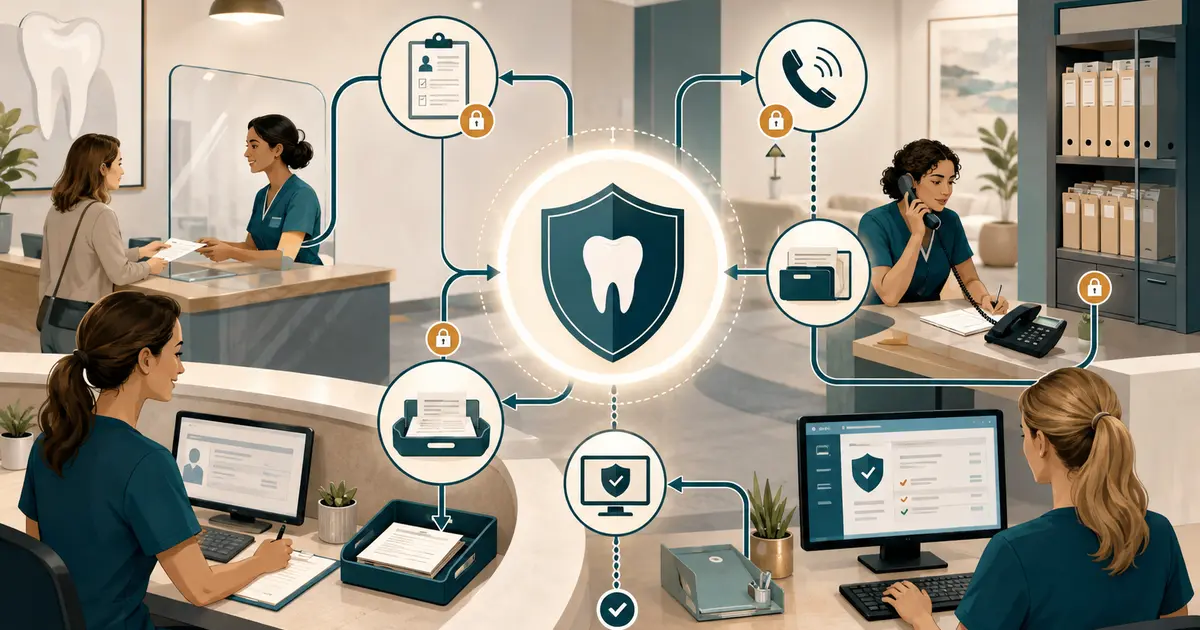
Trace information through five front desk moments
Instead of beginning with a binder, follow protected health information through a realistic patient journey.
First contact
Review what staff collect from a new caller, web form, email, referral, or walk-in. Capture only information needed for the immediate administrative purpose. Avoid repeating sensitive details where others can overhear. Define when an employee may acknowledge that a person is a patient and when identity or authority must be checked first.
Scheduling and reminders
Document which channels the office uses, what message content is approved, how communication preferences are recorded, and how wrong-number or shared-device risks are handled. A convenient channel is not automatically appropriate for every message.
Arrival and service
Inspect sign-in practices, waiting-room conversations, unattended paperwork, screen visibility, printed schedules, and verbal handoffs. Reasonable safeguards should fit the environment. Move a sensitive conversation to a more private location when practical.
Payment and follow-up
Separate the information needed for payment or routine operations from unrelated clinical detail. Confirm where receipts, estimates, explanations, and follow-up notes are stored and who may see them.
Records and departure
Test how access requests, amendments, restrictions, accounting questions, and representative requests are routed. The office's dental record correction process should preserve the original record and authorized amendment history rather than erase inconvenient information.
Set role-based access and security controls
The HIPAA Security Rule applies to electronic protected health information. A documented risk analysis is foundational: identify where electronic information is created, received, maintained, or transmitted; assess threats and vulnerabilities; and choose safeguards appropriate to the risks.
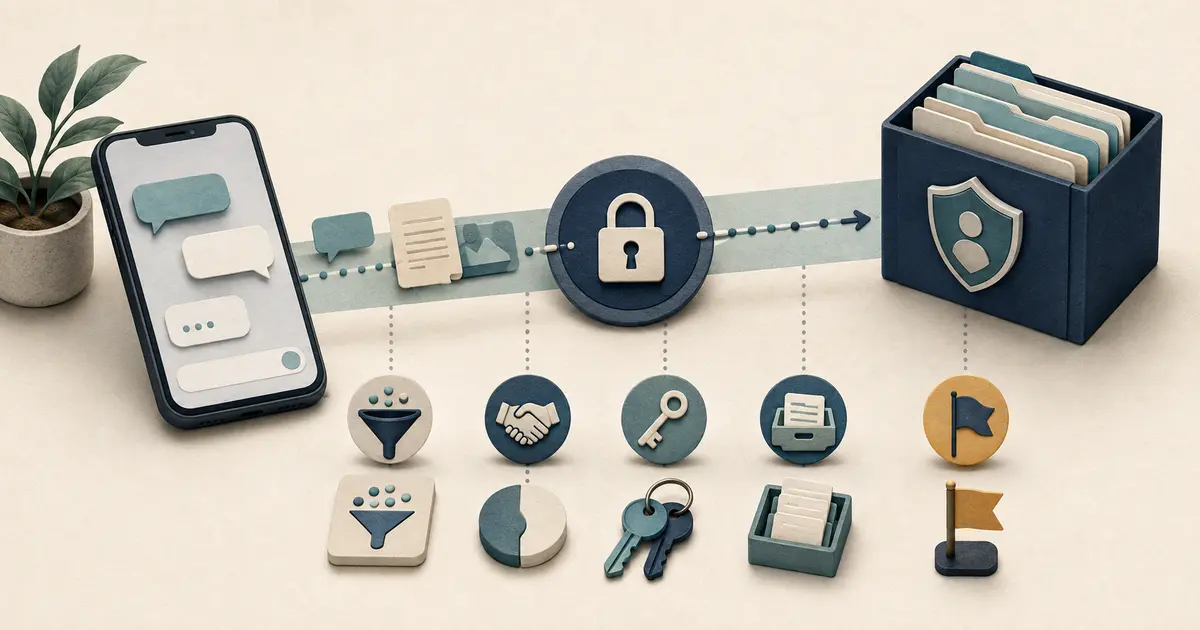
Map every system and endpoint that may handle ePHI, including practice-management software, imaging, email, patient portals, clearinghouses, payment workflows, backups, phones, remote access, file sharing, multifunction printers, and vendor support tools. Include dormant accounts and data retained by former vendors.
For each role, define the minimum access needed to perform assigned work. Use unique accounts, strong authentication, prompt offboarding, appropriate automatic locking, and audit review. Shared credentials eliminate accountability. Administrative convenience is not a sound reason to give every employee broad access.
Document backup, recovery, patching, device, remote-work, and incident procedures. Test restoration rather than treating a successful backup notification as proof. The dental office cybersecurity checklist can help organize technical controls, but it does not replace a HIPAA risk analysis or professional assessment.
Decide disclosures by purpose and authority
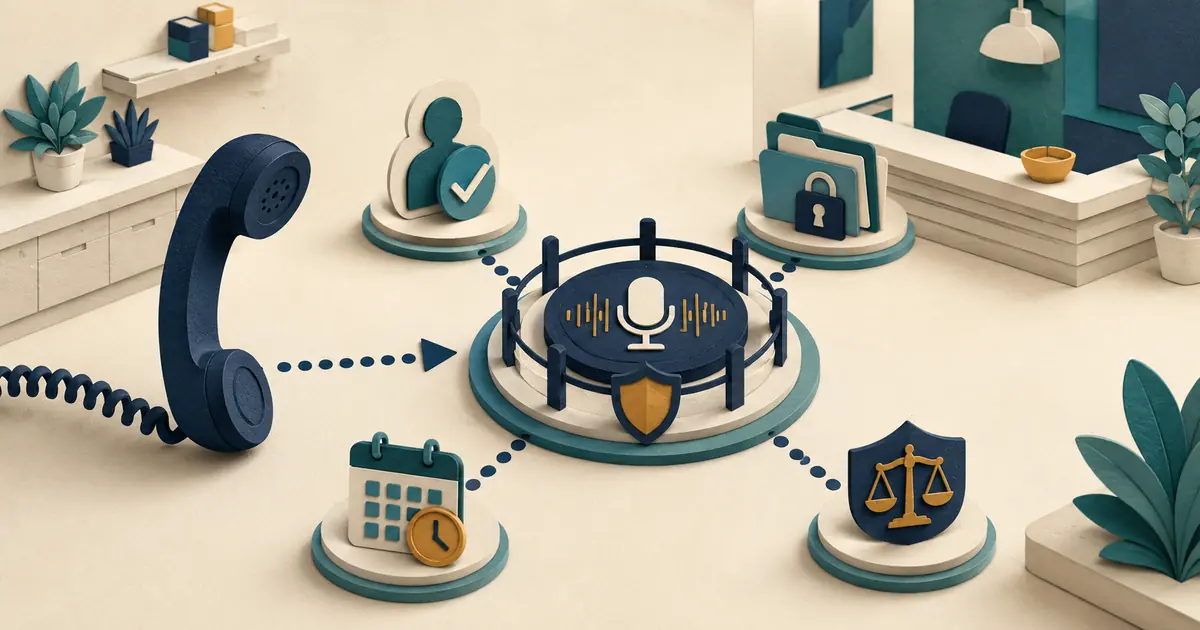
Create decision guides for frequent situations: patient calls, parents and minors, spouses, caregivers, personal representatives, other providers, insurers, employers, law enforcement, subpoenas, and public reviews. Staff should identify the request, verify identity and authority at a level appropriate to the risk, and use the rule that applies to that purpose.
The minimum necessary standard generally requires reasonable steps to limit many uses, disclosures, and requests to what is needed for the purpose. Important exceptions and special rules exist, including treatment disclosures. Staff should not apply a memorized slogan to every situation.
A family relationship alone does not always provide unlimited authority. Use the family-member call workflow and escalate unusual documents or contested authority instead of making legal conclusions at the desk.
Prepare neutral scripts:
- “I need to confirm who is requesting the information and what you need before I can discuss the record.”
- “Your permission appears limited to billing. I will route the clinical request to our privacy contact.”
- “I cannot verify that information in this setting. Let me explain the office's request process.”
Scripts support consistent handling; they do not override facts, patient rights, or applicable law.
Maintain notices, authorizations, and patient rights
Verify that the Notice of Privacy Practices reflects current operations, identifies required contacts, and is provided and posted as required. Keep evidence of the practice's good-faith effort to obtain acknowledgment without turning the acknowledgment into a condition that blocks appropriate care.
Review forms that purport to authorize disclosure. An authorization is not the same as consent for treatment, a payment agreement, or a general privacy acknowledgment. Confirm required elements, scope, expiration, and revocation handling. Retire old forms so employees do not choose the wrong version.
Test the workflow for patient access requests. Record receipt date, identity verification, scope, format, fulfillment, extension or denial basis, communications, and closure. State law may provide stronger rights or shorter timeframes. Similarly, route amendment requests through the defined review process; front desk staff should not silently overwrite a clinical record.
Maintain a complaint path that reaches the privacy official and prohibits retaliation. Treat complaints as signals about the system, not as proof that a breach occurred or that an employee should improvise a resolution.
Govern vendors and workforce behavior
Inventory vendors that create, receive, maintain, or transmit PHI for the practice. Determine whether each is a business associate and whether an appropriate business associate agreement is required. A vendor's statement that it is “HIPAA compliant” does not settle the practice's obligations or describe permitted uses, security duties, subcontractors, incident notice, data return, or termination.
For each vendor, record service owner, data involved, access method, agreement status, security review, incident contact, retention, export, and termination plan. Remove support access when no longer needed.
Train employees on the policies relevant to their roles. Front desk training should include caller verification, minimum-necessary handling, screen and paper safeguards, secure messaging, misdirected communications, patient rights, complaints, and immediate incident reporting. Use fictional examples and observed practice. Record the topic, date, trainer, participants, and follow-up.
Sanctions should be documented, consistently applied, and aligned with law and policy. Training is not a substitute for access controls, and discipline is not a substitute for fixing a confusing process.
Respond to incidents without guessing
Give employees one immediate instruction: report suspected loss, access, misdirection, or disclosure promptly and preserve facts. They should not delete messages, negotiate with a recipient, promise that no breach occurred, or wait for the next staff meeting.
The response owner should contain ongoing exposure, preserve evidence, identify systems and information involved, notify appropriate internal and external experts, and conduct the required legal and risk assessment. HIPAA generally presumes an impermissible use or disclosure is a breach unless the covered entity or business associate demonstrates a low probability that PHI was compromised using the required factors or an exception applies.
Maintain a case file with discovery time, reporter, containment, information involved, people affected, recipient, evidence, assessment, notifications, remediation, and final approval. HHS reporting and individual-notification duties depend on the facts and number of affected individuals; state law and contracts may add obligations.
Run a tabletop exercise using a misdirected email, lost device, exposed printout, or vendor alert. Measure whether staff report quickly, the contact tree works, and decision-makers can find the needed records. Record improvements and verify them in a second exercise rather than treating discussion alone as closure.