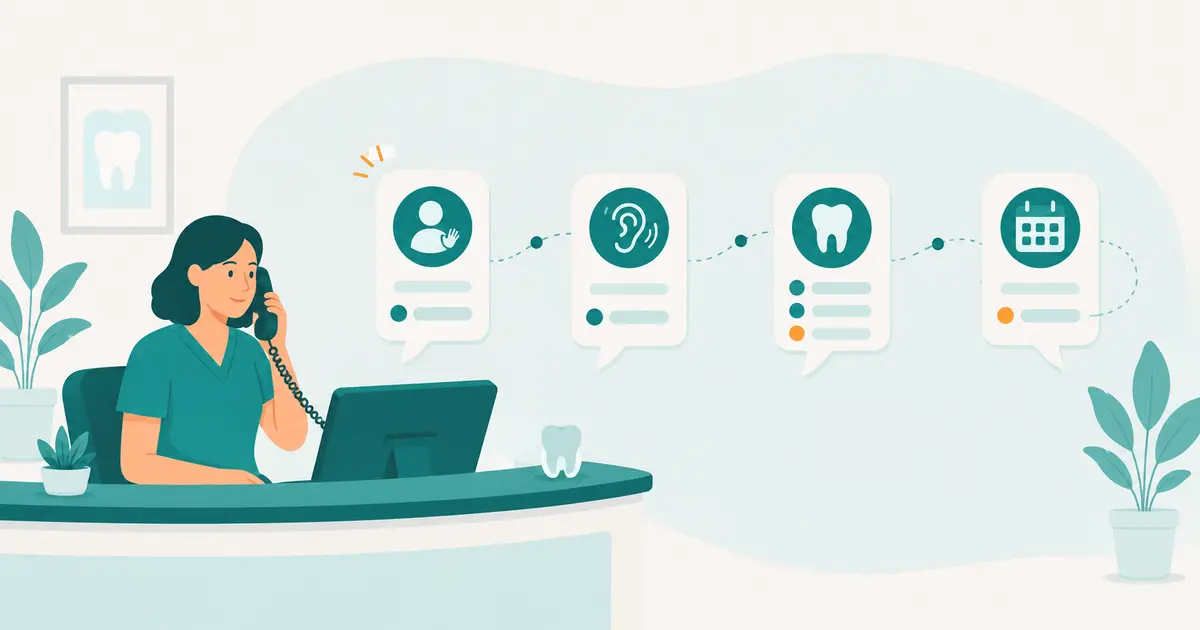
Dental front desk phone scripts are most useful as guides, not rigid speeches. A good script helps a team member open the call, gather the right information, and explain the next step consistently. It should still leave room to listen and respond naturally.
The examples below use fictional names and general situations. Adapt them to the practice's real policies, schedule, services, and approved insurance language.
A simple structure for most calls
Use four parts:
- Welcome: identify the practice and yourself.
- Clarify: ask what the caller would like help with.
- Confirm: repeat the request or key detail in plain language.
- Next step: explain exactly what will happen next and when.
Avoid saying an appointment, insurance benefit, or clinical outcome is confirmed unless the appropriate system or team member has actually confirmed it.
New patient call
“Thank you for calling Green Valley Dental. This is Jordan. How can I help you today?”
If the caller wants to become a patient:
“We'd be glad to help with your request. May I ask what type of visit you're looking for? I can review the next steps and available times with you.”
If the caller begins describing symptoms, listen without interpreting them. Follow the practice's clinical handoff policy rather than suggesting a diagnosis or treatment.
Request to schedule an appointment
“I can help with that request. Are you looking for a routine visit, or is there another reason you'd like the office to know about?”
After checking the actual schedule:
“I have [approved time options] available. Which works best for you?”
If schedule access is unavailable:
“I'll send your request to the scheduling team. What is the best number and time for us to call you back?”
Do not use “You're all set” until the appointment is saved and the normal confirmation process is complete.
Existing patient who wants to change an appointment
“I can help with your request. Let me first locate the appointment. May I have your name and the date or time currently scheduled?”
If another team member must complete the change:
“I found the request. Our scheduling team will review the available options and contact you at [callback number]. The appointment has not been changed yet.”
That final sentence prevents the caller from assuming a cancellation or reschedule is complete.
Insurance question
“We can explain the plans our office works with, but benefits and eligibility depend on your individual plan. May I take the plan information so our team can verify it through the normal process?”
If the office is out of network or the answer is uncertain, use the practice's approved wording. Do not estimate coverage or promise what an insurer will pay.
Price question
“The amount can depend on the visit and what the dentist recommends after an evaluation. I can share our standard office information and arrange for the right team member to explain the available next step.”
If the practice publishes a fixed consultation or exam price, state only the approved amount and what it includes.
Caller asks for clinical advice
“I can't provide clinical advice, but I can make sure the dental team receives your concern. Let me collect the best callback number and follow our office process.”
For a medical emergency, follow the practice's approved emergency wording and direct the caller to emergency services. Do not attempt phone triage unless that is an authorized clinical responsibility.
Returning a missed call
“Hi, this is Jordan from Green Valley Dental returning your call. Is now a good time? I understand you contacted us about [brief neutral request]. How can I help with the next step?”
If only a partial message is available:
“We received your request for a callback, but I don't want to assume the details. Could you tell me what you'd like help with?”
Closing the call
End by stating one concrete next step:
“Your request has been sent to our scheduling team. We expect to call you back by [practice-approved window] at [confirmed number].”
Then ask:
“Is there anything else the office should know before we follow up?”
Make scripts easy to use
Keep the approved versions in one place. Use short headings by call type, highlight the sentences that require exact wording, and identify when staff must hand the conversation to a clinician or manager. Review scripts when office hours, insurance participation, services, or policies change.
For calls staff cannot answer, a structured handoff can preserve the same principles. See What Is a Dental Answering Service and How Does It Work? and How to Handle After-Hours Calls at a Dental Office.