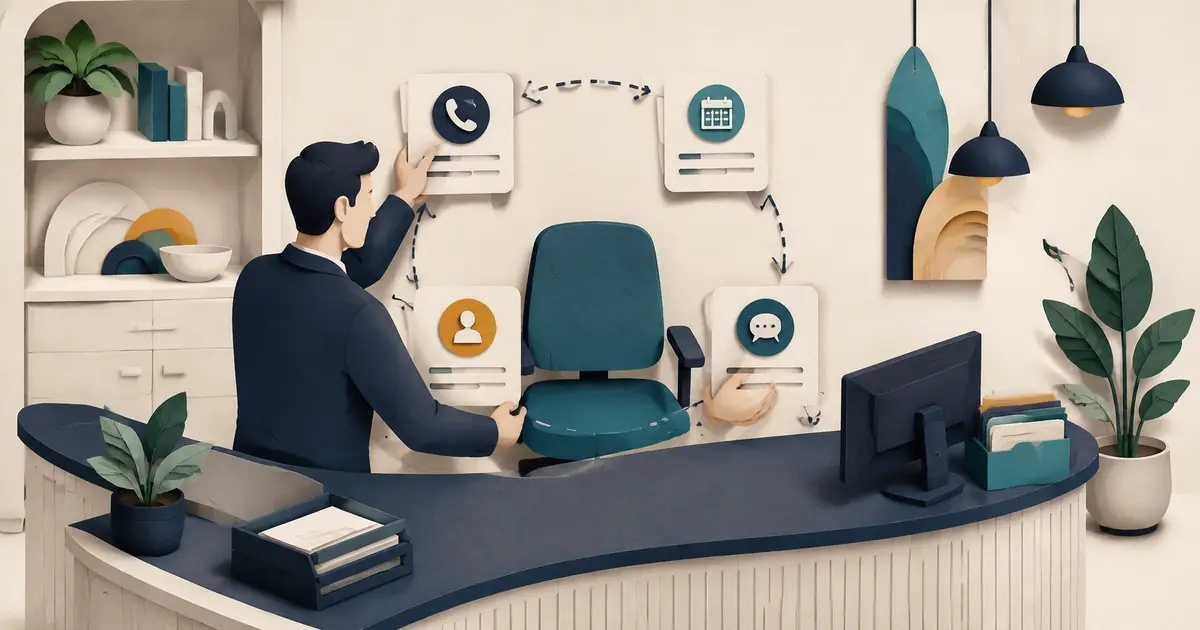
A dental front desk shift handoff should transfer ownership, not merely information. “I left a note” does not tell the next employee which request is still open, when it is due, or whether someone else is already responding.
Use one authoritative queue and a brief spoken review for exceptions. The outgoing employee remains responsible until the incoming owner explicitly accepts the item.
Prepare the queue before the handoff
Ten to fifteen minutes before shift change, reconcile call logs, voicemail, handoff records, and personal reminders. Move every valid open item into the approved queue. Remove duplicates only after linking them to the surviving record.
Each open call needs:
- caller or patient identifier permitted by office policy;
- callback number and whether it was confirmed;
- concise administrative request;
- source and received time;
- current owner and next owner;
- next action and due time;
- attempts already made;
- privacy or communication restriction;
- escalation state;
- clear closure evidence.
The front-desk daily checklist can reserve time for this reconciliation. The front-desk workflow guide helps define one system of record.
Use a five-part verbal handoff
Speak only the context needed to continue the work, and use an appropriate private setting.
- What is open? “Three callbacks remain.”
- What is due first? “This request affects today's office operations and is due by 3:00.”
- What has happened? “One attempt was made at 1:20; no message was left under preference.”
- What is the safe next step? “Return the call using the confirmed number and approved script.”
- Who accepts it? The incoming employee repeats the item and marks acceptance.
Do not retell a full call when the record already contains it. The verbal step should expose priority, uncertainty, and exceptions.
Escalate exceptions separately
Use a short exception table:
| Exception | Required handoff |
|---|---|
| Caller described a possible clinical concern | Route under the practice's clinical escalation protocol; staff do not diagnose |
| Identity or representative authority is uncertain | Pause sensitive disclosure and send to an authorized employee |
| Two employees may be responding | Freeze outreach until the authoritative owner is confirmed |
| Callback number is unconfirmed | Apply the callback-verification procedure before disclosure |
| Request is already overdue | Notify the manager and set a new owned action |
| Technology failed | Preserve the event and activate the tested fallback |
The callback-time standard should define due time by request class, not promise an arbitrary universal response.
Protect minimum necessary context
HHS minimum-necessary guidance supports reasonable efforts to limit certain uses, disclosures, and requests for protected health information to what is needed, while recognizing exceptions. The practice should apply its own policies and qualified guidance to handoff records.
Avoid diagnoses, speculation, unrelated history, or sensitive details that the next owner does not need. Use approved identifiers and access controls. Never move patient information into a personal text thread for convenience.
Reconcile at close
The final shift should compare the call source, callback queue, and closed records. For every unresolved item, record why it remains open, who owns it next, and when it will be reviewed. A message sent is not closure unless the defined outcome is “message sent.”
Track a small set of operational measures: open items at handoff, items accepted without an owner, duplicate follow-ups, overdue items, and items reopened because closure evidence was incomplete. Use the results to fix the process rather than rank individuals.
Missed Calls Dental boundary
Missed Calls Dental can support approved request capture and office handoffs, but staff retain responsibility for acceptance, prioritization, clinical escalation, appointment decisions, and closure. It does not diagnose or verify insurance. SMS is separate and readiness-gated.
Daniel Reed is an editorial pen name. This article was reviewed for accuracy and alignment with Missed Calls Dental product information.