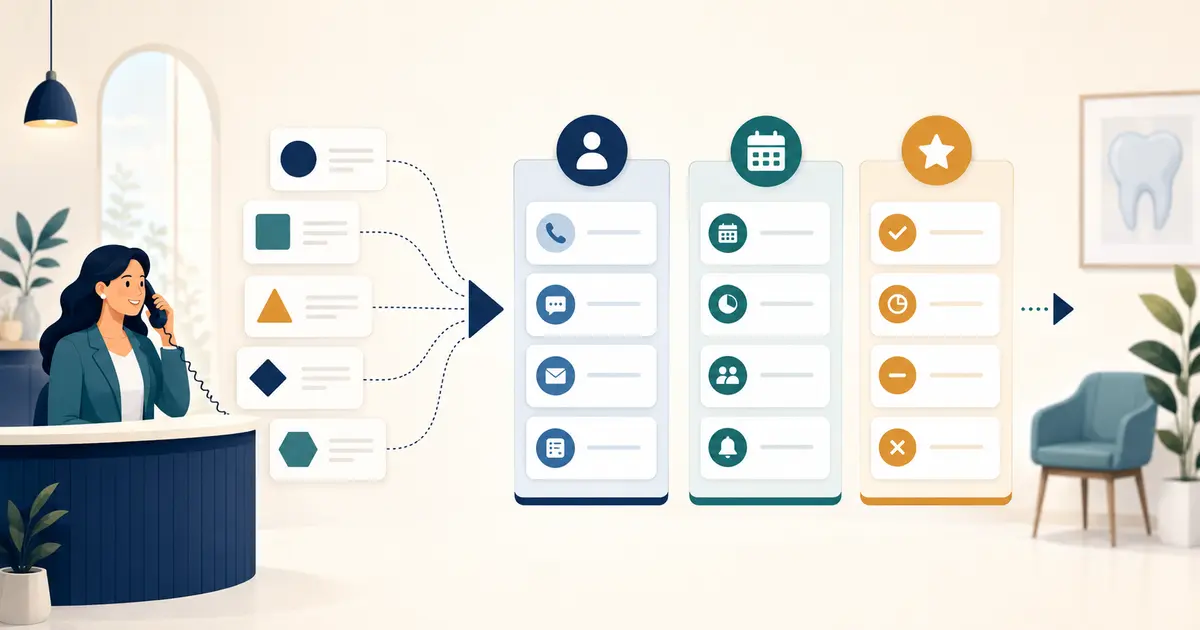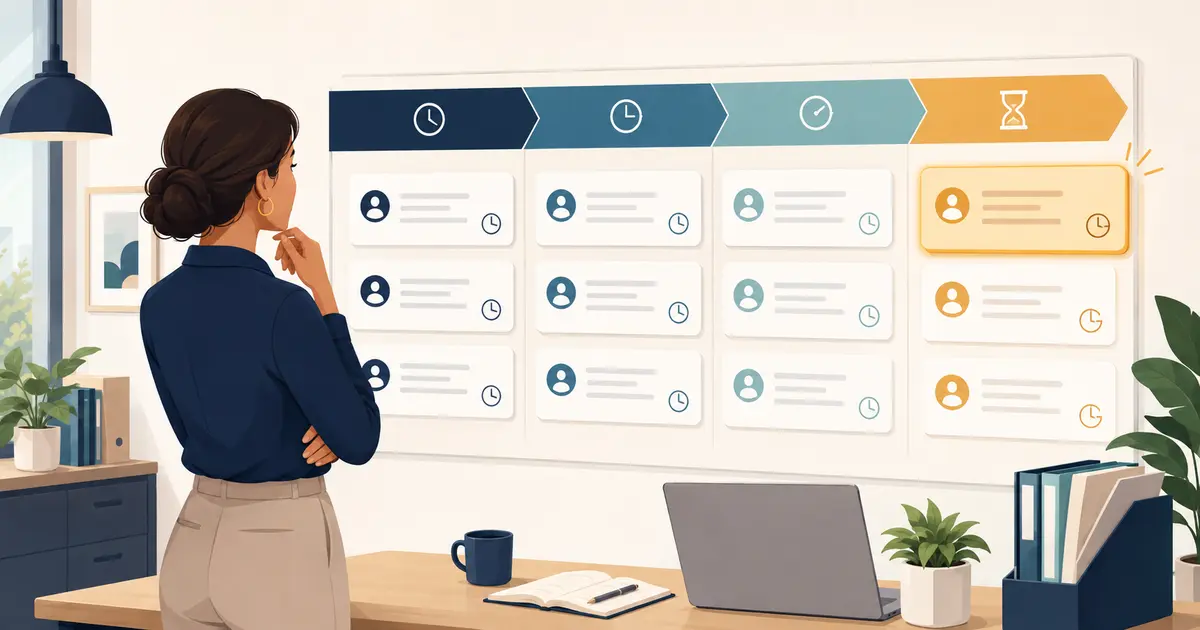
A dental call queue aging report should answer: Which caller requests are still open, how long have they been waiting, and who owns the next action? It is an operations report, not a count of unanswered rings and not a substitute for reading urgent requests.
Define an open item precisely
Choose the event that opens work. It might be a captured callback request, a transferred request returned to the front desk, or a staff-created follow-up. Then define closure with equal care: the practice completed the promised action, recorded the result, and no next step remains.
An attempted callback should not automatically close an item. Record contact outcome separately with dental call disposition codes. If another attempt or another team member's answer is required, the work remains open with a next-action time.
Use one aging clock
Document whether age is measured in elapsed hours or business hours. If business hours are used, define holidays, lunch closures, weekends, and after-hours intake. Store the original received timestamp so a reviewer can reconstruct the calculation.
Useful age bands should trigger different action, for example:
| Age | Review action |
|---|---|
| Within target | Work in normal priority order |
| Near target | Confirm owner and next action |
| Past target | Escalate and explain the delay |
| Severely aged | Manager reconciles immediately |
Set the bands from the practice's documented callback-time standard, not from a vendor benchmark presented without context.
Show ownership and blockers
Every open row needs an accountable owner, last action, next action, and due time. Add a blocker field with controlled choices such as awaiting caller response, awaiting clinical review, awaiting insurance information, or routing error. Keep notes factual and limited to what the team needs.
HHS describes the minimum-necessary standard as requiring reasonable efforts to limit uses, disclosures, and requests for protected health information. The aging view should therefore avoid exposing full narratives when a request type, owner, and status are sufficient.
Review the tail before the average
An average can look healthy while a few callers wait far too long. Start the daily review with the oldest open item, unowned items, repeatedly reassigned items, and anything beyond policy. Then look at median age, age-band distribution, and volume by intake period.
Use provider analytics only for the events they actually observe. A call dashboard may describe answer and connection behavior, while the practice's workflow system describes whether follow-up work is complete. Do not merge those meanings silently.
Reconcile the queue each day
At opening, assign anything captured after hours. During the day, use the dental office call queue rules to control ownership and escalation. Before closing, reconcile unowned, overdue, and blocked work and prepare the front desk shift handoff for anything still open.
Sample a few closed items weekly. Verify that the recorded closure has evidence and that staff did not close work merely to improve the metric. A good aging report makes neglected requests visible; it should never pressure staff to hide them.
Missed Calls Dental boundary
Missed Calls Dental can capture a caller's administrative request and make it available for practice follow-up within its supported workflow. It does not set the practice's callback target, assign clinical urgency, verify that a patient was contacted, or independently close work. The practice owns prioritization, documentation, action, and reconciliation. SMS is separate and readiness-gated.
Amelia Brooks is an editorial pen name. This article was reviewed for accuracy and alignment with Missed Calls Dental product information.