A dental call overflow service is worth considering when several calls regularly arrive at the same time, the front desk cannot answer them without neglecting patients in the office, and missed-call follow-up is no longer recovering those requests reliably.
Do not add coverage because one hectic afternoon felt uncomfortable. Measure when calls collide, what happens to the unanswered calls, and whether the problem comes from staffing, routing, or an avoidable workflow gap. The right solution may be backup coverage, a schedule change, a simpler phone process, or a combination of all three.
What dental call overflow coverage actually does
Overflow coverage handles a call only when the primary office path cannot. It is different from replacing the front desk or sending every call to an outside service.
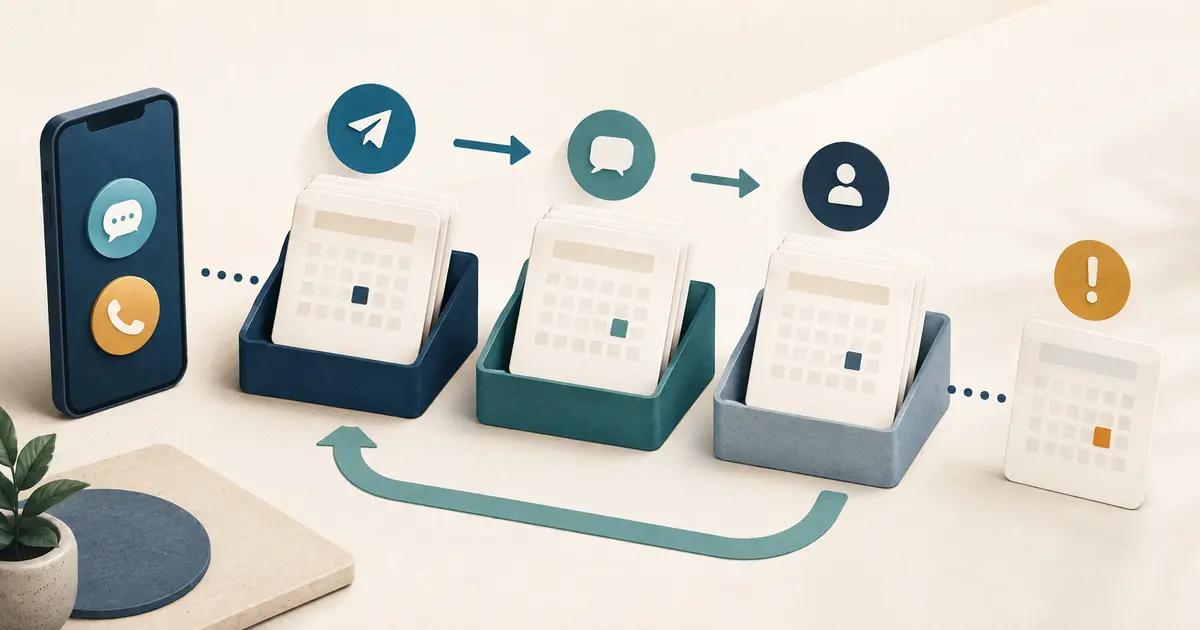
A typical daytime flow is:
- The office phone rings first.
- The front desk answers when available.
- A defined condition—such as no answer, busy lines, or simultaneous calls—sends the call to a backup path.
- The backup path captures the request or transfers the call according to approved rules.
- The office receives a clear handoff and owns the next action.
That distinction matters. A practice may need overflow support for several short periods each day without needing full-time outsourced answering. The goal is to protect the moments when demand exceeds realistic staff capacity, not to add another system that competes with the front desk.
For a broader explanation of the service category, read what a dental answering service is and how it works.
Measure call collisions, not just total call volume
A daily total can hide the real problem. Forty calls spread evenly through a day may be manageable. The same forty calls concentrated around opening, lunch, and closing may produce repeated misses.
Review call activity in short time blocks and track:
- calls offered to the office;
- calls answered by staff;
- calls that reached busy, no-answer, or another fallback;
- times when two or more calls overlapped;
- calls returned the same day;
- callers who tried more than once before reaching someone;
- requests still unresolved at closing;
- the outcome of each recovered request.
The dental call tracking metrics guide explains how to define these measures without turning the dashboard into a list of vanity numbers.
There is no universal missed-call percentage or number of simultaneous calls that proves every practice needs overflow coverage. A small specialty office, a multi-location group, and a high-volume general practice have different staffing and call patterns. Compare the demand with your own service standard and the work your team can complete consistently.
Five signs the problem is more than an occasional rush
1. The same windows fail repeatedly
Look for a pattern across several normal weeks. If unanswered calls cluster around opening, staff handoffs, lunch coverage, or the end of the day, the practice has a predictable capacity gap.
A predictable gap is easier to solve than random noise. You can adjust breaks, assign a backup person, change routing by time, or cover only those windows.
2. Callback work spills into the next business day
A missed call is not automatically lost if the team returns it promptly and documents the outcome. But when yesterday's queue survives into today's opening rush, staff are working from behind.
Track whether each request was reached, whether a voicemail was left, and whether the caller still needs action. The guide to returning missed patient calls provides a practical ownership and documentation process.
3. Phone coverage competes with patients standing at the desk
Front desk employees should not have to choose repeatedly between a ringing line and a patient who is checking in, checking out, or asking for help in person. Occasional overlap is normal. A recurring conflict suggests the coverage model assumes one person can perform two time-sensitive jobs at once.
Overflow support can protect the interruption, but first confirm that responsibilities, break coverage, and backup roles are clear. Technology cannot repair an undefined staffing process.
4. Promotions, reminders, or seasonal demand create predictable spikes
Some call surges follow a known event: a marketing campaign, a holiday closure, a reminder batch, a weather disruption, or a return from vacation. Temporary or time-based coverage may fit better than a permanent all-day service.
Record the event with the call data. Otherwise a short spike can be mistaken for a permanent staffing problem.
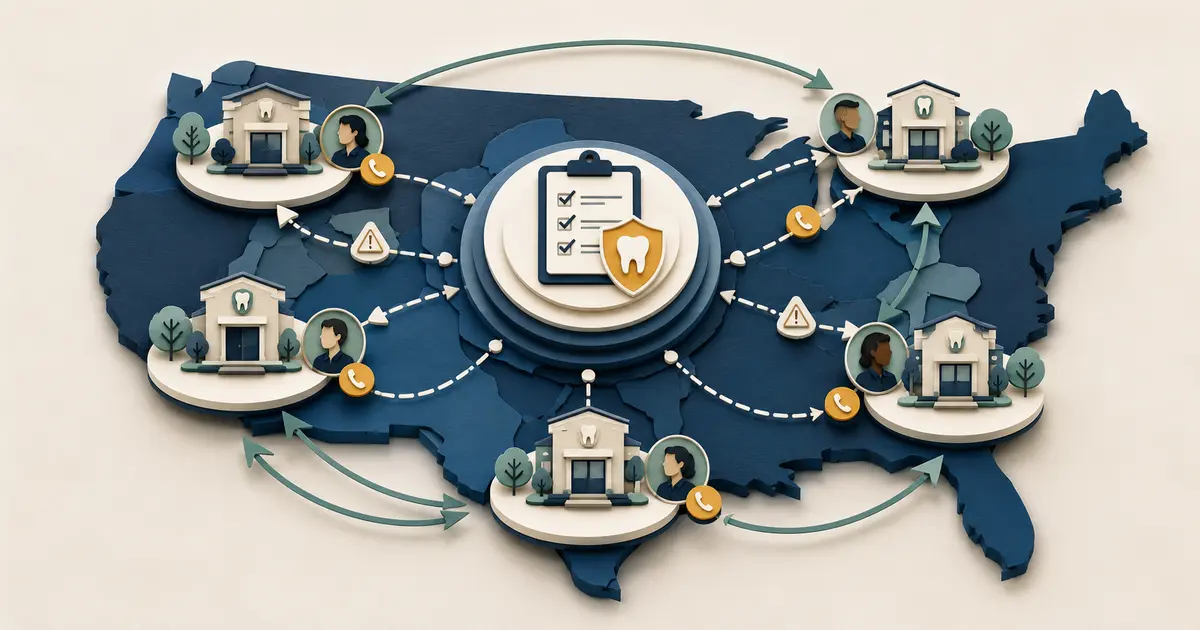
5. Multiple locations create unclear ownership
For groups with several locations, the first question is not only who answers. It is where the request belongs and who owns it after the call.
Before adding an overflow answering service for dentists, define how the service identifies the correct location, which office facts it may use, where the handoff appears, and who resolves cross-location questions. A shared overflow path without location ownership can create faster conversations but slower follow-up.
Run a one-week overflow audit
Use one representative week that does not contain an unusual closure or one-time event. Review each coverage window with the front desk.
| Question | Evidence to collect | Decision it supports |
|---|---|---|
| When do calls collide? | Time of each offered, answered, and missed call | Exact hours that may need backup |
| What work is interrupted? | Check-in, checkout, insurance, scheduling, or other front desk duties | Staffing or workflow changes |
| What happens after a miss? | Callback time, attempts, outcome, and owner | Whether recovery is already working |
| Why do callers contact the office? | Neutral request categories | What backup coverage must handle |
| Where do handoffs fail? | Missing number, location, reason, or owner | Information the new path must capture |
At the end of the week, separate three causes:
- Capacity: more simultaneous calls than assigned staff can answer.
- Process: unclear responsibility, inconsistent breaks, or scattered callback queues.
- Routing: calls do not reach the right available person or fallback.
Overflow coverage is strongest when capacity is the recurring cause and the handoff process is already clear. Fix basic process and routing problems before paying another service to inherit them.
Compare the practical coverage options
Internal backup coverage
Another trained employee answers when the front desk is occupied. This preserves office knowledge and direct control, but the backup person needs a realistic workload and clear trigger. A name on a policy does not create availability.
Voicemail plus a disciplined callback queue
Voicemail may be sufficient when call volume is low and the office reliably reviews messages. It costs callers more effort and can produce incomplete requests, so measure completion rather than assuming every voicemail becomes a callback.
A live dental office overflow answering service
Human operators can manage varied conversations, but quality depends on current scripts, training, staffing, and the completeness of the handoff. Ask what happens when an operator does not know an answer and how quickly the office receives the request.
AI call answering
AI can capture repeatable requests and use approved office facts consistently. Its judgment boundaries must remain narrow: it should not diagnose, provide clinical triage, promise appointment availability, or guess about insurance benefits.
A hybrid path
A practice can use different coverage for different windows or call types. Hybrid routing may fit a complex operation, but every additional branch needs a trigger, fallback, and owner. If staff cannot explain the flow simply, the design is too complicated.
Price the handoff, not only the answered call
Quotes may use minutes, calls, agents, included usage, overages, or add-ons. Normalize each option against the same call sample and coverage hours. The dental answering service cost guide provides a worksheet for comparing pricing structures.
Also calculate the office work that remains after the call. A low-cost service can be expensive if staff must listen to recordings, reconcile duplicate messages, identify the correct location, or call patients again to learn why they contacted the practice.
Require each option to produce a usable handoff with:
- caller name when available;
- verified callback number;
- intended location;
- request in neutral language;
- unanswered question;
- source and time of contact;
- assigned office owner and next action.
Pilot one narrow coverage window
Do not redirect every daytime call on the first day. Start with the window where the audit found the clearest recurring collision.
Test routine requests, unknown questions, wrong numbers, interruptions, failed handoffs, and calls that should stay with the office. Then review:
- how many overflow calls were captured;
- whether requests were complete enough to act on;
- whether staff followed up on time;
- whether duplicate work increased or decreased;
- whether callers understood who would contact them next;
- whether the front desk experienced fewer avoidable interruptions.
Expand only if the complete workflow improves—not merely the count labeled “answered.”
Where Missed Calls Dental fits
Missed Calls Dental is designed for eligible missed, busy, overflow, and after-hours calls that a dental practice forwards to its MCD AI number. AI Answering can use approved common office information, capture the caller's request, and create a transcript and summary in Workspace for front desk follow-up.
It does not replace the office phone system, book appointments, diagnose, provide clinical triage, or confirm individual insurance benefits. The practice keeps its existing office number and controls when forwarding is active. The dental team reviews the handoff and decides the next step.