A dental office softphone policy should be finished before staff depend on laptops or mobile devices for patient calls. The policy needs to identify approved devices, accounts, networks, physical locations, emergency-calling behavior, privacy controls, and the support owner for each configuration.
Define the approved operating set
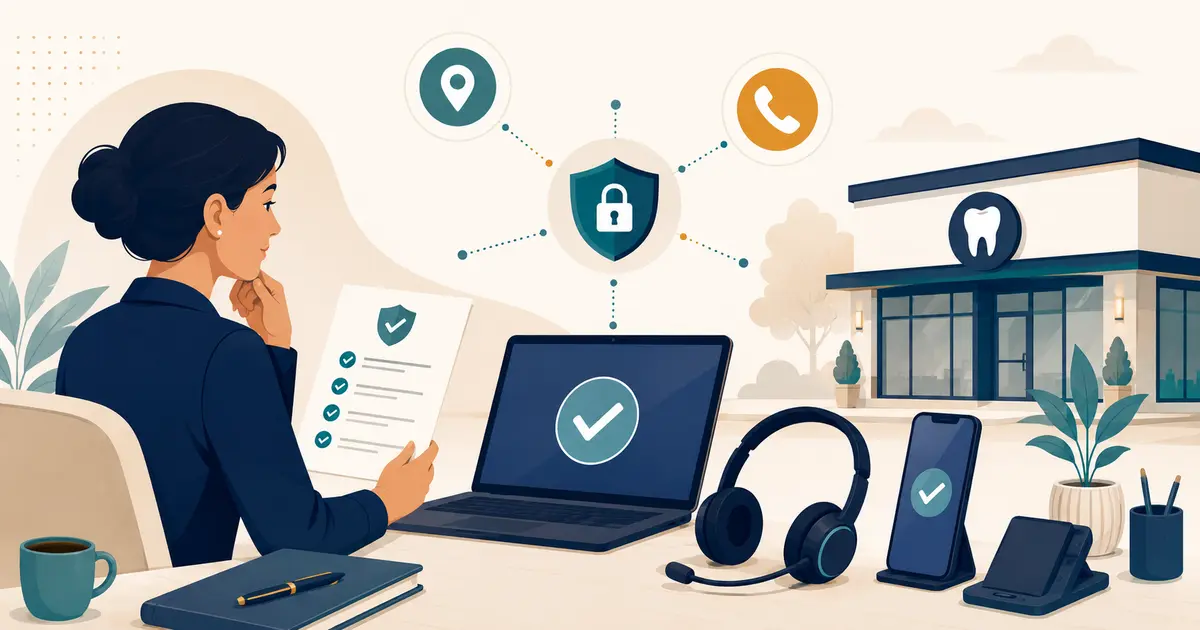
Create a short matrix of roles, devices, applications, operating systems, and locations. A configuration is approved only when the practice can maintain it and reproduce its settings. Do not let “the app installed successfully” become the entire standard.
For each approved combination, record:
- whether the device is practice-owned or personally owned;
- the required application and minimum supported version;
- the permitted office, remote, and mobile locations;
- required screen lock, encryption, updates, and multifactor authentication;
- whether calls may use Wi-Fi, wired service, or cellular data;
- the headset and microphone model tested; and
- the person responsible for support and removal.
If personal devices are allowed, align this list with the front desk personal-device policy. NIST treats bring-your-own-device security as a lifecycle issue, including deployment, use, and disposal—not a one-time login choice.
Validate the network and audio path
Test every approved combination during realistic office load. Place inbound and outbound calls, hold and resume, transfer, mute, reconnect after a network change, and confirm that the correct caller identity appears. Listen for one-way audio, clipping, delay, or dropped calls.
Use the dental office VoIP quality test to establish a repeatable evidence set. Provider diagnostics can help locate media or signaling problems, but provider-specific metrics should not be assumed to describe every carrier or application.
Resolve emergency calling before use
A movable softphone can make location assumptions dangerous. Document whether the application permits emergency calls, how dispatchable location is supplied or updated, what happens when the user changes locations, and what notification or callback behavior applies.
The FCC's multi-line telephone system requirements address direct dialing, notifications, and dispatchable-location obligations in covered circumstances. Have the provider and qualified counsel confirm how the rules apply to the practice and configuration. Run the dental office E911 setup checklist for every location; do not place an unannounced live emergency test call.
Control privacy and access
Require individual accounts, least-privilege roles, approved sign-in recovery, and prompt access removal. Prevent call details from appearing on lock screens. Prohibit local screenshots, downloads, address-book synchronization, or recordings unless the practice has deliberately approved and governed them.
Set expectations for where calls may be taken. A functional softphone in a waiting room, shared home space, or public location can still expose conversations. Pair technical controls with the dental phone and voicemail privacy checklist.
Define failure and support rules
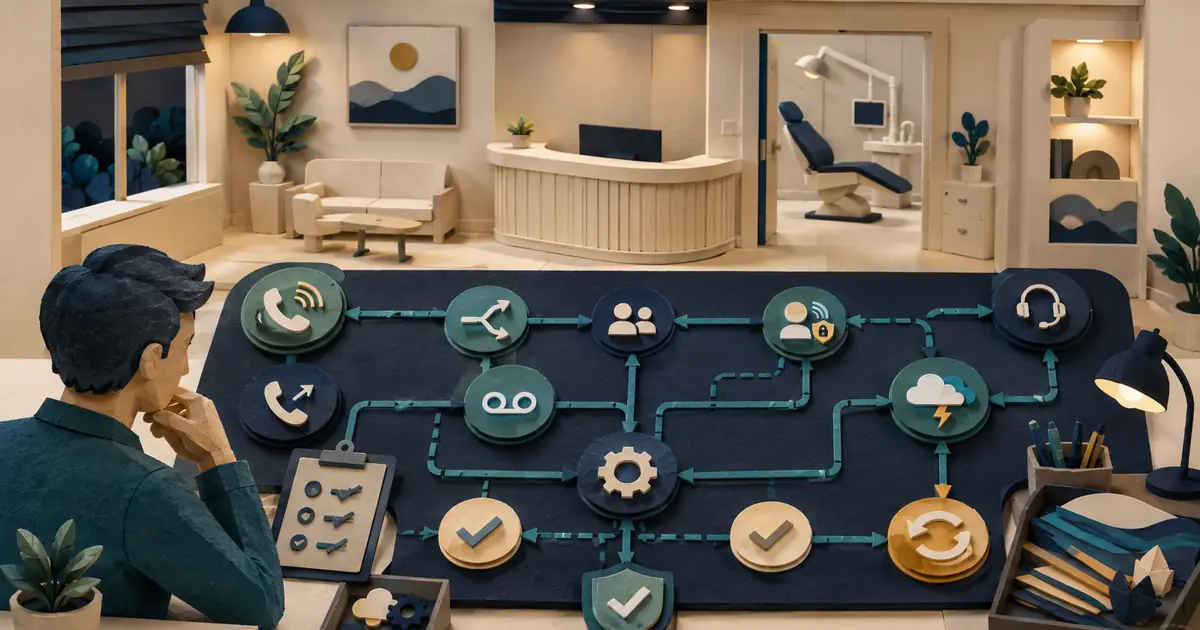
Staff need to know when to stop troubleshooting and switch paths. List the fallback device or number, the evidence to capture, the support contact, the escalation threshold, and how unresolved patient requests will be reconciled.
Review the approved matrix when devices, apps, networks, office locations, or emergency-calling configurations change. Retest rather than assuming a previously approved setup still behaves the same way.
Missed Calls Dental boundary
Missed Calls Dental may be used as a configured call destination under the product's supported setup. It does not configure or manage the practice's softphones, networks, devices, emergency calling, or device-security policy. It does not independently book or change appointments. The practice owns technical approval, staff use, privacy review, and fallback operations. SMS is separate and readiness-gated.
Julian Hayes is an editorial pen name. This article was reviewed for accuracy and alignment with Missed Calls Dental product information.