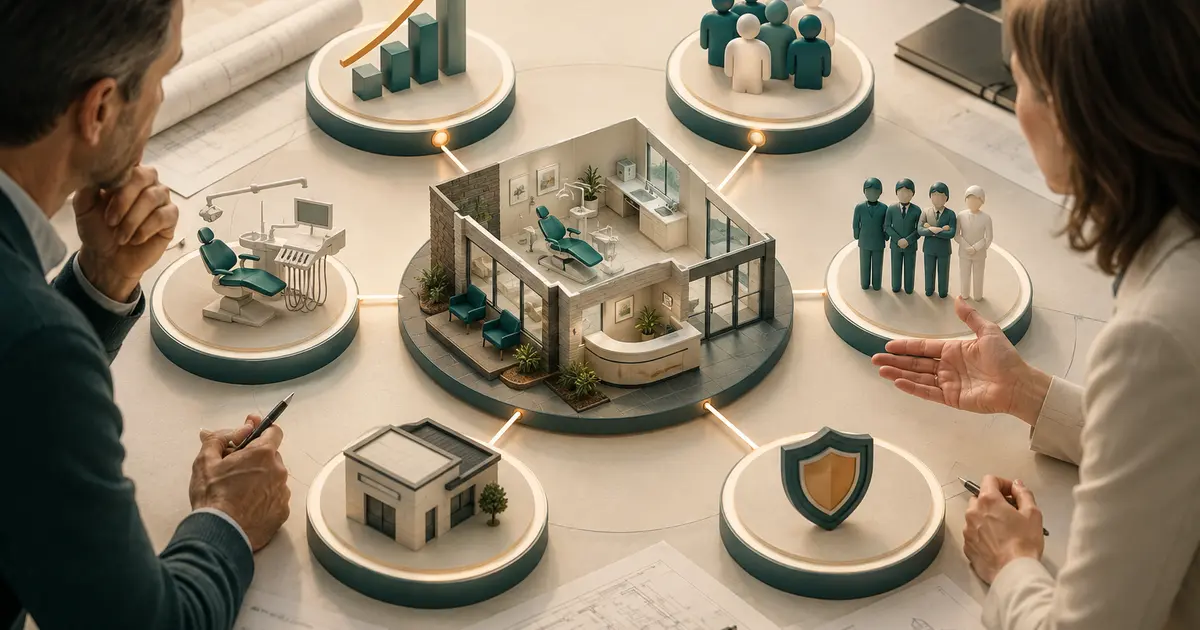
A dental office lease controls far more than monthly rent. It can determine whether dental use is permitted, who pays for specialized construction, when rent begins, whether equipment can be installed, how the practice can expand or sell, and what the owner still owes after leaving.
Do not sign a letter of intent or lease based only on asking rent and square footage. A dental attorney, architect, engineers, insurance adviser, accountant, and other qualified professionals should review their respective parts before the commitment becomes binding.
Confirm the premises can support dental use
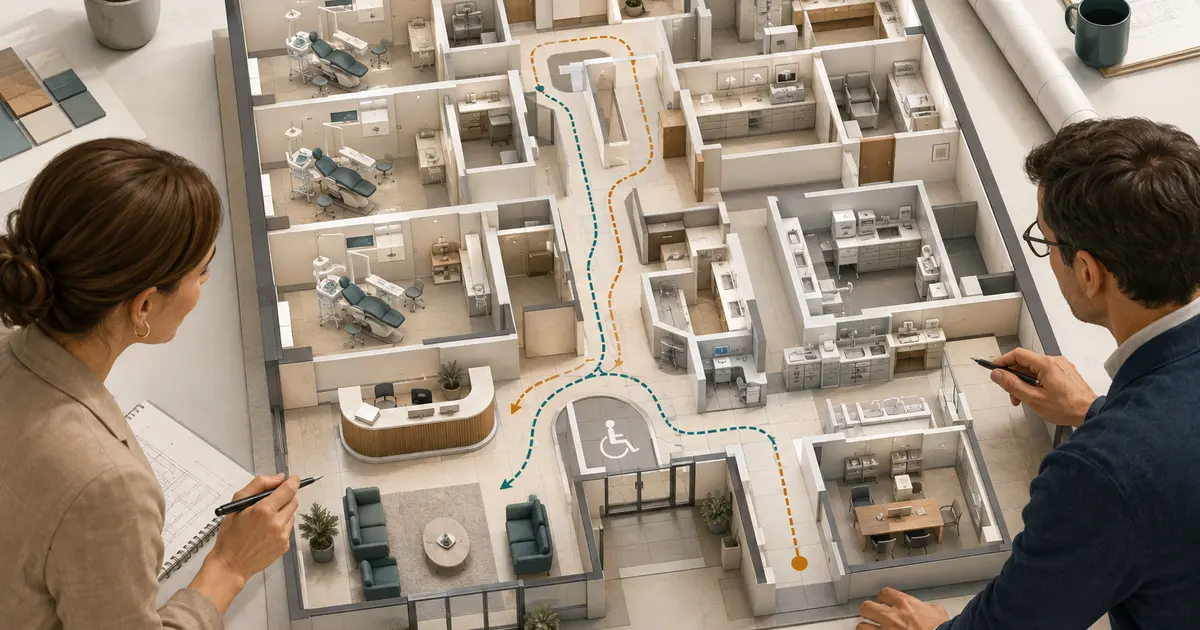
Start with evidence about the site, not contract language. Obtain a measured test fit, zoning and permitted-use information, building rules, structural conditions, electrical capacity, water and drainage routes, HVAC and ventilation data, roof or exterior restrictions, internet availability, fire and life-safety conditions, and accessibility review.
Identify requirements for dental plumbing, vacuum, compressed air, imaging equipment, shielding where applicable, sterilization equipment, laboratory functions, regulated waste, signage, after-hours access, deliveries, and emergency power or backup systems. Exact needs depend on the practice and selected equipment.
The dental office opening checklist helps connect premises tests with permitting, equipment, utilities, hiring, and launch dependencies. Attach the approved premises description and plan exhibit when counsel recommends it; an incorrect suite outline can create a dispute even if the narrative sounds right.
Review the permitted-use clause word by word
A narrow clause such as “general dental office” may not clearly permit every planned specialty, imaging service, laboratory task, sedation-related activity, retail item, training use, or future associate. An overly broad clause may create licensing, insurance, or landlord concerns.
The use provision should match the lawful operating model and preserve reasonable evolution. Review:
- current and anticipated dental services;
- administrative and educational activities;
- imaging and laboratory functions;
- sale of approved products where applicable;
- hours, staffing, and after-hours access;
- assignment to a buyer or related entity;
- compliance responsibility when laws or codes change.
Also examine exclusivity and prohibited-use language. A useful exclusivity clause must define the protected use, building or center, exceptions, enforcement, and remedy. Do not assume the landlord has promised not to lease next door to a competing office unless the agreement says so.
Tie construction duties to dates and money
Dental build-outs are specialized. The lease should identify the landlord work, tenant work, approval process, plans and specifications, construction standards, contractors, permits, inspection, insurance, access, change orders, allowance, reimbursement conditions, and ownership of improvements.
Create a responsibility schedule:
| Item | Design owner | Installation owner | Payment source | Approval evidence | Maintenance owner |
|---|---|---|---|---|---|
| Main utilities to premises | |||||
| Dental plumbing and equipment connections | |||||
| HVAC capacity and distribution | |||||
| Electrical service and panels | |||||
| Accessibility changes | |||||
| Fire/life-safety modifications | |||||
| Data, phone, and security pathways |
Clarify whether the allowance is paid up front, through draws, or only after completion and lien waivers. Determine who funds the gap before reimbursement and what costs qualify.
Rent commencement should relate to defined delivery and construction events, not only a calendar date the practice cannot control. Address delays caused by landlord work, permits, utilities, force majeure, tenant decisions, and other parties. A “free rent” period is not valuable if the premises are unusable throughout it.
Match lease milestones to the lender and construction agreements. A draw may require executed leases, permits, lien waivers, inspections, or borrower equity before funding. Misaligned documents can leave the tenant owing rent and contractor payments while financing remains unavailable.
Calculate total occupancy cost
Model every required payment over the initial term and each option period:
- base rent and scheduled increases;
- common-area or operating expenses;
- real estate taxes and insurance pass-throughs;
- utilities and after-hours HVAC;
- management or administrative fees;
- parking, signage, storage, and access charges;
- maintenance, repairs, replacements, and service contracts;
- construction debt or allowance repayment;
- security deposit and letters of credit;
- restoration and surrender costs.
Check how the tenant's share is calculated, what expenses are excluded, whether capital items can be passed through, whether there is a controllable-expense cap, and what audit rights exist. Review historical statements, but do not assume they predict future charges.
Put occupancy payments into the dental practice business plan by actual due date. Include rent and operating charges during design, construction, and credentialing delays, not only after opening.
Protect continuity and transferability
A dental location accumulates patient familiarity, staff routines, equipment, and phone and directory references. Review the initial term and renewal options against the useful life of the build-out and financing.
For each option, confirm notice window, delivery method, rent-setting method, conditions, and whether a minor prior default can eliminate the right. Calendar multiple reminders well before the earliest notice date.
Assignment and change-of-control language matters when selling the practice, adding a partner, reorganizing the entity, or bringing in a successor. Review landlord consent standards, fees, financial requirements, recapture rights, profit sharing, release of the original tenant and guarantor, and permitted transfers to affiliates or qualified buyers.
Do not assume assignment releases a personal guarantee. A seller may remain liable for years after transferring the practice unless the landlord expressly releases the obligation.
The dental practice due diligence checklist explains why lease term, transfer rights, location stability, and facility condition need independent review in a transaction.
Allocate repair, casualty, and compliance risk
Define responsibility for roof, structure, foundation, exterior, plumbing mains, electrical service, HVAC equipment, interior systems, dental equipment, and code upgrades. “Tenant maintains the premises” may shift much more risk than expected.
Review casualty and condemnation provisions: rent abatement, restoration decisions, termination rights, insurance proceeds, rebuild deadlines, access, and treatment of specialized improvements. Determine whether the practice can operate elsewhere and what property or business-interruption insurance is required.
Accessibility and code obligations may be allocated by contract even when public-law responsibilities also apply. The U.S. Access Board publishes federal accessibility standards, but qualified local professionals must evaluate the actual building, alterations, and jurisdiction.
Environmental and hazardous-material clauses need dental-specific review. Identify permitted materials, storage, disposal, spill response, preexisting conditions, indemnities, and surrender obligations without accepting liability for unrelated contamination.
Read the default, guarantee, and exit clauses
List every tenant default, notice, cure period, landlord remedy, late charge, interest provision, acceleration right, lien, self-help right, and cross-default. Confirm that notices go to current addresses and counsel where appropriate.
Personal guarantees deserve separate negotiation. Review amount, duration, burn-off, renewal treatment, assignment, death or disability, spouse involvement, and continuing liability after surrender. Model the owner's exposure in a downside case rather than treating the guarantee as boilerplate.
At expiration or early termination, determine which cabling, plumbing, shielding, fixtures, signage, equipment, and improvements must be removed and what condition must be restored. Specialized removal can be expensive. Photographs and a written delivery-condition record reduce later disputes.
Close with a conditions checklist
Before signature, maintain a closing list for zoning/use confirmation, test fit, professional reports, financing approval, entity formation, insurance, landlord approvals, construction exhibit, allowance evidence, permits, utility verification, title or lender matters where applicable, and execution authority.
Every open item should be resolved, made an express condition, or accepted knowingly with a named risk owner. Oral promises should be placed in the signed documents when counsel advises; an email from a leasing agent may not change an integrated lease.
Store the final lease, amendments, exhibits, notices, insurance certificates, construction approvals, and option calendar in a controlled location. Summarize duties for operations, but always preserve the executed agreement as the authority.
Assign a lease administrator after opening. That person should track notices, insurance evidence, operating-expense statements, repair duties, option dates, and landlord approvals. A carefully negotiated right has little value when its notice window passes unnoticed.
Review that calendar during every annual planning cycle and ownership transition.
A suitable space can still become a bad business commitment through vague construction terms, uncontrolled costs, or weak transfer rights. The lease review should prove that the premises, economics, and contract support the same practice plan.