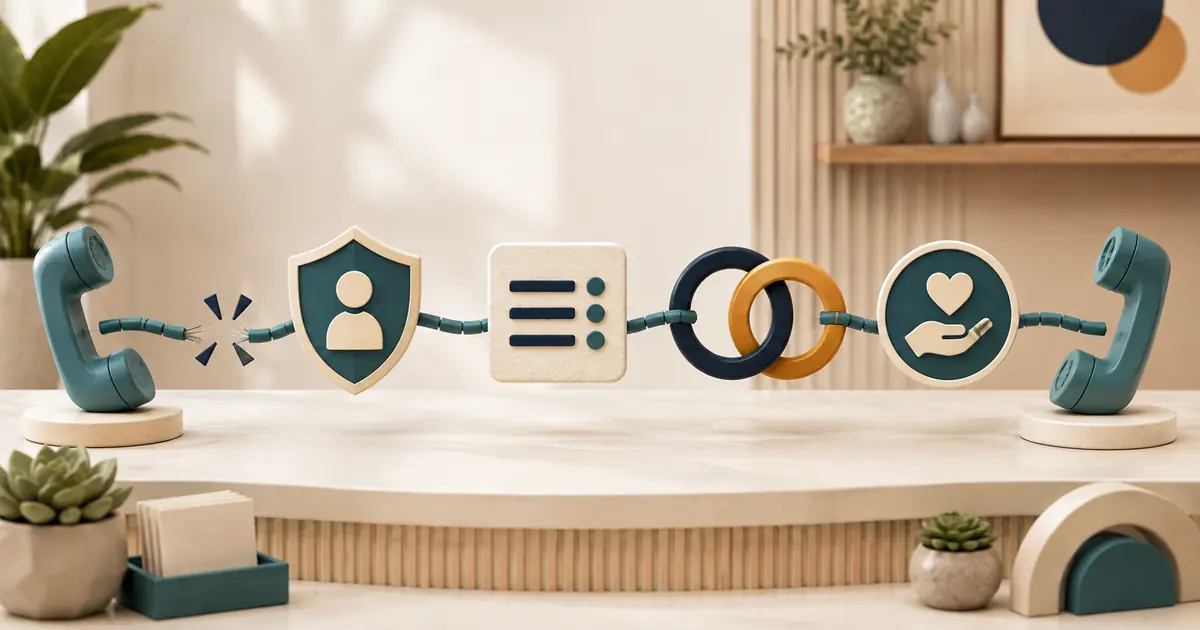
A dental dropped call recovery script helps the front desk reconnect after an unexpected disconnect without disclosing information to the wrong person or creating duplicate work. The first question is not “Where were we?” It is whether the office can safely identify the person who answered.
Decide who calls back
If the caller provided a callback number and permission, use that preference. Otherwise, follow the office's approved callback-number and identity rules. Do not assume the displayed number is correct, private, or owned by the caller.
When the disconnection appears to affect many calls, use the phone outage plan and manager escalation rather than having every employee improvise from a personal phone.
Use a privacy-safe opening
When someone answers:
“Hello, this is [name] from [office name], returning a call that was disconnected. May I confirm who I am speaking with?”
Do not state a patient name, appointment type, treatment, balance, insurance question, or reason for the prior call before verification. If voicemail answers, leave only the practice's approved generic callback message.
Resume with a controlled recap
After the appropriate verification:
“We were discussing your request for the office to review [brief neutral description]. I have not marked anything confirmed. Would you like to continue from there?”
Ask the caller to correct the recap. Distinguish information already captured from an action the office still needs to complete. Do not promise that an appointment, cancellation, reschedule, benefit, or clinical decision was completed before the call dropped.
If the caller starts over, listen for changed information rather than forcing the prior version. Record the source and time of any correction.
Prevent duplicate work
Search for the original call or request before creating another task. Link the reconnect attempt, update the existing owner and due time, and preserve both call events. If the system creates a second record automatically, use the front desk request-ownership workflow rather than deleting one without checking.
Keep the recovery distinct from a call-transfer troubleshooting process: a dropped call may involve carrier, device, signal, or caller action rather than an internal transfer.
Close with clear status
At the end, state what the office captured and what happens next:
“I have recorded your request for the team to review. This is not yet a confirmed schedule change. The office will follow up through the contact method we verified.”
Document the drop time, callback attempt, verified person, resumed request, changes, next owner, due time, and final status. Escalate repeated drops or audio symptoms through the phone quality process.
HHS privacy guidance supports reasonable safeguards and minimum-necessary disclosure. Applied here, that means a generic callback opening, verification before the recap, and only the information required to continue the administrative request.