A dental shared headset cleaning checklist defines who uses each headset, how it is cleaned under manufacturer instructions, what damage removes it from service, and how the team confirms usable audio. It applies to front desk work areas, not clinical instrument reprocessing.
Prefer individual assignment when practical
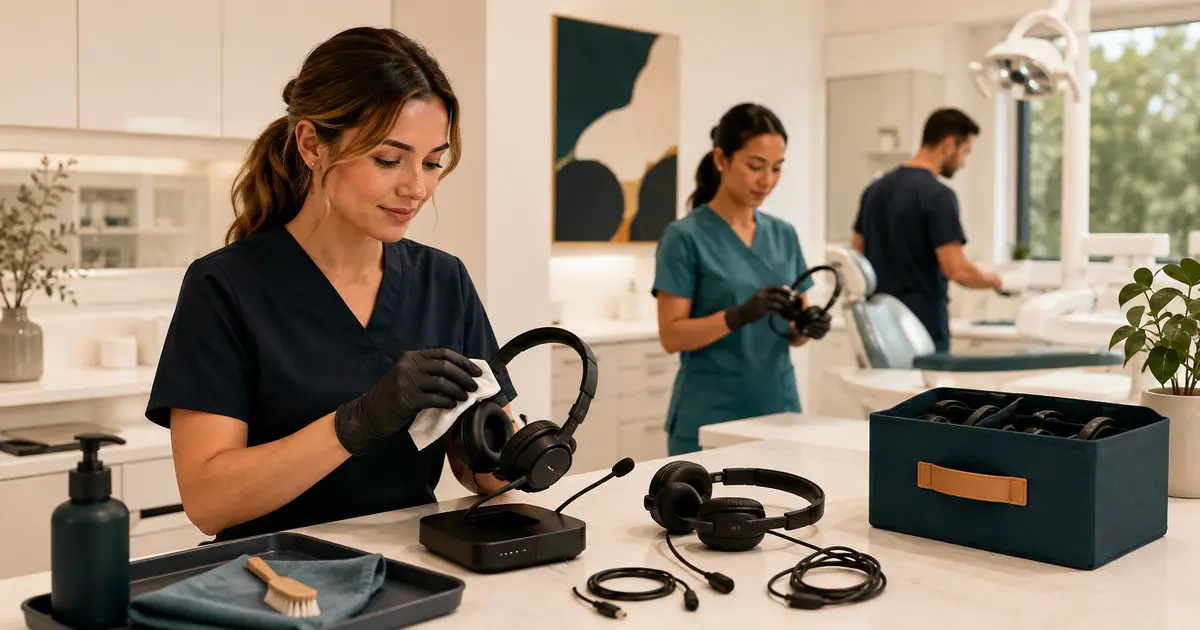
Give each headset or removable contact component an asset ID and assigned user when possible. For truly shared equipment, define cleaning before transfer, approved supplies, drying time, storage, and the employee responsible for restocking replacement cushions or covers.
Jabra’s headset-care guidance recommends regular cleaning and advises against sharing ear cushions or boom-arm foam tips. Follow the instructions for the actual model in use. Product compatibility still matters: a liquid or wipe can damage electronics, coatings, cushions, or microphones.
Follow the manufacturer's instructions
Keep the current cleaning and care instructions with the equipment record. Do not spray liquid directly into openings or use an unapproved chemical. Disconnect or power down the device when the manufacturer requires it.
If the headset has replaceable ear, headband, or microphone-contact parts, define replacement intervals based on condition and approved guidance—not an invented universal schedule.
Inspect before returning it to service
Check cushions, headband, microphone boom, charging contacts, cables, connectors, controls, battery condition, fit, and visible contamination. Remove damaged equipment from use and label it so another employee does not return it to the queue.
Run a fictional test call for microphone clarity, incoming audio, mute, volume, range, and disconnection. Record recurring failures in the phone quality trouble ticket.
Set up the workstation safely
Place the base and cables to avoid repeated reaching and trip hazards. OSHA's computer-workstation guidance recommends neutral positioning and notes that headsets can reduce strain from holding a phone between the head and shoulder.
Link the item to the phone hardware inventory so repairs, warranties, batteries, and disposal remain controlled.