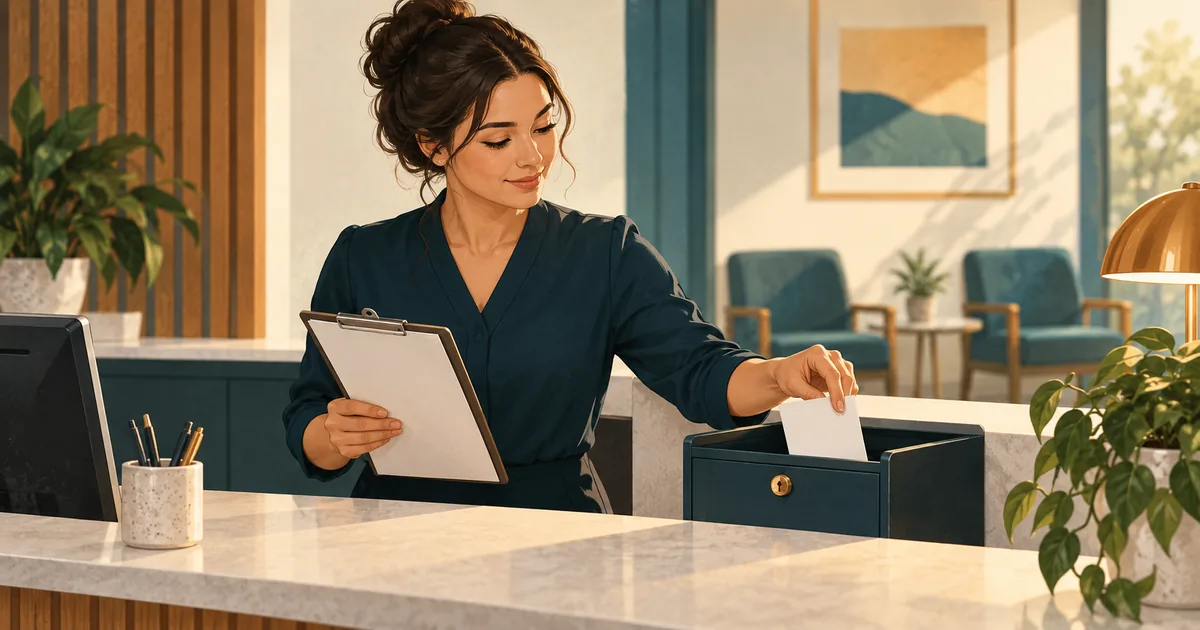
Paper dental callback notes need a controlled path from the moment staff write them to the moment the request is entered into the approved follow-up process. A small message slip can contain protected health information, even if it is temporary and never becomes a formal chart page.
HHS explains in its Privacy Rule summary that protected information can be oral, paper, or electronic. A note beside the phone should therefore receive appropriate safeguards rather than being treated as ordinary scrap paper.
Capture only what the handoff needs
Use the office’s approved message format. It may include the caller’s name where provided, callback information, a concise request, the time received, and the staff owner. Avoid writing a detailed clinical history when the administrative task is to arrange an appropriate callback.
The dental AI privacy and security guide helps keep administrative capture focused. Staff should not use a paper slip to make clinical judgments or promise an appointment that has not been confirmed.
Keep the note out of public view
Choose an approved location behind the desk or in a restricted message tray. Do not place notes where patients can read them while checking in, attach them to the front of a monitor, or leave them in a waiting-room clipboard.
A covered tray is useful only if the access arrangement is appropriate. The practice should decide who may collect the notes and how unattended notes are secured.
Make the handoff visible to the receiving person
Record who accepts the request into the approved follow-up workflow. Verify important details through the practice’s normal process; handwriting that is difficult to read should trigger clarification rather than guessing.
Use a simple reconciliation at the end of the coverage period:
- Which notes have been entered into the approved system?
- Which requests still await an assigned person?
- Which details need clarification?
- Where are the remaining paper copies held?
Do not mark a request complete merely because the slip moved from one desk to another. The front desk shift-handoff guide addresses the broader continuity process.
Dispose of the paper through the approved route
Follow the practice’s retention and disposal rules, including any applicable hold. Entering a note into software does not automatically authorize immediate destruction of the paper.
HHS’s disposal guidance explains why patient information generally should not be placed in publicly accessible trash or recycling without appropriate protection. Use the office’s approved secure disposal process when the record is eligible for it.
Missed Calls Dental provides captured requests in Workspace within its documented workflow. If staff also create paper notes during manual calls or an outage, reconcile them deliberately so the office does not operate two conflicting queues.
The practical result is one accountable next action for the caller and a known location for the paper. A temporary note should never become an unowned patient request or an overlooked disclosure at the counter.


