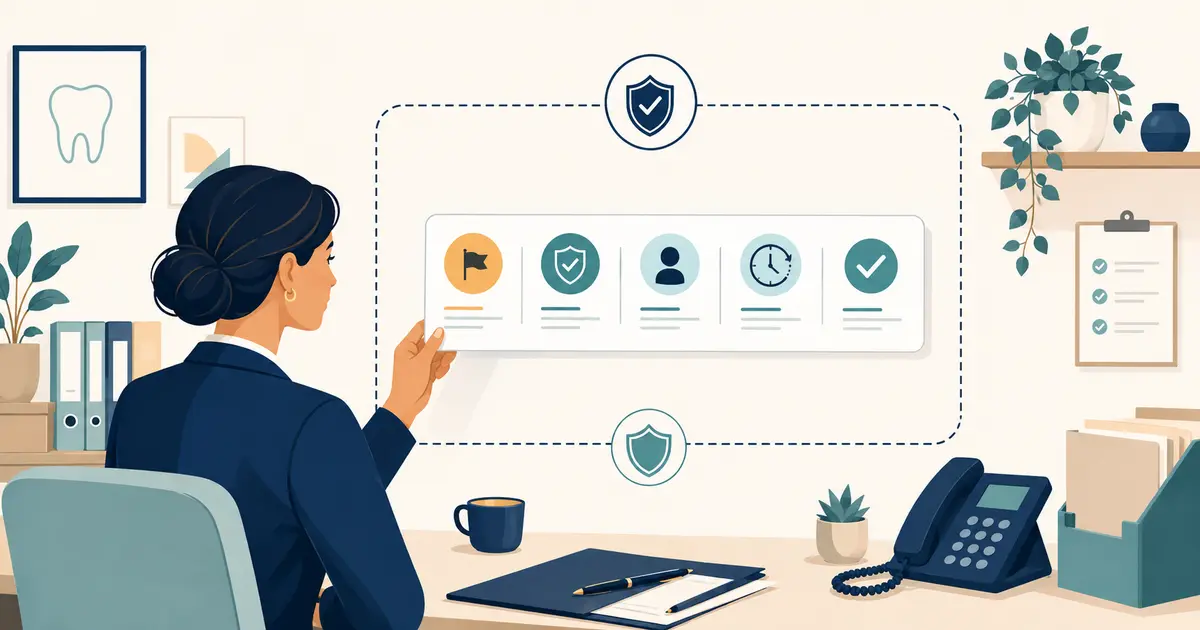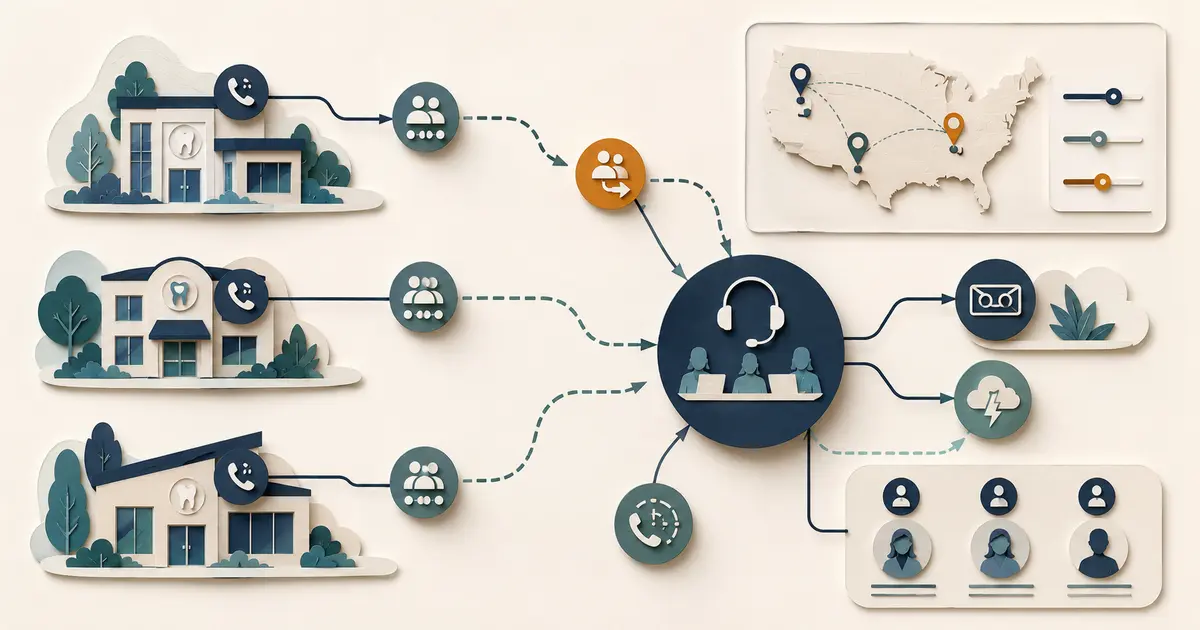
A multi-location dental phone system should make it easy for callers to reach the right practice and easy for staff to see who owns the call. Centralization is useful only when location identity, hours, provider context, local policies, and follow-up responsibility remain accurate.
Managers should write routing requirements before comparing vendors. A feature list does not show what happens when two offices share staff, one location closes early, or a transfer fails.
Inventory numbers and identities
Create a record for every public number, direct line, tracking number, toll-free number, fax line, temporary number, and emergency or on-call route. Identify owner, carrier, displayed caller ID, destination, business purpose, and rollback.
For each location, maintain approved name, address, hours, time zone, holiday exceptions, providers, general services, accessibility and language paths, and emergency direction.
Avoid greeting every caller with a group brand when the patient expects a specific practice. Preserve both group and local identity where appropriate.
The keep-your-number guide explains why existing-number behavior needs provider verification.
Define routing by state
Map open, busy, ring-no-answer, simultaneous call, lunch, closed, holiday, staff absence, carrier outage, internet outage, and vendor outage.
For each state, specify:
- rings or time before next route;
- queue or hunt order;
- central or local destination;
- backup or answering condition;
- voicemail order;
- caller message;
- owner of the resulting request;
- failure path and alert.
Phone-provider behavior is provider-specific. Test the real configuration rather than assuming standard terms mean the same thing.
Preserve local authority
Central staff may answer general questions and capture requests, but appointment types, provider schedules, urgent procedures, referral rules, financial policies, and clinical decisions may remain local.
Create an authority matrix showing what central, local, and backup teams may say, collect, transfer, or change. A central receptionist should not infer that one location's policy applies to another.
Missed Calls Dental is missed-call backup for eligible forwarded calls. It captures requests for front-desk follow-up and does not replace the phone system, schedule appointments, or make clinical decisions.
Design queues for ownership
Choose whether calls queue by location, function, language, provider, or another verified need. Keep queue announcements accurate and give callers an alternative to waiting indefinitely.
Define maximum practical hold behavior, callback options, queue overflow, and how abandoned calls enter recovery. Preserve original location and route when a central team answers.
The dental call queue rules guide provides a focused simultaneous-call framework.
Make transfers recoverable
Support warm transfers with context. Tell the caller where the call is going and give the receiver the reason. If the destination does not answer, return to an accountable role or capture a request.
Test transfers across locations, to remote staff, to provider lines, and back to the original queue. Avoid loops. Record attempted destination, result, and final owner.
Give staff approved transfer scripts and a recovery step for every unavailable destination.
Keep voicemail and greetings location-aware
Use current local hours, reopening dates, approved emergency direction, and truthful callback expectations. Do not play another location's holiday greeting or on-call number.
Define mailbox access, notifications, capacity, retention, and reconciliation. Avoid distributing detailed voicemail content broadly.
The dental voicemail greeting scripts provide examples for open, lunch, closed, holiday, and outage states.
Control caller ID and callbacks
Determine which number patients see for inbound and outbound calls. Staff should know which location identity to use. Test callbacks from central teams, mobile apps, remote devices, and backup services.
Avoid exposing personal staff numbers. Verify whether return calls reach the correct practice or a generic queue. Document number portability and ownership at vendor exit.
Protect privacy across locations
Limit directory, recording, transcript, voicemail, analytics, and patient-record access by role and location. Test float staff, supervisors, central teams, support vendors, and terminated users.
HHS's minimum-necessary guidance supports limiting access and information to the purpose. Determine business associate responsibilities for phone, answering, recording, transcription, messaging, analytics, and support relationships.
Use individual accounts, strong authentication, useful logs, retention rules, incident response, exports, and deletion.
Plan resilience and recovery
Identify dependencies: carrier, internet, local network, power, vendor control plane, identity provider, devices, integrations, and staff availability. Define fallback routes that do not depend on the same failed component.
Keep provider support and routing records outside the phone platform. Test how to disable forwarding, route to an alternate line, post an approved outage message, and reconcile missed calls after recovery.
The phone outage plan offers a detailed continuity checklist.
Require location-level reporting
Reports should preserve offered calls, answered destination, original location, queue time, transfers, abandons, voicemail, backup answers, failed routes, callback outcomes, and outages. Define duplicate and spam rules.
Do not compare locations until event definitions, hours, and coverage models are aligned. Keep counts and denominators visible.
Test every location pattern
Create a matrix by number, time, state, caller type, and expected route. Include open hours, lunch, closed, holiday, busy, simultaneous calls, wrong location, shared number, provider at two offices, central-team absence, transfer failure, carrier outage, and vendor outage.
Call from outside numbers. Verify greeting, caller ID, route, queue, transfer, voicemail, notification, owner, and recovery. Repeat after material configuration changes.
Define vendor and exit requirements
Ask who owns numbers, porting credentials, recordings, configuration, analytics, and support access. Define service levels without treating them as guarantees, escalation, change control, security, data export, retention, and termination.
Rehearse number porting or route rollback before dependency becomes critical. Preserve a current configuration diagram and change log.
A strong centralized dental answering service or phone platform keeps routing simple for callers and responsibility visible to staff. Central tools should strengthen local ownership, not obscure it.
Maintain a route acceptance matrix
Create one row for every public number and operating state. Record expected greeting, queue, ring interval, overflow destination, voicemail, emergency path, displayed caller ID, request owner, and fallback. Add the actual test result, timestamp, carrier or vendor configuration version, defect, and retest.
Test from outside numbers and from more than one carrier when practical. Simulate two and three simultaneous calls, a transfer to an unavailable destination, a local internet failure, central-team absence, and a disabled forwarding rule. Verify that each call reaches a recoverable state.
Review the matrix after hours, locations, numbers, providers, queues, carriers, devices, or vendors change. Do not approve a global configuration change from one successful test location. Each distinct routing pattern needs evidence.
Give managers read access to the current diagram and escalation contacts outside the phone platform. During an outage, they should know which exact route to disable or activate without depending on the failed system.
Track configuration drift. Compare the documented route with the provider's live settings and investigate unauthorized or unexplained differences. Preserve an approved rollback so repair does not become improvisation.
Finally, connect every backup destination to a queue owner. A call that reaches voicemail, central staff, or an answering service is not complete until the correct location accepts and resolves the request. Test acceptance and resolution evidence, not merely whether the phone platform reports a successful transfer or completed forwarding leg. Preserve the result for review.