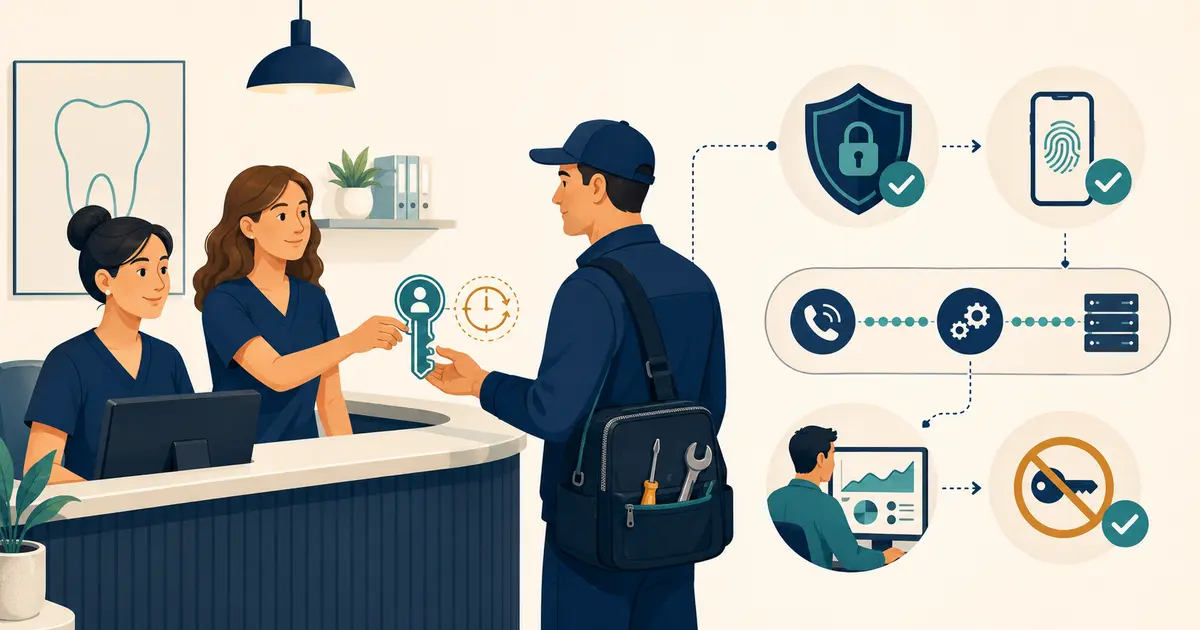
Dental phone vendor temporary access should be specific to one verified person, one approved support purpose, the least privilege needed, and a short time window. Shared permanent administrator credentials make support convenient at the cost of accountability and clean removal.
Verify the request out of band
Confirm the support case, vendor organization, technician identity, requested system, task, and access duration through a trusted channel already held by the practice. Do not rely only on a link, phone number, or message supplied in the access request.
Identify the practice approver and technical owner. If the vendor's contract or phone system SLA includes access terms, confirm that the actual request matches them.
Create narrow individual access
Use a named vendor account or supported delegated-support feature. Grant only the role and systems required for the ticket. Require multifactor authentication when available; CISA recommends MFA because it adds protection beyond a password.
Set an automatic expiration when the platform supports it. Otherwise create a scheduled revocation task with an owner and exact time. Do not send practice administrator passwords or one-time codes to the technician.
Control the support session
Before work begins, capture the relevant baseline and approved change scope. Require the technician to describe intended changes and rollback. Follow the dental phone routing change process when routes, schedules, or destinations are affected.
Where practical, have an authorized practice representative observe the session. Limit access to patient information and recordings to what is actually necessary. HHS describes risk analysis as an ongoing foundational activity for protecting electronic protected health information; practices should assess vendor access within their applicable privacy and security program.
Preserve evidence without oversharing
Record the case number, named technician, approver, access role, grant and expiration times, systems reached, changes made, test results, and revocation evidence. Retain vendor logs according to policy. Avoid copying passwords, tokens, patient narratives, or unnecessary screenshots into the support ticket.
Review any data export separately. A technical support case does not automatically authorize downloading recordings, contact data, or patient-related summaries.
Revoke and verify
At completion or expiration, remove the account or role, revoke active sessions and temporary tokens, verify the user no longer appears in the authorized-access list, and review relevant change history. Then run the agreed test and reconcile affected caller work.
Include vendor accounts in the next dental phone system access audit. A closed support ticket is not proof that access disappeared.
Missed Calls Dental boundary
Missed Calls Dental controls support access to its own product according to its supported processes; it does not authorize vendors to enter the practice's carrier, network, devices, email, or other systems. The practice owns third-party approval, identity verification, least privilege, oversight, privacy review, evidence, and revocation. SMS is separate and readiness-gated.
Daniel Reed is an editorial pen name. This article was reviewed for accuracy and alignment with Missed Calls Dental product information.