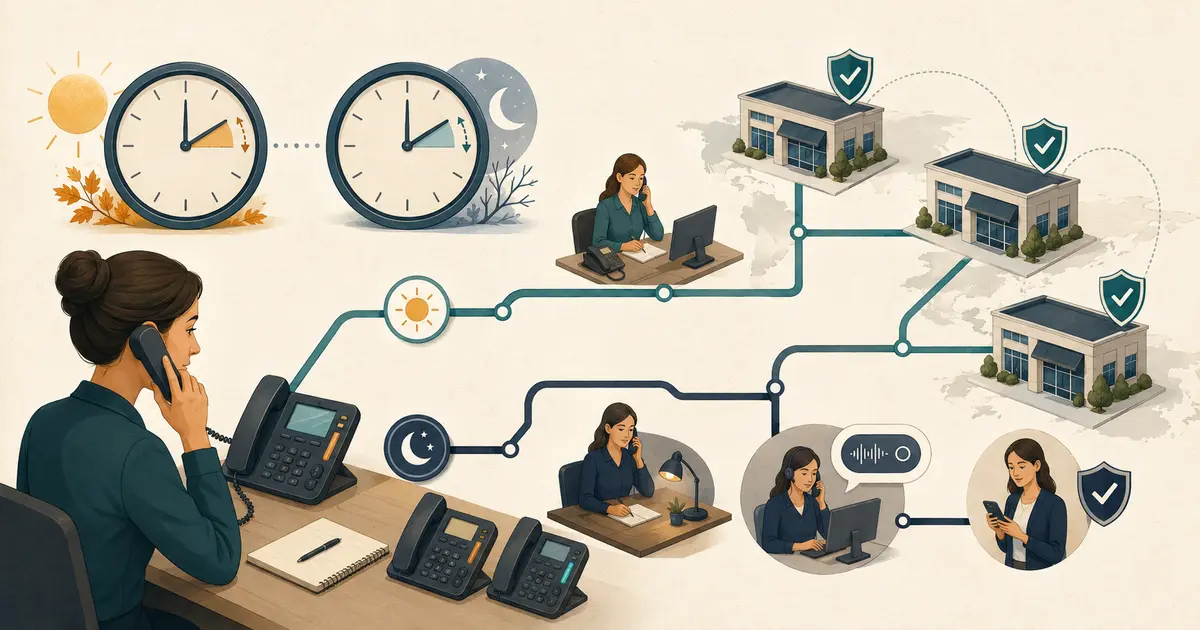
A dental phone system daylight saving test checks whether business-hours routes, after-hours behavior, voicemail, callbacks, and records still follow the intended local time when clocks change. A system can display the right wall clock yet apply an old offset, inherit an account-level time zone, or disagree with a vendor dependency.
Inventory every clock that affects a call
Record the configured time zone and time source for:
- carrier and hosted phone account;
- business-hours and after-hours schedules;
- queues, menus, voicemail, and call forwarding;
- call recording, transcription, summaries, and analytics;
- staff devices, calendars, notifications, and callback tools;
- vendor dashboards, integrations, and exported reports;
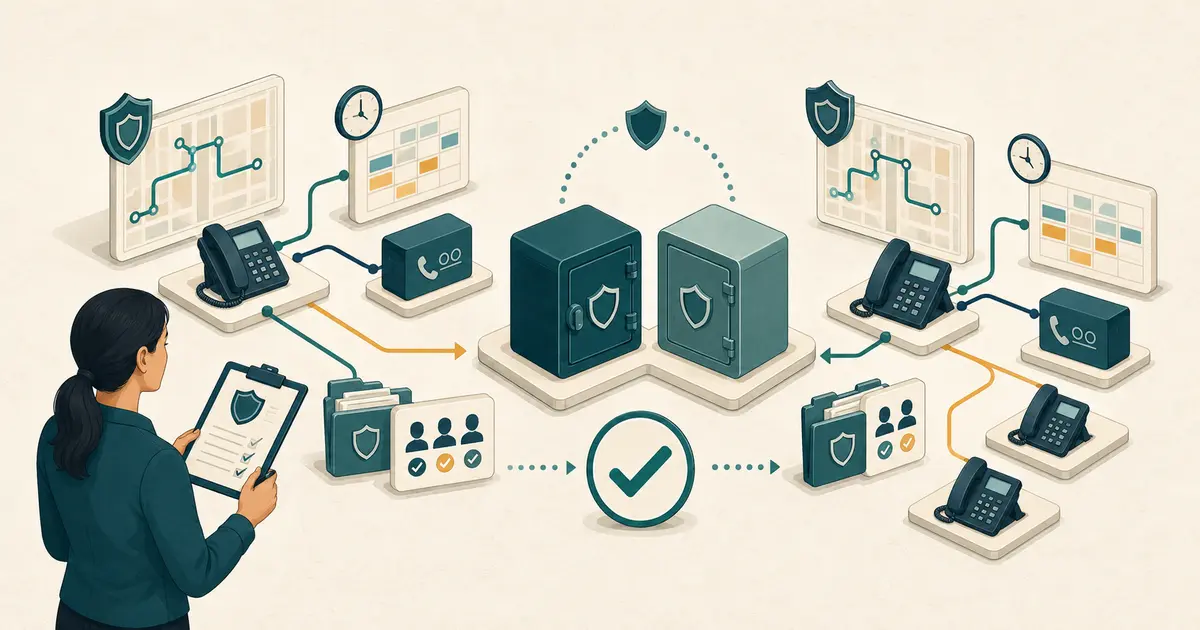
- multi-location and remote-team accounts.
Use named time zones such as America/Chicago where systems support them, rather than relying only on a fixed UTC offset. The IANA Time Zone Database publishes updated rules used by many systems; confirm how each provider receives and applies updates.
Test both sides of the transition
Create fictional calls just before and after the relevant boundary in a sandbox, provider test window, or controlled schedule. Record results in the phone-system acceptance test. Confirm:
- open and closed routes switch at the intended local time;
- after-hours messages and destinations are correct;
- voicemail timestamps and notification times agree;
- call logs sort events in the correct order;
- callback due times do not shift unexpectedly;
- reports and exports label the time zone clearly;
- multi-location routes follow each location's policy.
Also test the following business day. Some defects appear only when a recurring schedule evaluates the changed offset. Keep this exercise distinct from the weekend and holiday coverage plan, which validates exception dates rather than seasonal clock rules.
Include systems that do not change clocks
Not every U.S. location observes daylight saving time, and federal law allows certain state exemptions. A practice with callers, staff, or vendors in multiple regions should not assume the same transition everywhere. Use the U.S. Department of Transportation's current overview and provider documentation to confirm the applicable rule.
Check fixed-offset systems, manually entered schedules, legacy devices, and integrations that convert UTC. Document whether timestamps represent caller location, office location, account location, or UTC.
Define failure and fallback
A test fails when a call reaches the wrong route, a closed message plays during staffed hours, an after-hours call rings an unintended destination, a timestamp could mislead follow-up, or a due time shifts without explanation. Assign each failure to the responsible provider or system owner.
Prepare a manual schedule override or approved fallback when supported. Protect override access, record who activates it, and remove the temporary setting after the issue is resolved. Retest the full path rather than checking only the displayed clock.
Make the test recurring
Schedule checks before the spring and fall transitions, after provider migrations, and whenever account time zones or locations change. Record the rule version, test time, expected route, actual result, evidence, correction, and next test date. Use fictional calls and avoid exposing patient information in screenshots or logs.
Missed Calls Dental boundary
Missed Calls Dental can receive eligible calls under a supported forwarding setup, but it does not configure the practice's carrier schedules, device clocks, or third-party time zones. The practice and its providers own time settings, route tests, fallback, and caller follow-up.