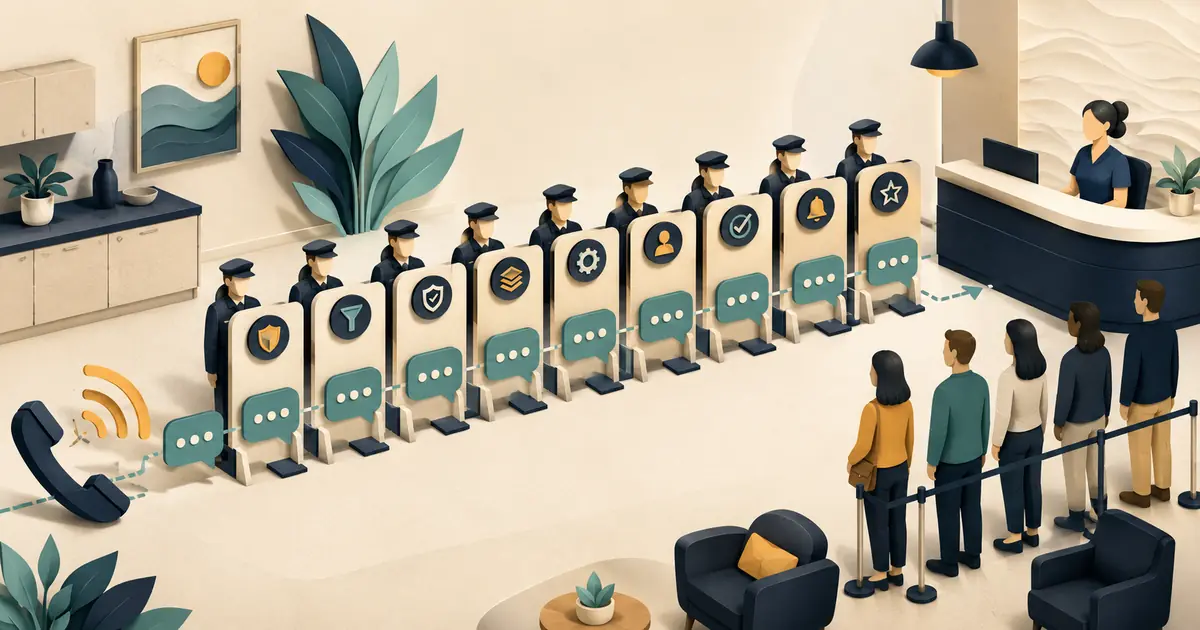
Dental patient communication best practices are easier to follow when the office defines which channel is used for which purpose. Phone, voicemail, text, email, portal messages, and in-person conversations have different strengths, privacy risks, response expectations, and failure modes.
Build a channel matrix
| Channel | Good use | Avoid or escalate | Closure evidence |
|---|---|---|---|
| Phone | Conversation, clarification, sensitive or complex administrative issue | Clinical judgment without authorized staff | Call outcome and next owner |
| Voicemail | Brief callback request and approved office instructions | Detailed private information | Message reviewed and assigned |
| Text | Short administrative exchange under consent and opt-out rules | Detailed clinical or financial discussion | Delivery, reply, opt-out, disposition |
| Patient portal | Approved secure communication and forms | Anything outside the portal's supported workflow | Message state and staff action |
| Approved administrative information | Sensitive details without the appropriate safeguards | Sent item and follow-up owner | |
| In person | Identity-sensitive or complex discussion | Conversation audible to unnecessary people | Office record when required |
Adapt the matrix to the practice's systems and policies. Do not assume one channel is secure or compliant solely because a vendor labels it that way.
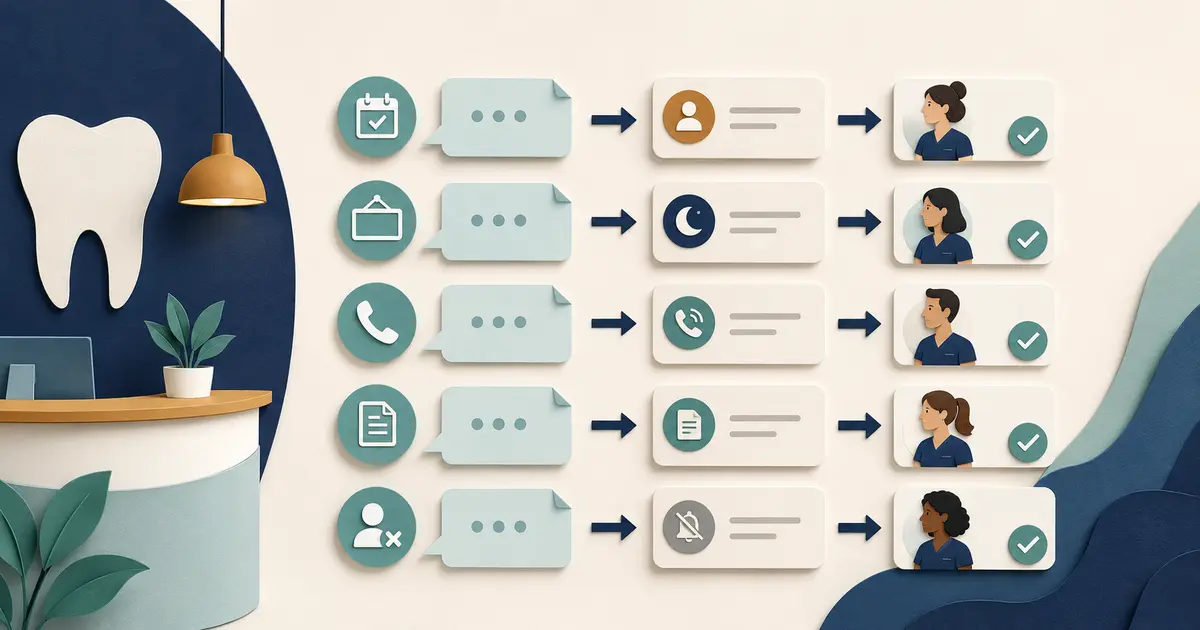
Give each message one owner
A handoff should include:
- sender or caller;
- verified contact method when needed;
- general request;
- channel used;
- expectation given;
- primary owner;
- backup;
- due time;
- disposition.
“Front desk” is not enough when three people share the queue. Use a person or staffed role.
The office communication policy guide explains how to document these rules.
Match detail to the channel
Use the minimum information needed for the next action. A text reminder may need the practice identity and a simple response option; it rarely needs treatment detail. A voicemail should avoid unnecessary private information. An internal handoff may need more context but should remain inside the approved system.
HHS minimum-necessary guidance applies in defined contexts and includes exceptions. Practices should also account for treatment communication, patient access rights, consent, accessibility, state law, and their own risk analysis.
Set accurate response expectations
Avoid “soon.” Use an office-owned window:
“A team member will review this during our next business-day message check.”
“I have sent this to our billing coordinator, who reviews these requests on weekday afternoons.”
The wording should match actual staffing. If the office cannot meet the window, update the patient and reassign the request.
The patient phone-experience plan offers additional standards for live calls.
Preserve the conversation across channels
Patients may call after texting or mention a portal message during an in-person visit. Check for an existing open request before creating another one.
Do not copy every message into every system. Maintain one authoritative request with references to relevant communications, ownership changes, and the current next step.
Design fallback and opt-out
For each channel, answer:
- What happens when delivery fails?
- What happens when the patient does not respond?
- What happens when the employee is absent?
- How is an opt-out honored?
- How does the patient request another channel?
- When does the office stop repeated attempts?
The patient texting best-practices guide covers sender identity, consent, opt-out, and message design.
Include accessibility
Ask and record communication preferences through the approved process. Provide alternatives for callers who cannot use a particular channel, have language needs, or need another accommodation. Do not make a self-service digital path the only way to reach the office without reviewing accessibility implications.
Use scripts as boundaries, not performances
Helpful phrases include:
“I want to make sure I record that accurately. What would you like the office to do next?”
“I can capture your question, but the appropriate team member needs to review it.”
“Your preferred time is recorded; it is not confirmed yet.”
“This text inbox is not the right place for detailed clinical information. I’ll route your request through our approved process.”
Audit message closure
Weekly, sample requests from each channel. Verify source, owner, response, promises, transfers, final state, and duplicate handling. Review failures by process category rather than assuming the patient or employee caused them.
How Missed Calls Dental fits
Missed Calls Dental can capture a request from an eligible call routed to the AI assistant number and provide the transcript and summary in Workspace. Staff decide how and when to follow up. SMS is separate, requires readiness, and must preserve consent, opt-out, sender, delivery, privacy, and ownership controls.
Noah Carter is an editorial pen name. This article was reviewed for accuracy and alignment with Missed Calls Dental product information.