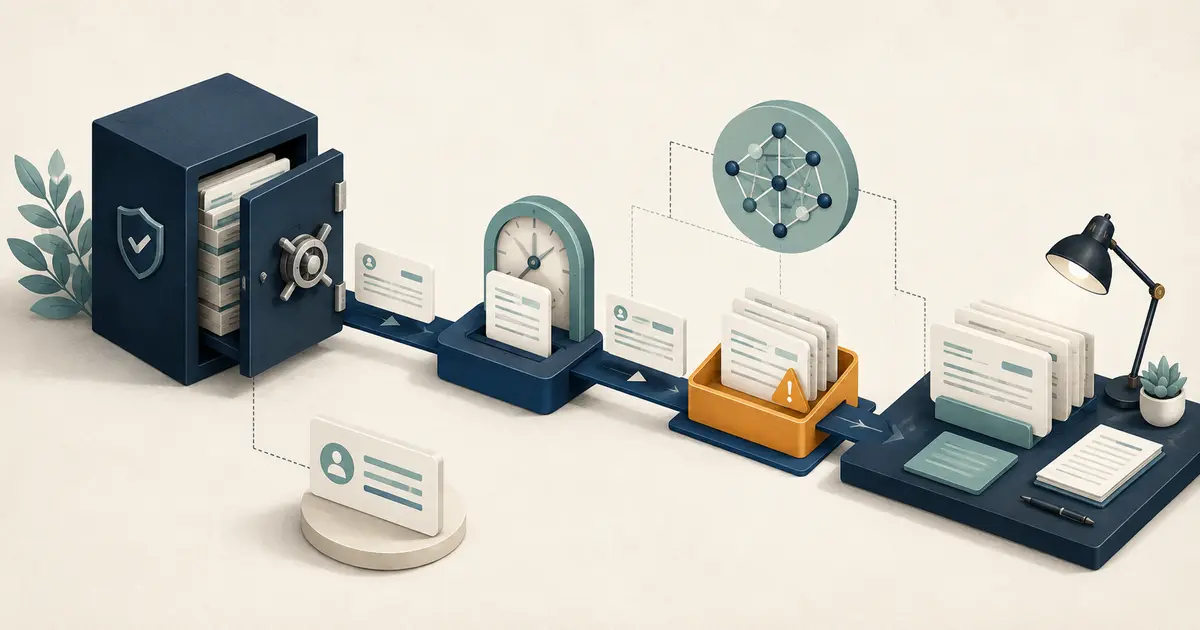
Dental online scheduling and phone scheduling should be designed as two entrances to one controlled appointment process. Online tools offer convenience and structured availability; phone conversations handle questions, exceptions, accessibility needs, and callers who prefer human help. The practice needs shared rules for identity, appointment types, confirmation, changes, and failure recovery.
Distinguish request from booking
Both channels can support either model:
- request: patient submits preferences for staff review;
- confirmed booking: authorized system writes a valid appointment and returns final details;
- assisted handoff: request moves to staff because it exceeds rules.
Label the state explicitly. A confirmation page, text, or spoken phrase should not say “booked” when the practice has only received a request.
The requests-versus-confirmed-bookings guide explains this distinction.
Compare strengths and limits
| Dimension | Online path | Phone path |
|---|---|---|
| Availability | Self-service at any time if system is available | Depends on staffed or answering hours |
| Structure | Consistent fields and rules | Flexible conversation |
| Questions | Limited to designed content | Can clarify approved information |
| Exceptions | Must route out safely | Staff can identify and hand off |
| Accessibility | Requires accessible design | Requires effective voice and alternate support |
| Identity | Digital verification | Practice phone verification |
| Failure | Form, integration, or notification error | Hold, transfer, disconnect, or staffing failure |
| Evidence | Submission and system logs | Call notes, request record, confirmation |
Neither channel is universally better. Design around patient needs and practice authority.
Create one scheduling authority matrix
For every appointment type, define:
- request only or direct booking;
- new versus established patient rules;
- location and provider;
- duration and resources;
- required administrative information;
- exclusions and stop conditions;
- same-day or short-notice rules;
- identity requirements;
- confirmation method;
- cancellation and change authority;
- exception owner.
Do not ask an online form, phone employee, or AI to infer a clinical appointment type from symptoms unless a qualified, validated clinical workflow authorizes it.
Keep a shared source of truth
Both channels need current:
- hours and closures;
- providers and locations;
- appointment types and durations;
- availability rules;
- accessibility and language resources;
- approved participation and price language;
- contact methods;
- exception destinations.
Assign owners and effective dates. Test changes across both channels before publishing.
The new-practice phone system guide can help future owners connect routing and scheduling access.
Design exception handoffs
Examples include:
- caller cannot find an appropriate option;
- patient needs accessibility or language assistance;
- appointment type is uncertain;
- schedule appears full;
- insurance or price question exceeds approved facts;
- identity cannot be verified;
- patient requests a change outside rules;
- system is unavailable;
- duplicate record or appointment appears;
- caller expresses a clinical concern.
Each exception needs a real owner, response standard, and status message. “Contact the office” is incomplete if the office cannot see the request.
Preserve patient choice and accessibility
The Department of Justice explains that effective communication depends on the nature, length, complexity, context, and person's normal method of communication. An online-only path may exclude some people; a phone-only path may also create barriers.
Offer appropriate alternatives, publish them clearly, and test keyboard, screen-reader, relay, language, and human-help paths as applicable. Do not charge a patient for required auxiliary aids or default to an unqualified companion for complex communication.
Protect privacy and identity
Collect only information needed for the appointment process. Define where form entries, call notes, confirmations, and failed submissions are stored. Restrict access and notification previews.
Before disclosing or changing appointment information, apply the practice's identity rules. A link click, caller ID, or remembered date may not be sufficient for every action.
HHS minimum necessary guidance supports role-based policies and reasonable limits on PHI. Qualified advisers should review both channels.
Test state conflicts
Use fictional scenarios:
- online and phone request for the same slot;
- patient opens two browser sessions;
- staff blocks availability during submission;
- confirmation notification fails;
- phone employee changes an online booking;
- patient replies to a reminder with a change request;
- integration is stale;
- duplicate patient record appears;
- office closes unexpectedly;
- patient needs an appointment type outside self-service.
Define which system is authoritative and how conflicts are detected and recovered.
Measure channel quality
Track separately:
- started and completed requests;
- confirmed bookings where authorized;
- abandoned forms and calls;
- exceptions;
- duplicate or conflicting records;
- staff corrections;
- failed confirmations;
- accessibility requests;
- time to staff ownership;
- unresolved requests;
- patient complaints.
Avoid claiming that one channel converts better without a defined population and comparable state.
Keep Missed Calls Dental's role clear
Missed Calls Dental can capture appointment preferences and caller requests from eligible missed calls for front desk follow-up. It does not access availability, book or change appointments, or integrate with a PMS. The caller must be told the request is not confirmed.
The front desk appointment-request workflow shows how staff can complete the handoff.
Launch both channels deliberately
Before opening:
- approve the authority matrix;
- test normal and exception paths;
- verify status language;
- train staff;
- publish contact alternatives;
- set outage procedures;
- monitor early requests closely;
- reconcile channels daily;
- review accessibility and privacy;
- keep a rollback plan.
Design the daily reconciliation
Choose one employee or role to compare online requests, phone requests, confirmed appointments, failed notifications, and exceptions. The review should answer:
- Does every request have one current state?
- Is each pending request assigned to a person?
- Did any patient receive conflicting messages?
- Did staff create duplicate appointments or patient records?
- Did an online slot disappear before final confirmation?
- Did a phone request remain open after staff completed it elsewhere?
- Are accessibility or language needs attached to the next action?
Reconciliation is especially important during outages, schedule-template changes, multi-location coverage, and vendor transitions. Record carried work and require the next owner to accept it.
Evaluate the whole cost
Do not compare only an online scheduler's subscription with the minutes spent on calls. Include setup, configuration, staff review, exception handling, patient support, integration monitoring, corrections, privacy review, training, and outage fallback. On the phone side, include staffing windows, hold and transfer failures, callbacks, and repeated contacts.
The better channel mix is the one that produces accurate schedule states with manageable exceptions and accessible patient choices. A channel that appears inexpensive but creates frequent corrections can move cost rather than remove it.
Review changes before enabling them
New appointment types, locations, providers, scheduling rules, or integrations can change what patients can request and what the system represents as available. Require an owner, fictional test cases, approval, effective date, monitoring period, and rollback for material changes. Retest both channels because an update to the authoritative schedule can affect phone scripts as well as online options.
Archive the approved test result with the exact configuration version. When an exception appears later, the team can determine whether the rule was never tested, changed after approval, or failed under an operating condition the original test did not cover adequately at all.
Online and phone scheduling work best as complementary paths. The practice owns the rules, the authoritative schedule, the exceptions, and the final communication—regardless of how the request begins.