Dental office temperature complaints should be recorded by room, time, conditions, and observed pattern before staff repeatedly change a thermostat. A useful facilities log helps the responsible building professional investigate the problem and gives the manager a way to verify the outcome.
This is a comfort-complaint workflow, not a clinical storage standard, ventilation design, or medical assessment. A report suggesting immediate danger or illness belongs in the office's safety and clinical escalation process.
Listen without diagnosing the cause
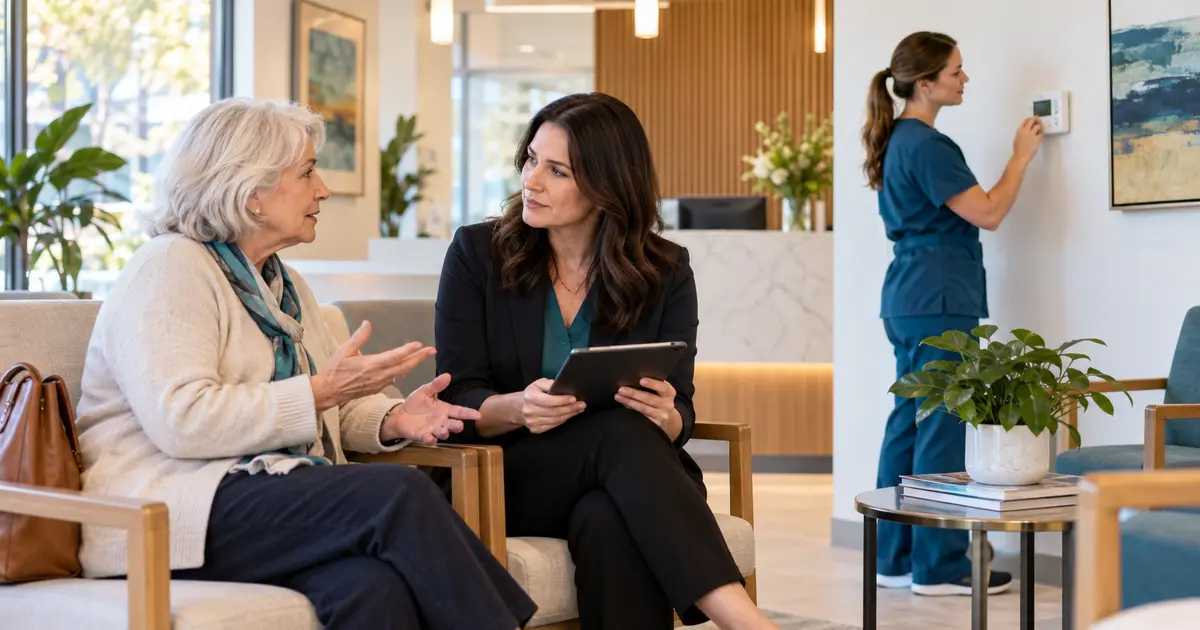
Ask which space feels uncomfortable, when the problem occurs, and whether it is recurring. Record the person's observation neutrally: “waiting area felt cold near the entrance at 9 a.m.” is more useful than “HVAC failure.”
If there is a measured temperature, record the instrument, location, and time. Distinguish that measurement from a thermostat set point or a person's estimate. Do not imply that one reading establishes compliance or proves a building system is defective.
OSHA identifies temperature, humidity, and ventilation among factors affecting indoor air quality. A temperature complaint can warrant facilities review without establishing a particular cause. OSHA indoor air-quality overview
Use a small, consistent log
| Field | Useful entry |
|---|---|
| Location | Specific room or area |
| Time and duration | When discomfort began and whether it persisted |
| Observation | Too warm, too cold, draft, or another reported condition |
| Context | Occupancy, open door, sunlight, or recent building work |
| Measurement | Actual reading and method, if available |
| Action | Approved adjustment or facilities referral |
| Follow-up | Owner, review date, and observed result |
Keep patient information out of a general maintenance log. If a person's health information is relevant, route it into the appropriate protected process rather than describing it in a contractor email.
Check the operational pattern
Compare repeated reports. Does the problem occur only near a door, after a schedule change, during a crowded period, or in one room while others are comfortable?
Ask the landlord or facilities lead to review the appropriate system settings and equipment. Staff can supply observations, but should not block vents, bypass controls, open electrical equipment, or make unapproved system changes.
Avoid creating competing thermostat owners. Assign one authorized route for adjustments so the investigator can reconstruct what changed.
Separate temporary comfort from corrective work
An approved seating change or another simple accommodation may help someone immediately, but it does not close a recurring facilities issue.
Document temporary measures and their limits. Do not use portable heaters, fans, or other equipment without the relevant safety and facilities approval. Keep clinical storage, equipment operating conditions, and infection-prevention requirements with their qualified owners.
Use the incident-report process when the event requires it. A routine comfort entry should not replace a required safety report.
Verify the reported fix
Ask the service provider to identify the work completed and any follow-up conditions. Recheck the affected space under comparable circumstances where practical.
For a fictional example, a cold waiting area may improve after an entry-door problem is repaired. The manager should record the repair and subsequent observation, not claim that a thermostat adjustment solved it when no such work occurred.
If the complaint persists, preserve the history and reopen the issue with the facilities contact.
Review recurring exceptions
Add unresolved items to the manager's daily control list until a responsible person accepts the next step. Periodically look for repeated rooms, times, and unsuccessful temporary measures.
The log succeeds when it helps someone investigate and verify an actual change. It should not become a collection of dismissive comments or unsupported assurances that every room is safe.