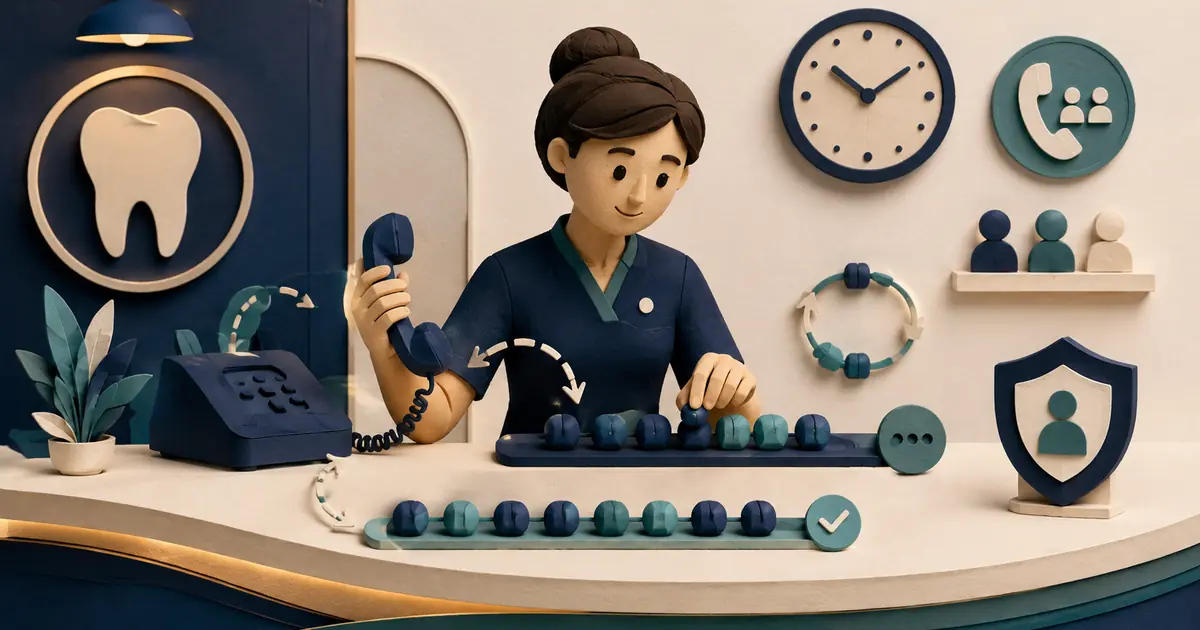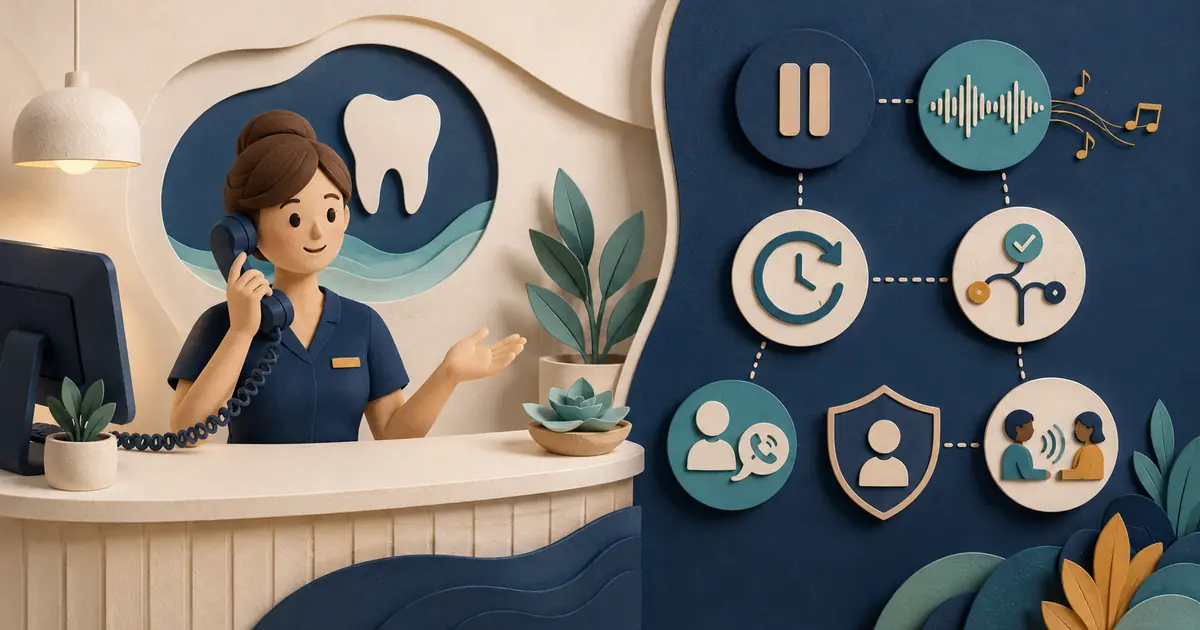
A dental office hold message begins before music plays. The employee should ask permission, explain the immediate reason at an appropriate level, and retain ownership of the return. “Please hold” followed by silence makes the caller responsible for guessing whether the call is still connected.
Use short language that staff can repeat consistently during a busy period.
Ask before placing the caller on hold
“May I place you on a brief hold while I check that for you?”
If the caller agrees, acknowledge the answer and activate the hold correctly. If the caller cannot hold, offer the approved alternative:
“I understand. I can record a callback request with the best number and timing information, or you may call us again. Which works better for you?”
Do not promise an exact duration unless the employee controls it. “A moment” can feel misleading when several tasks intervene.
The front-desk phone etiquette guide can place this exchange in a complete call structure. Use the callback-time guide to assign a realistic follow-up class.
Return before the caller has to wonder
The practice should choose a check-back interval based on its workflow and service standard. On return, give an honest update:
“Thank you for holding. I’m still confirming the information. Would you like to continue holding, or would you prefer a callback request?”
If transferring:
“I can connect you with [role or department]. If the transfer is not answered, the call will [state the tested behavior]. Would you like me to proceed?”
Do not say “They’ll pick up” unless the destination is known to be available. The employee should understand whether the transfer returns, reaches voicemail, or disconnects.
Keep recorded content accurate and restrained
On-hold recordings can provide office hours, location guidance, communication options, and general administrative information. Review every statement for accuracy and ownership.
Avoid:
- clinical advice or emergency triage;
- claims that the office is “always available”;
- outdated hours, providers, or services;
- promises about appointment availability;
- requests to speak sensitive information while the call is unattended;
- loud, repetitive, or overly long promotions;
- instructions that exclude callers who use relay services or need another communication method.
The patient calling-expectations guide can align the recording with the actual service standard.
Protect privacy during hold and transfer
Confirm that the hold function prevents room audio from reaching the caller and caller audio from being broadcast in the office. Staff should not discuss patient details near speakerphones or assume hold is active because a button was pressed.
Share only the context the receiving employee needs. For a warm transfer, say the administrative purpose in an appropriate setting and let the patient repeat sensitive details when necessary. Follow office policy and qualified privacy guidance.
Support effective communication
The ADA's effective-communication guidance explains that covered entities must provide effective communication and accept calls placed through telecommunications relay services. Train staff to handle relay calls as legitimate communications and allow the process the time it needs.
Offer an approved alternative when a caller cannot use a long hold, automated menu, or particular audio channel. Accessibility is not a script add-on; it is part of designing the path.
Test the complete hold experience
Call from outside and test:
- permission language and button behavior;
- audio level and content accuracy;
- check-back ownership;
- transfer answer, no-answer, and return path;
- callback capture;
- concurrent calls;
- relay or other supported communication scenarios;
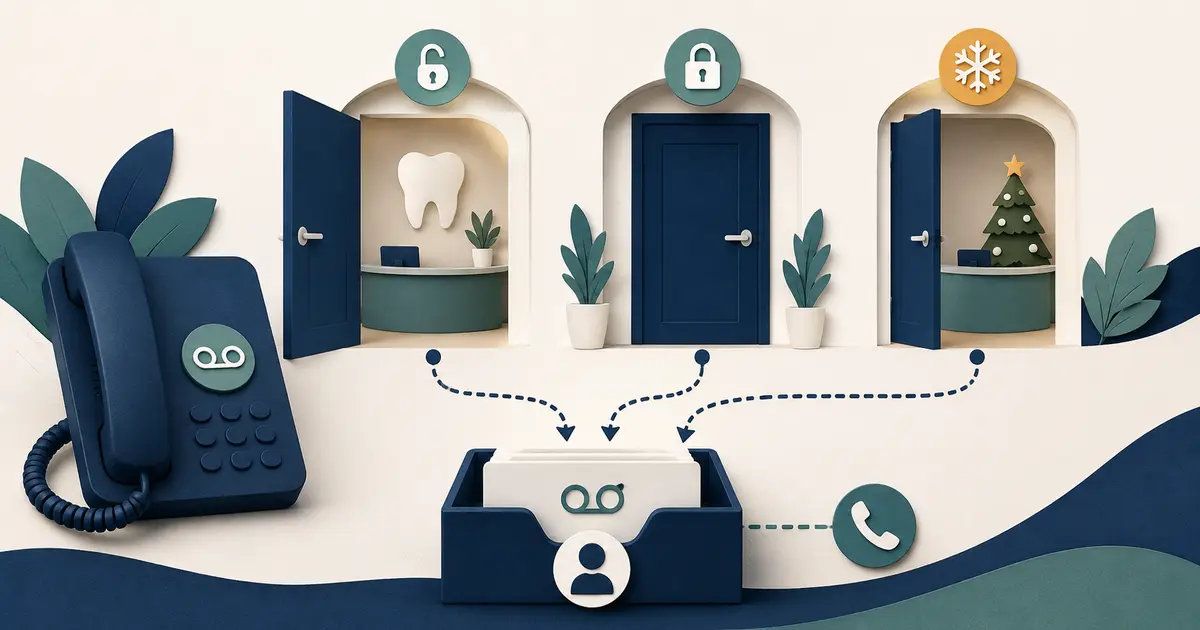
- after-hours behavior.
Record failures and assign corrections. A hold message is successful only when the caller reaches a clear next step.
Missed Calls Dental boundary
Missed Calls Dental can support approved voice coverage and handoffs, but it does not control the practice's hold system, carrier, transfer behavior, accessibility program, or office staffing. It does not diagnose, verify insurance, or independently change appointments. SMS is separate and readiness-gated.
Julian Hayes is an editorial pen name. This article was reviewed for accuracy and alignment with Missed Calls Dental product information.