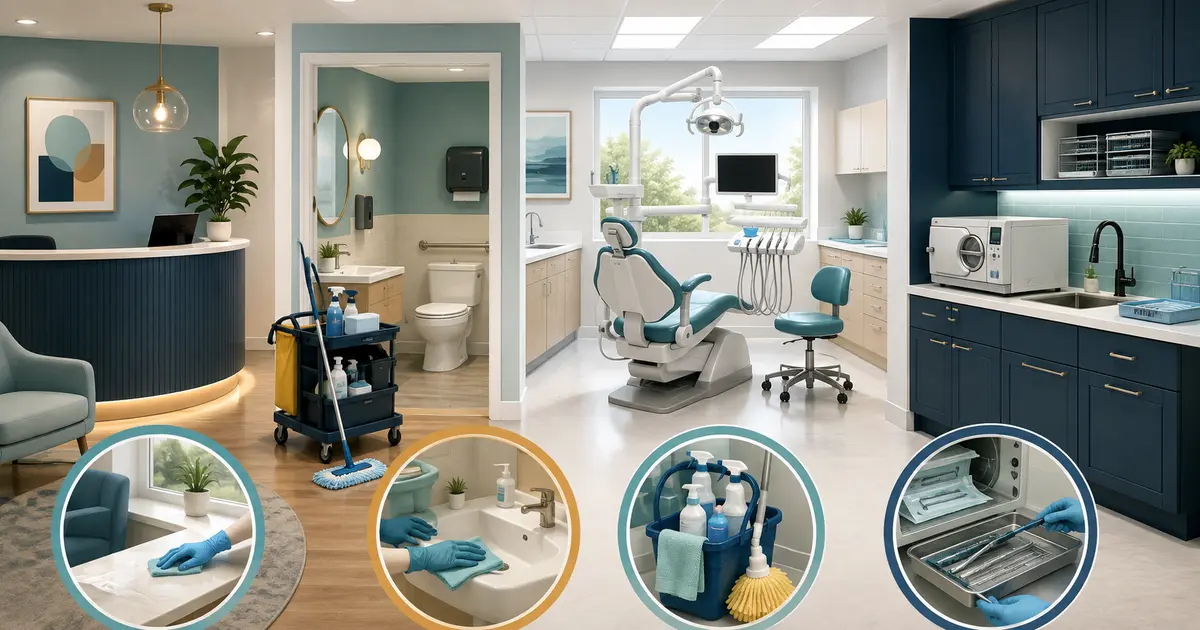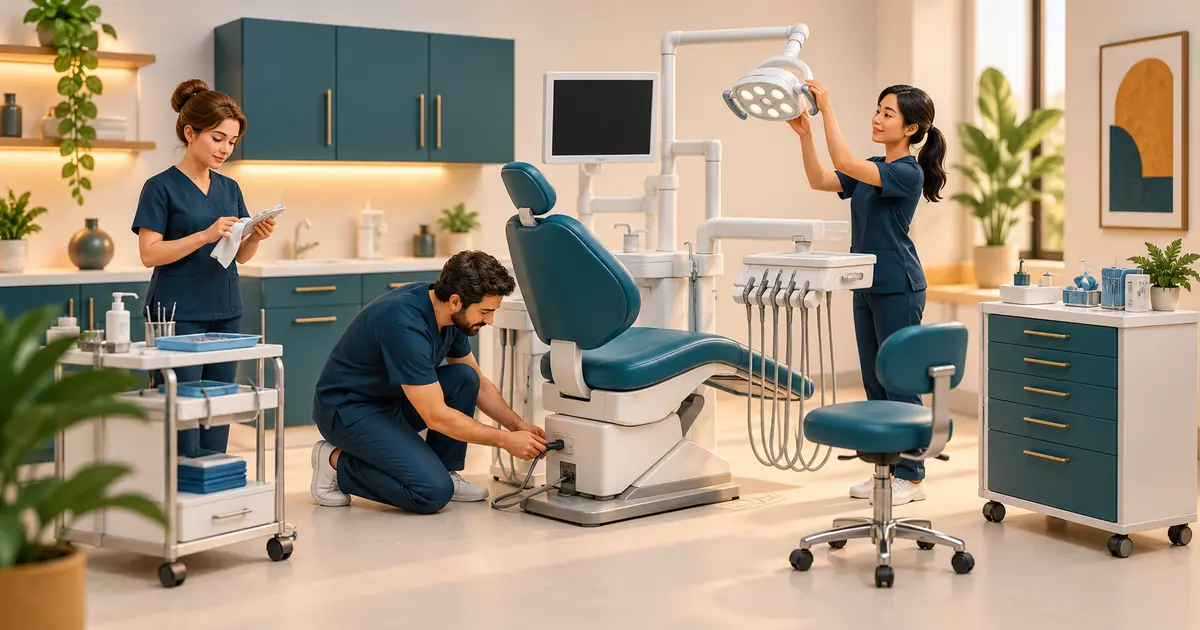
A dental office equipment checklist should connect every purchase to the services you will offer, the rooms you will equip, and the dependencies needed to use it. The checklist is complete when the equipment is correctly installed, required reviews are finished, staff are trained, and the practice has documented acceptance—not when the shipment arrives.
Begin with the launch service scope approved by the dentist. Have clinical, infection-prevention, facility, technology, and regulatory specialists define the requirements within their responsibilities. This guide organizes procurement and readiness; it does not prescribe clinical techniques or equipment operating procedures.
Set an opening baseline that suppliers can quote
Write down the number of operatories equipped on day one, simultaneous clinicians, hours, services, imaging approach, and work you intend to refer out. Distinguish a room ready for future equipment from a room fully ready for patients.
Assign each purchase one of three dates or triggers:
- Opening requirement: Needed for the approved launch service model.
- Later committed phase: Needed for an identified expansion, with a planned decision date.
- Conditional purchase: Considered only after a named service, staffing, or capacity trigger is met.
A supplier should price against this baseline. If one quote assumes four equipped rooms and another assumes two, their totals are not comparable. Match the baseline to the approved dental office floor plan before releasing orders that depend on construction.
Build the equipment list by function
Use the categories below as a starting inventory. Exact items, specifications, and quantities require professional selection for your practice.
| Function | Items to evaluate | Dependencies to resolve |
|---|---|---|
| Operatory | Dental chair, delivery system, light, stools, cabinetry, handpieces, selected small devices | Room configuration; compatible connections; power, air, vacuum, water, and service access |
| Shared utilities | Compressor, vacuum system, associated treatment or separation equipment where required | Demand across equipped rooms; ventilation, drainage, noise, electrical supply, and applicable requirements |
| Imaging | Selected imaging unit, sensors or other capture equipment, workstation, viewing and storage software | Qualified radiation review, registration or inspections as applicable, room requirements, licenses, and data compatibility |
| Instrument processing | Selected cleaning equipment, sterilizer, packaging supplies, monitoring materials, closed storage | Instrument compatibility, capacity, utilities, trained staff, and approved workflow |
| Instruments and consumables | Procedure-specific sets, trays or cassettes, approved materials, barriers, PPE, and opening stock | Service scope, reprocessing turnaround, shelf life, storage, and replenishment |
| Digital and administrative | Workstations, network equipment, backup system, phones, scanner, printer, payment equipment | Software access, security configuration, connectivity, support, and recovery checks |
| Safety and support | Clinician-approved emergency equipment, first-aid and exposure-response supplies, appropriate waste containers | Practice emergency plan, staff training, maintenance, and jurisdiction-specific requirements |
| Additional services | Scanning, milling, laboratory, or other specialized equipment within the approved scope | Demand, staff qualifications, space, support, consumables, and any additional permissions |
Give every line a room or shared-system location. “Two sensors” is incomplete if no one has checked connector compatibility, software licensing, or where staff will safely store them.
Check reprocessing and water dependencies before purchase
Instrument selection and reprocessing equipment must fit together. Ask the clinical and infection-prevention leads to compare the instruments' instructions with the proposed cleaning, packaging, sterilization, and storage arrangements. Include the monitoring supplies and training needed to support that system.
CDC recommends following manufacturer instructions for reusable dental equipment, keeping those instructions available, and assigning reprocessing to appropriately trained personnel. A device without suitable reprocessing instructions may be inappropriate for repeated patient use. These considerations belong in product selection, before the practice commits to incompatible equipment. CDC guidance on sterilization and disinfection
For dental units, include the manufacturer-supported water-maintenance and monitoring approach in the quote. A bottle reservoir alone does not establish adequate water quality. CDC advises consulting the dental-unit manufacturer about the methods and equipment needed to maintain water quality. CDC guidance on dental unit water quality
Keep the actual operating instructions under qualified ownership. The cleaning checklist by zone helps organize responsibilities after opening; the procurement decision must first ensure the selected equipment can support the approved program.
Estimate quantities from the working day
Count equipment by simultaneous need, turnaround, and backup arrangements rather than assigning one of everything to each chair.
For a fictional two-room opening, ask the clinical team to map instrument sets through a sample schedule. Which sets are in use, awaiting processing, being processed, or available? What happens when one handpiece is out for service? Use the exercise to expose shortages for professional review, without shortening approved reprocessing steps to make a smaller order work.
Shared equipment needs its own capacity check. A compressor selected for the initial rooms may or may not support a later expansion. Obtain the manufacturer's capacity assessment for the exact configuration and record what must change when another room is activated.
For consumables, document opening stock, expected use, lead time, storage limits, and reorder responsibility. Avoid using the launch order to buy a year's supply of a product the team has not evaluated.
Turn each order into a dependency record
For every major item, record:
Identity: Exact model, configuration, quantity, room, and approved alternatives. Site readiness: Required utilities and clearances, reviewed by the responsible professionals. Supplier scope: Accessories, delivery, installation, training, software, warranty, and exclusions. Dates: Order deadline, site-ready date, delivery, installation, and acceptance window. Ownership: Who performs each task and who verifies it. Evidence: Quote revision, planning documents, inspection results, training record, and acceptance record.
Resolve “installation by others” before ordering. Name who provides the connection, who tests it, and who pays if the site does not meet the agreed specification.
A substitution requires the same review as the original choice. A replacement sterilizer with a different electrical requirement or a sensor requiring a different license can change the opening plan. Record approvals and revised costs before accepting the substitution. Use the equipment-financing comparison once the complete procurement scope is known.
Separate receiving, installation, and acceptance
Receiving confirms the correct shipment, visible condition, quantity, accessories, and serial numbers. Photograph damage and follow the contract's reporting process. A receiving signature should not silently substitute for a broader acceptance you have not completed.
Installation confirms completion by the appropriate personnel using the applicable instructions. Collect configuration details, required inspection or commissioning records, and unresolved defects.
Acceptance confirms that the contracted configuration meets the agreed requirements. Have the responsible professionals verify function, required safety reviews, compatibility, and readiness within their scopes. For connected equipment, include authorized data access, export or recovery capability where relevant, and support arrangements.
Keep a defect list with impact, owner, correction date, and verification. A cosmetic defect and a missing safety approval need different decisions. Tie payment and acceptance milestones to the executed agreement; do not assume you can withhold payment outside its terms.
Create the equipment handoff before opening day
For each accepted asset, file the manual, serial number, warranty start, service contact, training evidence, maintenance schedule, consumable references, and downtime plan. Identify who checks manufacturer notices and arranges service.
Finally, have the practice's opening decision-maker review every required item marked incomplete. Define which room or service remains unavailable until the issue is resolved. Equipment readiness should support a deliberate opening decision, with visible evidence behind every checked box.