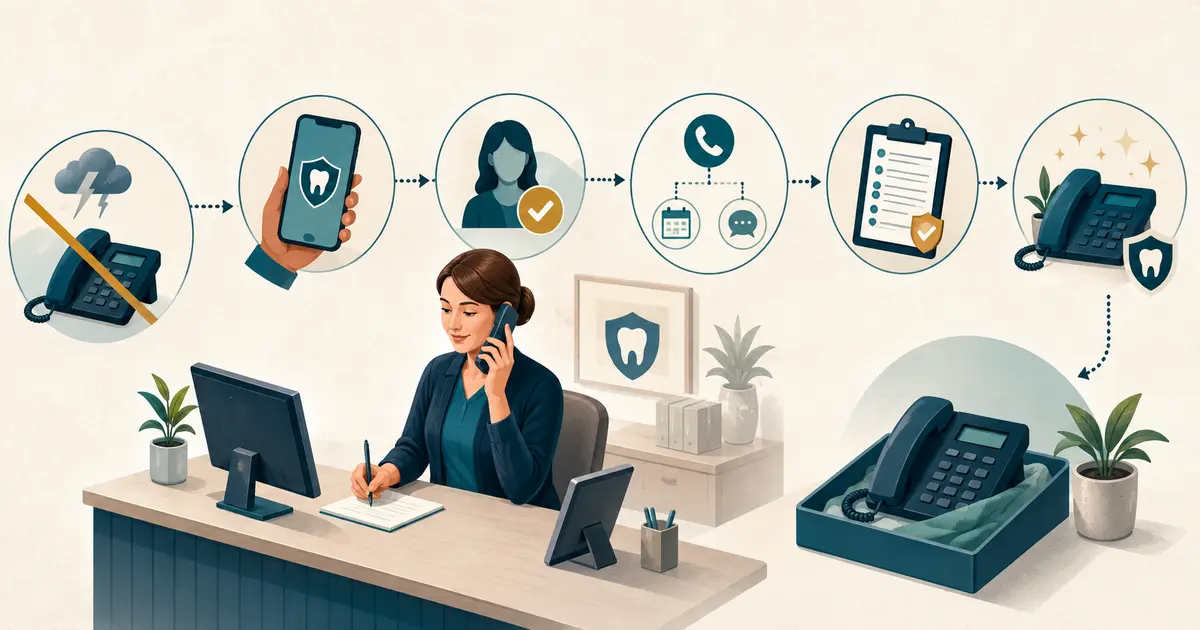
A dental alternate callback number script helps staff communicate safely when the practice's normal outbound caller ID or phone system is unavailable. Because an unfamiliar number can look like spam or fraud, the script should establish identity without revealing sensitive information, explain the limited reason for the alternate number, and give the recipient a trusted way to verify the call.
Approve the alternate number before the outage
Use a practice-controlled number or an approved vendor path. Record the owner, permitted users, purpose, activation trigger, caller ID behavior, voicemail, security settings, logs, retention, cost, and retirement method. Do not rely on an employee's personal phone unless the practice has explicitly addressed privacy, security, reimbursement, records, and emergency-use policy.
Add the number to the phone outage message templates and test it with fictional calls. Confirm outbound display, return-call route, voicemail, blocked-number behavior, and what happens after hours.
Use a transparent opening
A practice can adapt this structure:
“Hello, this is [Name or Role] calling from [Practice Name]. Our usual phone service is temporarily unavailable, so this call is coming from an approved alternate number. I am following up on a request to contact the office. Before we discuss details, I need to use our normal verification process.”
Do not state the patient's name, appointment, treatment, account, or request in voicemail or to an unverified person. Avoid pressure such as “call this number immediately” unless an authorized policy and qualified owner support the message.
Offer a trusted verification path
The recipient may be cautious. Give them the option to end the call and use the practice's official website or another previously established channel for verification. If the main number is down, explain the public status route approved by the practice.
Do not ask for passwords, one-time codes, payment credentials, or unnecessary identifiers. Follow the standard patient identity verification phone protocol before discussing protected information.
Limit the outage conversation
Use the alternate number for the approved purpose: acknowledging a request, providing a safe status update, arranging qualified follow-up, or completing another defined administrative action. Keep clinical, billing, records, and sensitive scheduling discussions within authorized workflows and systems.
Track the source request, staff member, outgoing attempt, verified recipient, outcome, next action, and permanent record location. If the alternate tool cannot securely store a note, document only the reference needed to update the authoritative system later.
Reconcile and retire after recovery
When normal service returns, move outstanding work to the approved queue, compare call logs, update caller records as authorized, and remove temporary forwarding or access. Change or revoke shared credentials, disable unused voicemail, and confirm the number no longer accepts or routes calls unexpectedly.
Sample the event for duplicate callbacks, unresolved messages, sensitive voicemail, personal-device use, and calls that never reached the permanent record. Use the phone outage recovery plan to close the broader outage.
Missed Calls Dental boundary
Missed Calls Dental can answer eligible forwarded calls in its supported workflow, but it does not control the practice's carrier outage, personal devices, temporary numbers, or identity policy. The practice owns authorization, scripts, verification, callback work, records, security, and retirement.


