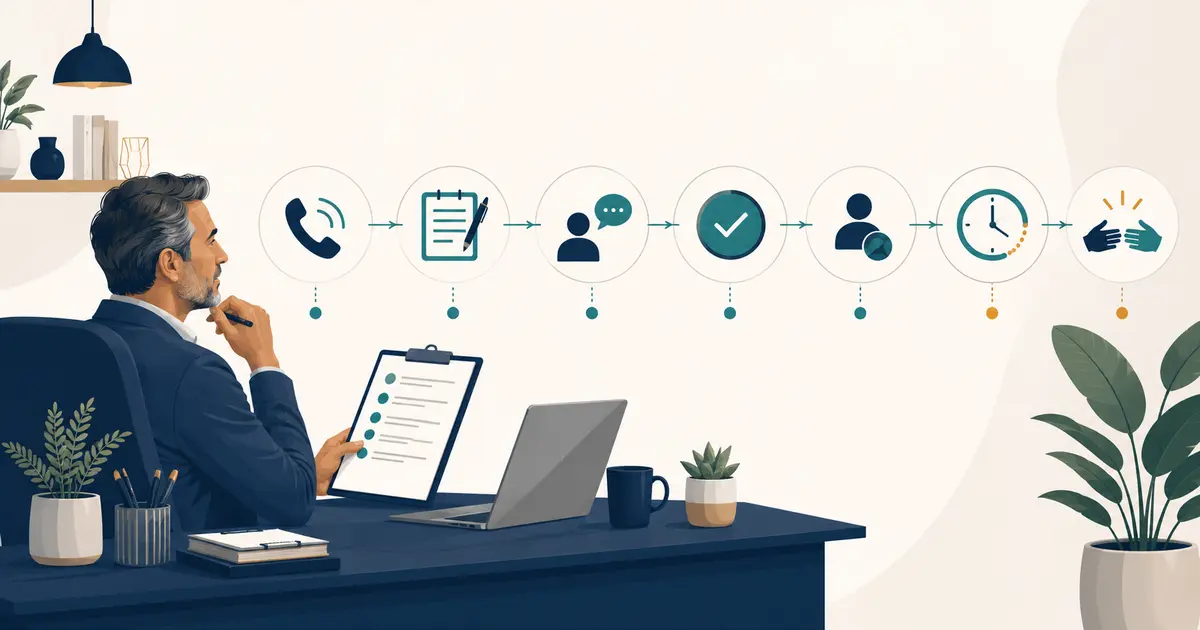
A dental after-call work standard should define what staff must complete before a caller request is considered safely handed off or closed. The goal is not to maximize time spent typing. It is to make the next action, owner, and evidence unambiguous.
Define when after-call work applies
Not every call needs the same record. Identify which contacts require documentation, follow-up, clinical routing, billing review, appointment action, complaint handling, or no further work. Use the dental front desk workflow to place after-call work between the conversation and the next queue state.
Specify whether staff finish the required work immediately or may enter a controlled pending state during peaks. If deferral is allowed, set a deadline and visible owner. An unlabeled sticky note is not a queue.
Require a concise completion set
For applicable calls, record:
- verified caller and relationship, according to policy;
- caller's stated reason in neutral language;
- relevant facts and action already taken;
- contact outcome and whether the request is resolved;
- next action, accountable owner, and due time;
- promised communication method; and
- escalation or review required.
Use the dental call notes template to keep fields consistent and minimum necessary. The ADA advises dental records that are accurate, objective, and understandable and cautions against personal opinions or criticism.
Separate reason from disposition
The caller's reason explains intent; disposition explains what happened. A person can call about a new-patient appointment and still require a callback. Preserve both fields using dental call reason codes and the practice's outcome definitions.
Do not use “resolved,” “scheduled,” or “left message” unless the definition is met. Managers should sample closed work for evidence rather than rewarding closure count alone.
Make handoffs explicit
When another person or team must act, route the work to a named role, include a due time, and state what completion will look like. For clinical questions, route to the authorized clinical team without interpreting symptoms or assigning clinical urgency outside the role.
At a shift boundary, reconcile incomplete items through the dental front desk call handoff. The outgoing team should not merely announce that work exists; the receiving team should acknowledge ownership.
Measure the process without distorting it
Review missing owners, overdue work, repeated transfers, reopened items, and closure without evidence. Avoid a blanket speed target that encourages incomplete notes or premature closure. Segment the review by request type and complexity.
Update the standard when the phone system, staffing model, privacy workflow, or appointment process changes. Test changes with fictional calls and confirm the receiving staff can act from the resulting record.
Missed Calls Dental boundary
Missed Calls Dental can capture an administrative caller request and provide a summary within its supported workflow. It does not diagnose, assign clinical urgency, verify insurance, or independently book, change, or cancel appointments. The practice owns documentation, prioritization, action, handoff, and closure. SMS is separate and readiness-gated.
Natalie Chen is an editorial pen name. This article was reviewed for accuracy and alignment with Missed Calls Dental product information.