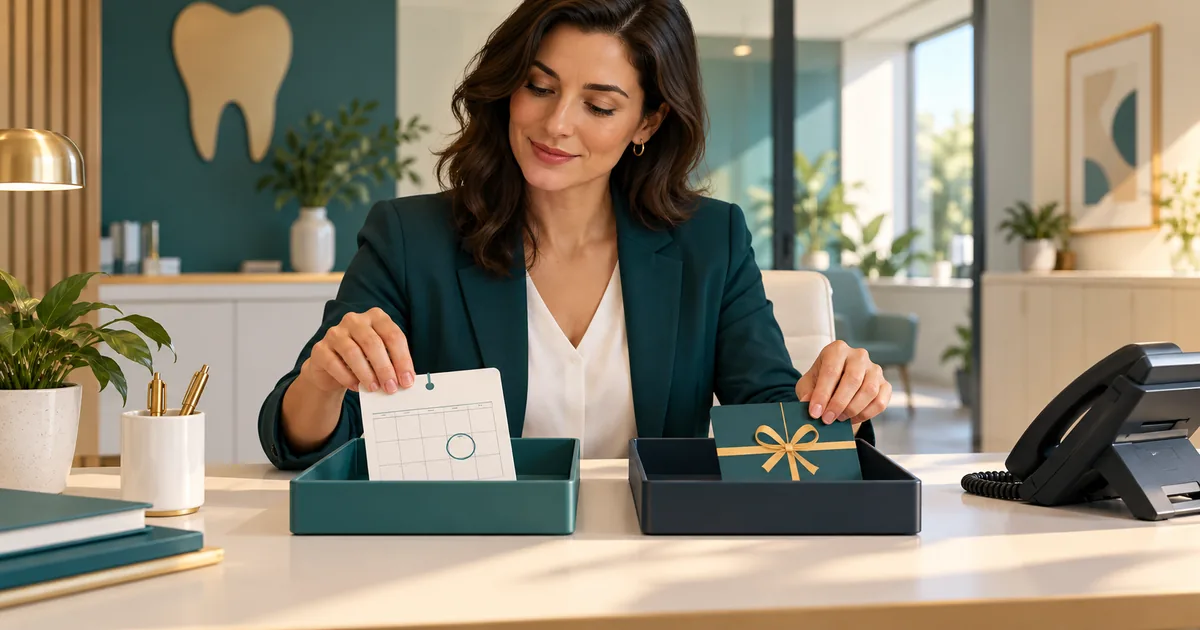
Dental appointment reminders and marketing texts should be reviewed as different communication purposes. A reminder helps a patient manage an existing care-related interaction. Promotional wording encourages a purchase or service choice. Combining the two in one message can change the review the practice needs.
Evaluate the complete message, sender, audience, and delivery method. Do not classify a text from its template name alone.
Review the message as the patient receives it
Consider these fictional examples for internal review:
| Draft | What needs review |
|---|---|
| A neutral message about a scheduled visit | Appointment details, recipient preference, and delivery permission |
| A discount offered to a broad list | Promotional purpose and applicable marketing requirements |
| A visit reminder with a whitening offer added | Mixed purpose; do not assume reminder rules settle the offer |
| A message about an unpaid balance | Separate billing analysis; not automatically a reminder exemption |
These are review categories, not a determination that any particular draft may be sent.
HHS considers appointment reminders part of treatment for HIPAA authorization purposes. See HHS appointment reminder guidance. HIPAA’s treatment analysis does not settle every TCPA or state-law issue involving automated delivery.
Separate the offer from the operational task
If the patient needs to confirm or discuss an appointment, keep that message focused. Adding an unrelated offer creates another question for the reader and another issue for the practice’s reviewer.
Store reminder and promotional templates separately in the editorial process. A staff member should not be able to turn an approved reminder into a new promotional campaign merely by appending a sentence without review.
Use the HIPAA versus TCPA guide when documenting the different approval questions.
Do not assume all healthcare messages share an exemption
The FCC’s healthcare-related provisions contain specific conditions and limits. Some messaging purposes fall outside a particular exemption even when the sender is a healthcare provider. Review the relevant portions of the FCC’s 2015 order, current rules, and later developments with the practice’s adviser.
HHS also provides a separate marketing guidance page. Use the applicable framework rather than assuming that the word “patient” makes all outreach treatment-related.
Keep a message approval card
For each approved template, record:
- exact wording and version;
- sender identity;
- eligible audience and purpose;
- trigger and delivery method;
- permission and preference checks;
- permitted edits;
- reviewer and review date.
If a staff member wants to change the offer, audience, or purpose, route the change for review. A new version should preserve the previous decision instead of silently replacing the original text.
Keep reminder delivery separate from appointment status
A sent reminder does not prove that the patient saw it, accepted the time, or attended. Use the no-show reminder workflow to define the staff follow-up and actual outcome.
Missed Calls Dental captures caller requests and supplies transcripts and summaries in Workspace. It should not be described as automatically booking appointments or operating a general reminder-and-marketing campaign platform. Additional SMS follows its own readiness and opt-out requirements.
The practice’s goal is a clear operational message sent under an appropriate, documented process. Keeping promotional content separate makes that decision easier to evaluate and easier for the patient to understand.