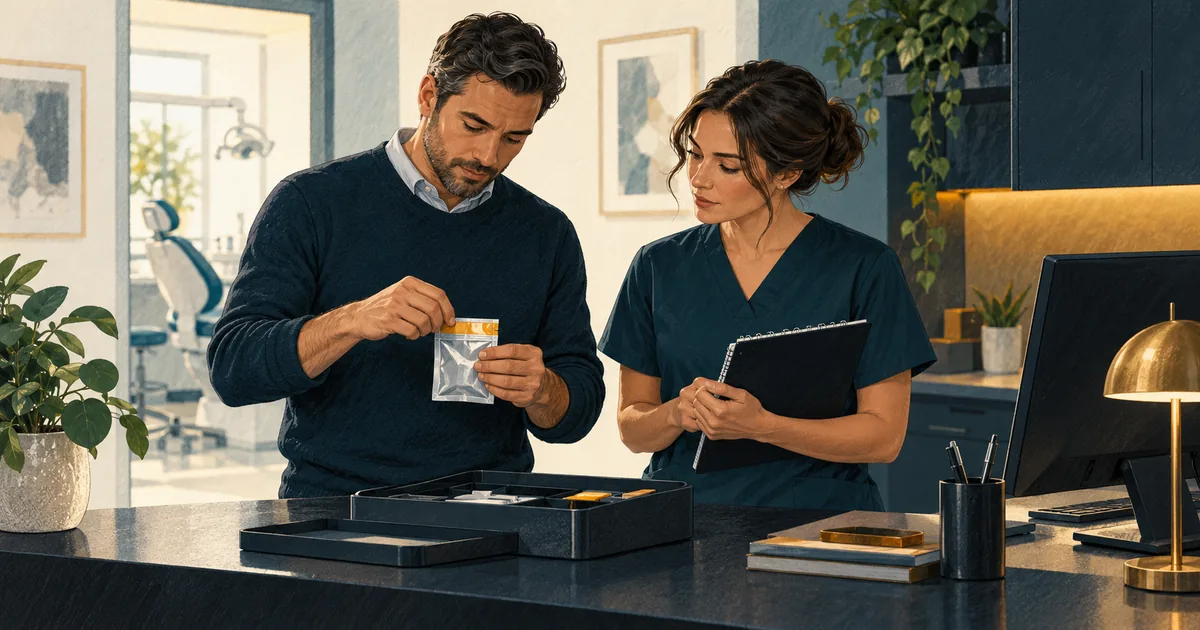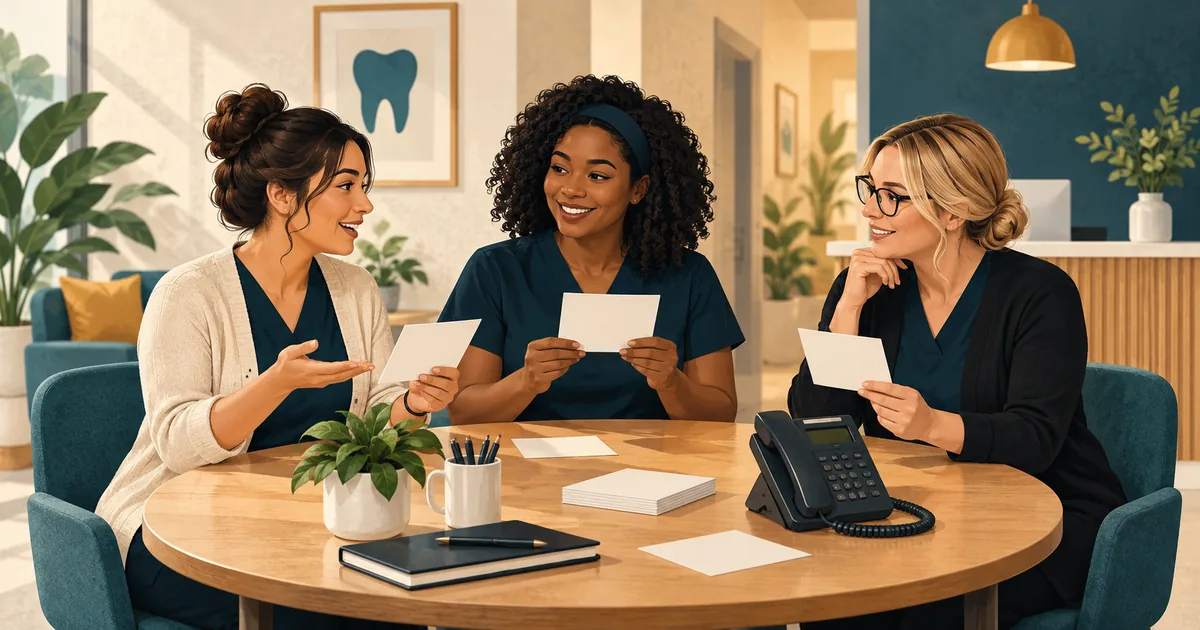
Dental receptionist HIPAA training works best when staff practice decisions they will face at the desk. A completed presentation shows attendance; a short scenario shows whether someone knows what to do. Use fictional patients and your approved procedures to rehearse the next action, the person responsible, and the information that should remain protected.
HHS describes workforce training and appropriate privacy safeguards in its Privacy Rule summary. Training should fit staff functions. These dental receptionist HIPAA training scenarios are exercises to adapt, not substitutes for the practice’s policies or qualified review.
Scenario one: a caller asks about a spouse
A caller knows a patient’s name and appointment day and asks what treatment is planned. Ask the trainee to explain which office procedure applies before discussing the record.
Look for three behaviors: the receptionist avoids treating familiarity as proof of authority, checks the applicable information-sharing arrangements, and escalates uncertainty without revealing more details. The family-member communication guide gives context for this decision.
A useful coaching question is, “What can you say while you check?” Practice a calm response that does not confirm confidential details merely to explain the delay.
Scenario two: an unfamiliar message contains a patient photo
A new text arrives with an image and a request for an immediate opinion. Ask where the message should go, whether the sender is matched correctly, and who can assess the clinical question.
The trainee should not download the image to a personal device or interpret it. Use the secure dental messaging guide to rehearse approved routing. Receiving a message and completing a clinical review are different events.
Scenario three: a colleague suggests a convenient shortcut
The manager is unavailable, so a coworker asks to use the manager’s login to find a call summary. Ask the trainee how to continue the task through an authorized route.
Do not score success as simply refusing to help. The useful response protects account boundaries and finds the approved backup person or access procedure. A policy that ends at “no” without a workable escalation path invites shortcuts during the next busy shift.
Scenario four: information may have gone to the wrong person
A receptionist realizes a callback message may have reached an incorrect number. Ask what happens first and what evidence should be preserved.
Look for prompt reporting through the office’s incident process, accurate facts, and avoidance of further unnecessary disclosure. Staff should not decide alone that a breach occurred or that the event can be ignored. The privacy lead owns the assessment with appropriate support.
Score the response using observable actions
Use a simple review record:
| Skill | What the observer records |
|---|---|
| Identifies the issue | Names the relevant privacy or access question |
| Finds the procedure | Locates the current instruction or responsible person |
| Limits disclosure | Avoids unnecessary details during the interaction |
| Completes the handoff | States who acts next and how completion is tracked |
Discuss errors privately and revise confusing procedures. Repeat the relevant exercise after a workflow change or a demonstrated gap; the practice’s training owner should set its overall training schedule.
For calls captured by Missed Calls Dental, staff still need to review the request and choose the appropriate follow-up. Training should make that responsibility clear. A useful session ends with demonstrated actions and resolved questions, not only a signed attendance sheet.