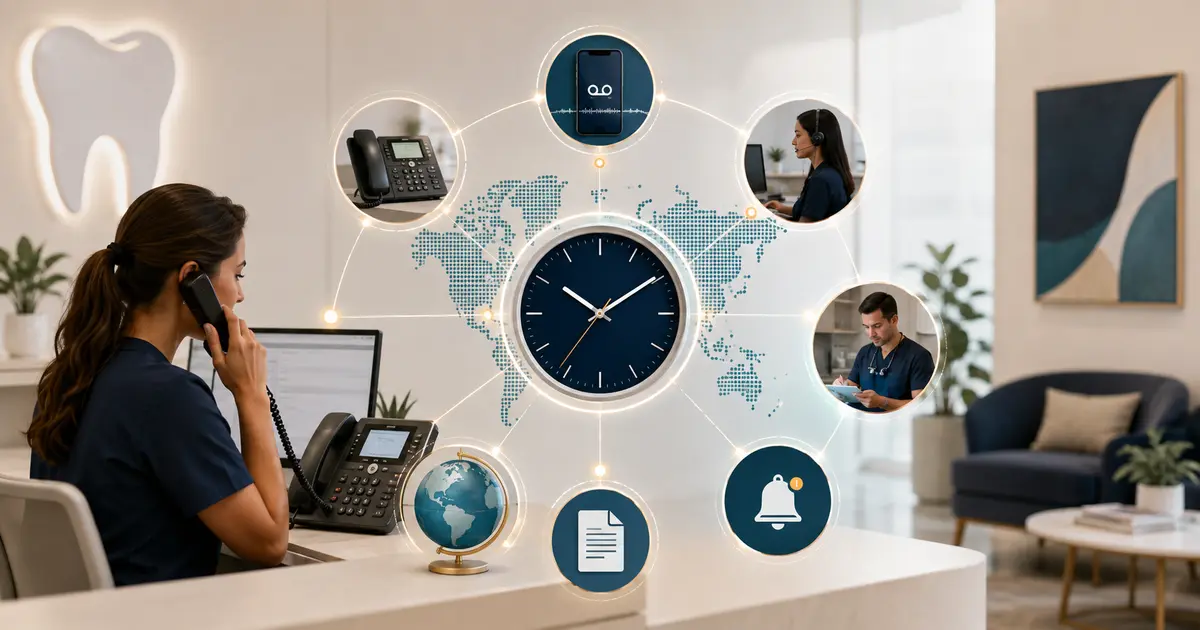
A dental phone system time synchronization test checks whether timestamps agree across the carrier, voice platform, desk phones, softphones, voicemail, queues, recordings, alerts, exports, and operational notes. Misaligned clocks can make a callback look late, hide the order of an incident, or send a schedule change at the wrong time.
Inventory time sources and display rules
For each component, record the clock source, configured time zone, daylight-saving behavior, display format, export format, and administrator. Distinguish local display time from UTC or another standardized timestamp used in logs.
The appointment time-zone guide checks how staff and callers interpret office-local times. This test focuses on whether evidence from one event can be put into the correct sequence.
Place a controlled reference call
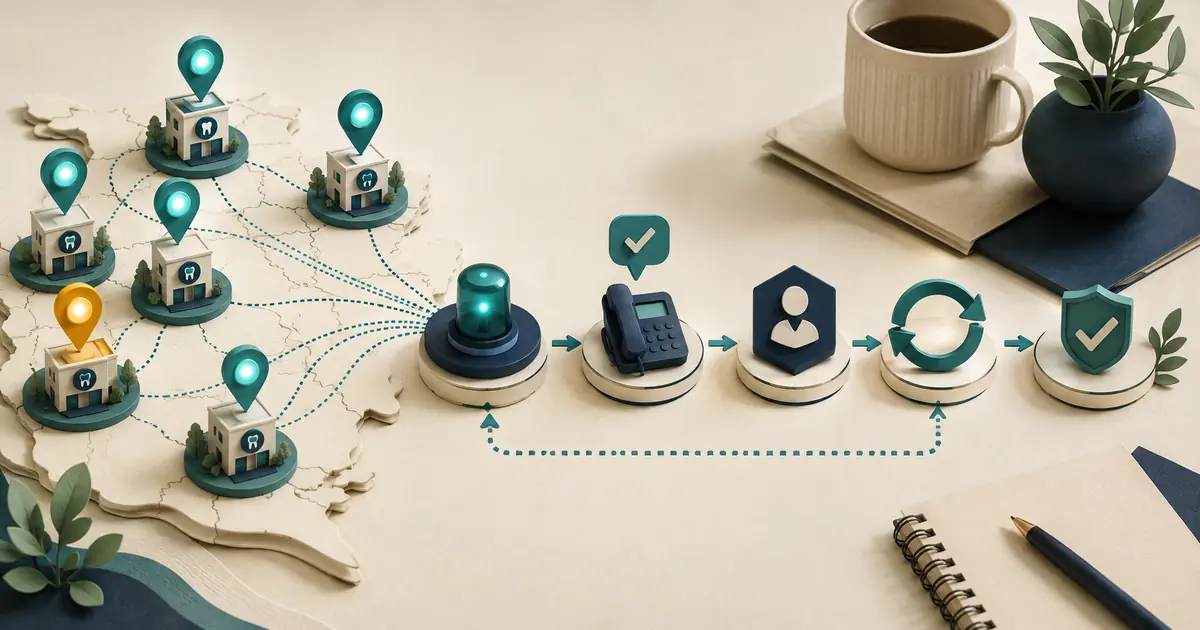
Use a fictional scenario and an independently verified reference clock. Record the reference time, calling and receiving endpoints, route, answer, transfer, hold, voicemail, callback, and completion. Then export every available record for the same event.
Compare:
- event order;
- timestamp and time zone;
- drift from the reference;
- handling of seconds and rounding;
- date rollover near midnight;
- daylight-saving offset;
- whether exports preserve the original zone.
Set a review threshold
Choose a tolerance appropriate to operational and incident needs. Small display differences may be acceptable, while reversed event order or the wrong date requires correction. Do not invent precision a source system does not provide.
Correct the source, not the spreadsheet
When possible, fix the device, server, identity, or provider configuration that creates the bad time. If a source cannot be changed, document the verified offset and transformation used for analysis. Preserve original evidence alongside any normalized timeline.
Retest after relevant changes
Repeat the test after provider migration, device replacement, time-zone changes, daylight-saving transitions, identity or network changes, and incident discoveries. Link unresolved discrepancies to the phone incident postmortem.
NIST publishes official U.S. time information and security guidance for clock synchronization and audit records. Provider implementations vary, so verify the actual call path.