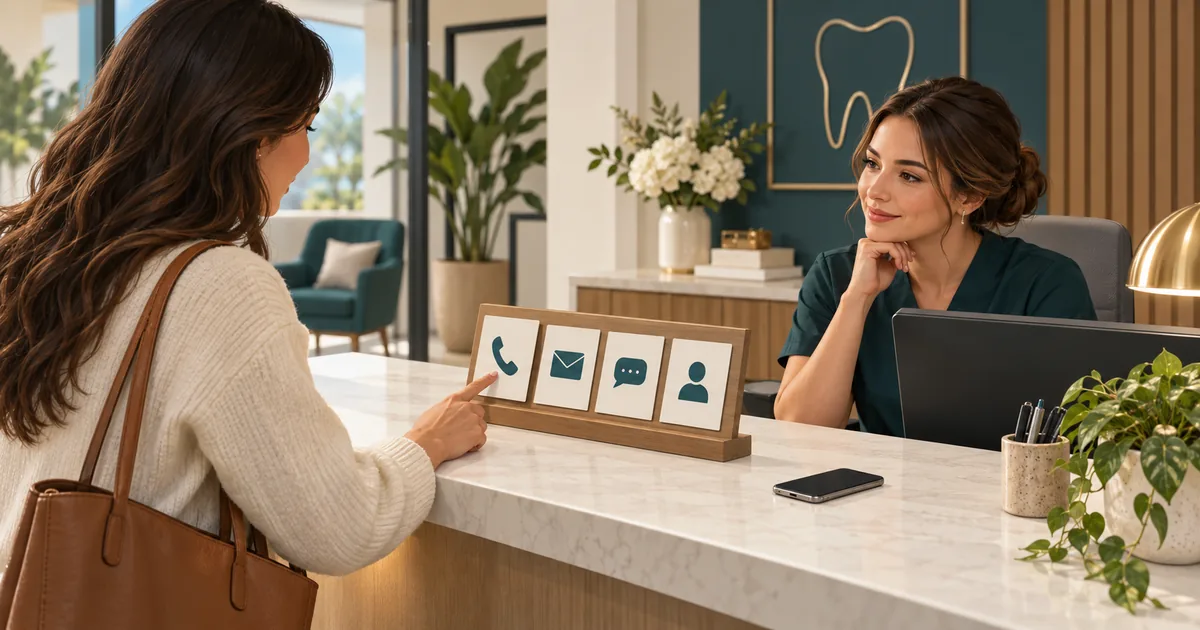
Dental patient confidential communication requests tell the practice how to contact a patient safely. A patient might ask the office to avoid a home phone, use a particular number, or keep voicemail limited. Record the instruction and make sure it reaches the workflows that send messages.
HHS explains that covered healthcare providers must accommodate reasonable requests for communication by alternative means or at alternative locations. Its Privacy Rule summary describes this right. Follow the practice’s procedure for receiving, evaluating, and implementing the request.
Ask for the instruction, not the personal story
The useful front-desk question is what contact method the patient wants the office to use. Do not require a patient to explain a sensitive household situation at the reception counter.
Suggested wording:
Which number or contact method should our office use? Is it okay to leave a message there, and are there any details you do not want included?
Follow the established identity process before changing contact information. For a family member making the request, apply the practice’s procedure for verifying authority; the patient representative guide addresses that separate question.
Turn the preference into an operational instruction
Avoid vague notes such as “private patient.” Staff need an instruction they can apply without interpreting a personal situation.
| Field | Example of useful information |
|---|---|
| Approved contact | Patient-verified number or other agreed method |
| Voicemail | Allowed, limited, or not allowed under the request |
| Message detail | Office-approved neutral wording only |
| Alternative | What to do if the preferred method fails |
| Owner | Person responsible for unresolved implementation questions |
The examples illustrate record structure, not a requirement that every system contain these exact fields.
Keep sensitive reasons out of general notes when they are not needed to implement the preference. Staff should see the instruction relevant to their task.
Check every place the old contact can survive
A corrected profile may not update an already queued reminder or a separate call list. Identify the systems the practice actually uses and ask each owner to confirm the change.
Review outbound calls, voicemail, text messages, email, mailed notices, vendor queues, and printed callback lists where applicable. If a requested method cannot be implemented immediately, route the matter to the authorized lead and agree on an interim approach with the patient.
Do not mark the request completed simply because it was typed into a note.
Handle a failed contact without reverting silently
Suppose a patient asks for calls only to a particular number, with no voicemail. Staff call and receive no answer. The next step is the agreed fallback or review by the responsible person. It is not automatically a call to the old household number.
Use the phone and voicemail privacy guide to build neutral wording for permitted callbacks. Keep clinical urgency decisions with authorized clinical staff and the practice’s established process.
Apply preferences to captured requests
Missed Calls Dental creates patient requests, transcripts, and summaries in Workspace for staff follow-up. A patient’s words in a captured call can alert the team to a contact preference; staff still need to implement it in the practice’s authoritative communication process.
Verify what the actual account supports before assuming a note automatically changes every sender or channel. Finish the handoff by recording the implemented instruction, systems checked, responsible person, and any unresolved limitation. That gives the next employee a usable plan without making the patient explain the situation again.


